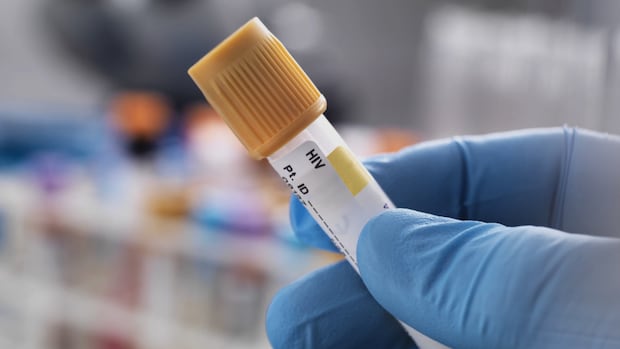
ManitobaNew federal figures suggest Manitoba had the highest incidence of new diagnoses of HIV across Canada last year, and advocates say the province needs a better monitoring and evaluation system before cases skyrocket as projected.Manitoba needs ‘a very well-coordinated, whole-of-government response,’ says HIV program directorCBC News · Posted: Dec 01, 2025 6:33 PM EST | Last Updated: 4 hours agoListen to this articleEstimated 4 minutesThe audio version of this article is generated by text-to-speech, a technology based on artificial intelligence.A laboratory technician examines blood samples for HIV/AIDS in a public hospital in a file image. Manitoba appears to have had the highest HIV infection rates in 2024, according to new federal data. (Reuters)New federal figures suggest Manitoba had the highest incidence of new diagnoses of HIV across Canada last year, and advocates say the province needs a better monitoring and evaluation system before cases skyrocket as projected.In 2024, Manitoba had the highest HIV infection rate in Canada, excluding Quebec, with 19.5 per 100,000 people infected, according to the Public Health Agency of Canada. Saskatchewan trailed in second at 18.6 per 100,000 people infected.There were 291 people in Manitoba newly diagnosed with HIV last year, which is a jump of less than 3 per cent compared to the year before, according to the province’s annual surveillance report released Monday.However, that number is over three times higher than the 90 new infections recorded in the province in 2019, the report shows.Injection drug use was the leading cause of infection in Manitoba, and that has been the case for the province since 2019, the report says. Manitoba diverges from the rest of the country in that way, as male-to-male sexual contact was the leading cause for other jurisdictions last year.Some of the major risk factors for HIV infection in Manitoba include a history of contracting sexually-transmitted diseases, struggles with housing, or incarceration, according to the report.Manitoba HIV program director Kim Templeton says she believes the province is already on track to surpass last year’s numbers. Her organization is calling on the province to better evaluate its services and invest in monitoring.”Any kind of response to what we’re seeing in Manitoba really needs to be a very well-coordinated, whole-of-government response that really takes into consideration all of the factors that need to be addressed here,” she told CBC News on Monday.Manitoba’s HIV program released its own report this week, which estimates that the annual number of new HIV infections in Manitoba could jump to 1,080 by 2028.”Unless there aren’t more … robust prevention, treatment and testing initiatives, we do anticipate that those numbers will continue to rise,” Templeton said.Indigenous women over-representedDec. 1 has been marked annually as World AIDS day to support people newly diagnosed and living with HIV, but also to raise awareness about rising rates.Manitoba began to offer pre-exposure prophylaxis, commonly known as PrEP, at no cost to any individuals who don’t already have full coverage through their insurance, starting in spring 2024.Melissa Morris, an Indigenous HIV support worker at Winnipeg’s Ka Ni Kanichihk who lives with the disease herself, says people newly diagnosed with HIV often don’t have their basic needs met, which includes housing, food security and emotional support.”If we don’t start meeting underlying needs, then our numbers are going to be tripling within the next few years,” she told CBC News on Monday.She also wants to see more community-based, peer-supportive programming offered in the province.”People living with HIV want to care for other people living with HIV, and there’s a lot of people getting diagnosed that just need to know that they’re loved and cared for.”Melissa Morris, an Indigenous HIV support worker at Winnipeg’s Ka Ni Kanichihk, says she wants to see more community-based, peer-supportive programming offered in the province. (Toni De Guzman/CBC)The Winnipeg Health Region accounted for the most infections in the province last year, but the provincial report says Prairie Mountain Health Region in southwestern Manitoba reported the highest infection rate of all the regional health authorities, with 26.4 per 100,000 people infected.The HIV program’s report recommends a provincewide monitoring and evaluation system to identify gaps, effectiveness, and support coordinated, community-led care across the province to ensure people living with HIV have equal access to high-quality services close to home.Tara Christianson, a social worker with the Winnipeg Regional Health Authority’s health outreach and community support program, says Indigenous people — particularly women — have been overrepresented in Manitoba’s infection rates.Indigenous females made up 85 per cent of all females referred to the Manitoba HIV program between 2018 and 2021, according to the program’s report.Christianson says that has been the case for years, signaling “an intentional gap in services.””I’m just concerned [about] how we can support folks and get a hold of that number.”WATCH | Manitoba’s HIV infection rates were Canada’s highest in 2024:Manitoba’s HIV infection rates were Canada’s highest in 2024New federal figures suggest Manitoba had the highest incidence of HIV across Canada last year, and advocates say the province needs to better evaluate and support services and invest in monitoring to close existing gaps, as Manitoba is on track to hit a new record in 2025.With files from Rosanna Hempel
Manitoba’s HIV infection rates were Canada’s highest in 2024, federal data suggests