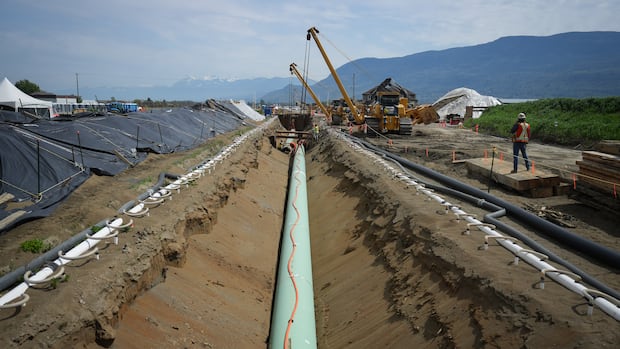
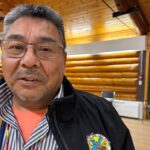
IndigenousThe Metis Settlements of Alberta say they’re interested in purchasing a stake in a proposed oil pipeline to the West Coast and want to work with First Nations in British Columbia who oppose the project and plan to bring forward an emergency resolution at the Assembly of First Nations meetings in Ottawa Tuesday.Metis Settlements of Alberta president says project could help Metis communities achieve full sustainabilityOlivia Stefanovich · CBC News · Posted: Dec 02, 2025 4:00 AM EST | Last Updated: 8 hours agoListen to this articleEstimated 4 minutesThe audio version of this article is generated by text-to-speech, a technology based on artificial intelligence.Workers lay pipe for the Trans Mountain pipeline expansion in Abbotsford, B.C., in May 2023. Though there’s still no route or private sector proponent for a new oil pipeline from Alberta to the West Coast, the Metis Settlements of Alberta says it wants to purchase a stake in the proposed project and plans to work with First Nations in B.C. who oppose it. (Darryl Dyck/The Canadian Press)The Metis Settlements of Alberta say they’re interested in purchasing a stake in a proposed oil pipeline to the West Coast and want to work with First Nations in British Columbia who oppose the project and plan to bring forward an emergency resolution at the Assembly of First Nations meetings in Ottawa Tuesday.Dave Lamouche, president of the eight Metis settlements in Alberta, said a new pipeline could help Metis communities achieve full sustainability.“It’s important to try and get some revenue generating partnerships so we’re able to afford things,” Lamouche said. “What Alberta is offering is full partnership and participation.”But he also says Coastal First Nations have a right to be concerned. The memorandum of understanding (MOU) signed by Ottawa and Alberta last Thursday states that any new pipeline needs to offer the opportunity for Indigenous co-ownership and other forms of economic benefits. It also says the federal government may adjust the oil tanker ban along the northern B.C. coast to get Alberta’s product to Asian markets, which could pit Indigenous groups against one another. Coastal First Nations have repeatedly said they’re opposed to any suggestion of lifting the oil tanker ban. With the plan being so contentious, Lamouche says he wants to meet with Coastal First Nations to see if there’s any way they can work together to help get the pipeline built.“If that doesn’t work, then we look at alternatives,” he said. WATCH | Indigenous leaders in B.C. point out red flags of past pipeline projects:B.C. leaders warn new pipeline proposal repeats past failures, ignores climate costsAs Ottawa and Alberta press ahead with a controversial proposed pipeline, some in B.C. are pointing to challenges and key lessons learned from Canada’s past pipeline projects. As CBC’s Janella Hamilton reports, Indigenous leaders are vowing to block Alberta’s pipeline plan. Proposed pipeline top of mind as PM addresses AFNThe proposed pipeline will be front and centre at the Assembly of First Nations (AFN) Special Chiefs Assembly in Ottawa this week. B.C. First Nations leaders are preparing to bring forward an emergency resolution to the floor of the meetings for AFN to support upholding the oil tanker ban just before Prime Minister Mark Carney is set to deliver a speech Tuesday afternoon and take questions from AFN chiefs, according to Terry Teegee, regional chief of the B.C. AFN.Teegee says he’s hearing major concerns about the pipeline proposal from First Nations leaders across the country.“There’s a lot of mistrust here as a result of this,” Teegee said. “You can’t simply override First Nations rights, title and interests … Consent is required for any project.”Terry Teegee, regional chief of the British Columbia Assembly of First Nations, calls Alberta’s pipeline proposal a slap in the face. (Maggie MacPherson/CBC)The Metis Settlements of Alberta have worked with the Alberta government for decades, including on co-management agreements for natural resources and non-renewables. Lamouche says the MOU provides a great opportunity for Indigenous people, and described Alberta’s approach as collaborative. “Instead of it being a prescriptive approach … they came up with a new approach, which is: Build this thing together,” Lamouche said. “It’s not just like checking a box and say ‘Wee got to do this [consultation].’ It’s creating an atmosphere where Indigenous groups can come and partner in, if they desire.”Alberta looks to partner with other Indigenous groupsLamouche says the Metis Settlements of Alberta are looking into accessing loan guarantees through the Alberta Indigenous Opportunities Corporation, which can help Indigenous communities invest in projects, such as pipelines. He says the money generated from the proposed project could provide much-needed funds for infrastructure, including roads, water and wastewater in Alberta Metis communities.The settlements, which have about 10,000 citizens in total, have set a goal to generate enough revenue to run their communities on their own by 2038, Lamouche said. Dave Lamouche is the president of the Métis Settlements General Council in Alberta. (Métis Settlements General Council)Alberta Indigenous Relations Minister Rajan Sawhney is working with Lamouche and other Indigenous communities on the potential pipeline. Her office told CBC News it’s been engaging with Alberta and B.C. nations since the province began working on its pipeline proposal last spring. “These conversations are laying the foundation of strong, meaningful and mutually beneficial relationships,” Sawhney said in a statement to CBC News. Sawhney’s office told CBC News it could not provide a list of specific meetings that the minister is holding with Indigenous groups, but said Lamouche is one of the Indigenous relations experts, who provides culturally-informed guidance on the province’s engagement efforts. “Alberta’s government is committed to supporting Indigenous communities through partnerships that deliver economic opportunities and long-term prosperity that will benefit generations for years to come,” Sawhney said.WATCH | Reactions to the potential new pipeline:Is Canada’s potential pipeline a ‘big step back’ or a ‘phenomenal opportunity’?Chief political correspondent Rosemary Barton speaks with Maureen Nyce, elected chief councillor of the Haisla Nation, about the impact a potential pipeline could have on that northern B.C. community and why she says the project is a ‘big step back.’ Plus, Robert Phillips from the First Nations Summit on the importance of Indigenous consultation. Finally, Surge Energy CEO Paul Colborne discusses why he believes the deal is a ‘phenomenal opportunity’ for Alberta’s oilsands and for Canada.ABOUT THE AUTHOROlivia Stefanovich is a senior reporter for CBC’s Parliamentary Bureau based in Ottawa. She previously worked in Toronto, Saskatchewan and northern Ontario. Connect with her on X at @CBCOlivia. Reach out confidentially: olivia.stefanovich@cbc.ca.
Métis in Alberta eye ownership stake in proposed oil pipeline