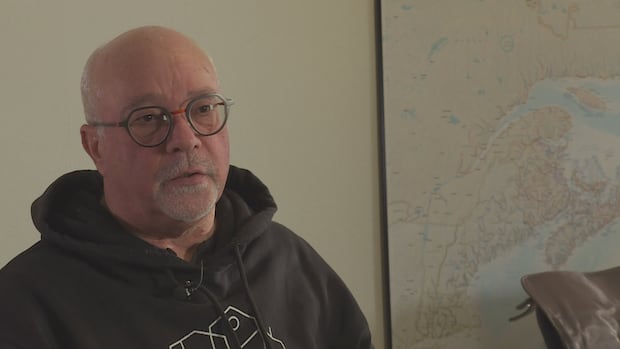
Community service providers and housing advocates in Fredericton are warning that a project meant to help people transition out of homelessness may not achieve that goal.Organizers behind the Neighbourly Homes project — an initiative of the non-profit 12 Neighbours — plan to open a new transitional housing site in Fredericton. Transitional housing is meant to house and support people leaving homelessness who don’t yet have the skills to live independently, with the eventual goal of moving them into a permanent space.The new site, which is located on Forest Hill Road, will include 20 to 30 rooms, a communal bathroom and courtyard space. The province is helping to fund the project, but the community has responded with anger and even legal action over the location and lack of public consultation. Now, other community service providers in Fredericton are questioning whether the site will work as intended.WATCH | Province ‘using a crisis to justify segregation,’ advocate says:Why a new housing project is raising red flags for community service providersThe New Brunswick government is helping fund a project to move people off the street into a group of rooms with a communal backyard and bathroom. But some warn the approach might further stigmatize people leaving homelessness.Other not-for-profits already operate transitional housing in the city, including Fredericton Homeless Shelters.Executive Director Warren Maddox said nearly every resident in their transitional housing program is successful — they work on personal goals, find a permanent housing option, and avoid returning to the shelter setting.Maddox has been using what’s known as a scattered model, where people are placed in low-cost apartment units spread throughout Fredericton. In contrast, the Neighbourly Homes project uses a clustered model — housing many residents together on one site.Those leaving homelessness usually have very complex needs, such as help managing addictions, trauma and mental illness, Maddox said. When grouped together, he said one person in crisis can have a destructive ripple effect on others.”Ultimately what we found is that… if you’ve got a group, concentrated group of people and one of them starts to escalate, then it’s gonna take six other people with them,” Maddox said.”The scatter site pulls people away from this sort of ramping, bald ugliness, chaos that exists amongst homeless populations.”Haley Flaro, executive director of Ability New Brunswick, says clustered housing can isolate people from the rest of the community. (Radio-Canada)Maddox said scattered transitional housing also helps people forge new roles within their communities.”You don’t lift them up by subjecting them to the same cycle that’s brought them there,” he said. “You bring them up by exposing them to the greater community and for the most part, when they get in there, they discover that the community is supportive.”Haley Flaro, executive director of Ability New Brunswick, believes the project is well-intended, but worries the site will stigmatize and isolate people who are already vulnerable. “The model is really concerning and disappointing, because it, it sets inclusion back, you know, to the 1960s,” said Flaro. “We’ve learned a lot in New Brunswick and Canada from the harmful impacts of segregating people.”Flaro pointed to the United Nations Convention on the Rights of People with Disabilities — to which Canada is a signatory — and its 2022 guidelines on deinstitutionalization. Those guidelines say community-based housing should prevent “the emergence of new segregated services,” including group housing and “transit homes,” another term for transitional housing. Project founder says similar initiative seeing successBut 12 Neighbours founder and the man behind the Neighbourly Homes project, Marcel LeBrun disagrees that his model segregates people from their communities.He said the UN guidance also emphasizes independent living and decision-making, which he believes residents get with the individual, locking units and lack of curfew on his sites.Marcel LeBrun, who runs Neighbourly Homes, disagrees that the project segregates people struggling with homelessness. (Ben Ford/CBC)LeBrun sees the clustered sites as another step in the progression from shelter living to permanent housing. “Everybody’s different. So you have to look at the person’s needs,” LeBrun said. “I think that you can graduate from a more clustered intensive support to a more occasional support.”While Maddox reported a success rate over 99 per cent in moving residents from Fredriction Homeless Shelter’s units to permanent housing, LeBrun’s project is too new to have a comparable figure yet.An example of a Neighbourly Homes unit, which is equipped with a bed, a desk, chair and an iPad, which can be used to access services. (Silas Brown/CBC News)But LeBrun believes the cluster model can work and pointed to a separate Neighbourly Homes site in Saint John, which opened in August with federal funding, and he said is moving in the right direction.”We have people who’ve gotten medical appointments for the first time in their lives. We have people that have invested in recovery,” LeBrun said. “We have three or four people who’ve got brand new resumes done, and they’re out there looking for work.”Where should taxpayer dollars go?The province has earmarked up to $7.4 million for what it calls housing first projects, and has noted transitional housing as a priority.But spokesperson Adam Bowie declined to share how much the government has committed to spending on the Forest Hill site, because “those funds have yet to be disbursed.” Housing researcher Tim Aubry, who has studied the housing first approach in Moncton, said scattered housing tends to be most successful. “They’re no longer in this place where it’s very clear everybody that lives there has come out of being homeless… that comes with all sorts of stigma attached to it, that’s hard to break out from,” he said. “Scattered throughout the community… people are, they’re just another tenant in an apartment building.”WATCH | From shelters to tiny homes, these are the levels of supportive housing:From shelters to tiny homes, these are the levels of supportive housingWhen someone is in crisis or trying to get back on their feet, different housing options are available to support them.But he also said the housing first approach is supposed to be about offering permanent housing — not making people leave the unit after a certain period of time.Ultimately, LeBrun agrees that the scattered, housing first approach is best. But, until more housing that can be used for that purpose is made available, he believes Neighbourly Homes is a faster option that can fill a gap.”This is not because we think it’s a panacea, not even close,” LeBrun said. “It’s a crisis response, gets you out of the woods, gets you warm and safe, supported, regulated, and let’s keep the pressure on government to build that housing.”Housing Minister David Hickey has called homelessness a crisis that demands quick solutions, and on Thursday urged more non-profits to apply for funding.”On a site like Forest Hill’s in, you know, in two or three years, I’d love to transition that site into permanent housing,” Hickey said.”But we need something to bridge us in order to get to that point, in order to actually make sure that people aren’t freezing outside, because we said we’re going to wait… for the perfect model.”
Transitional housing project may have unintended consequences, advocates warn