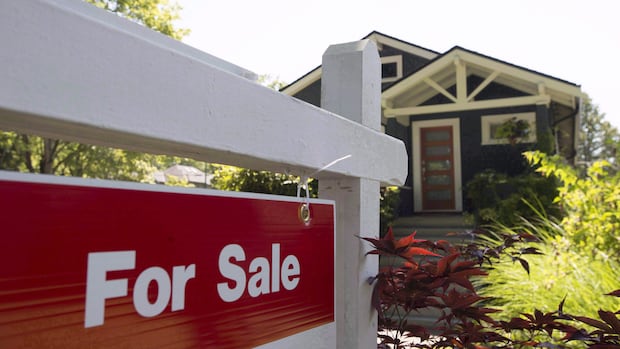
British ColumbiaMonthly data provided by Greater Vancouver Realtors showed 1,846 residential properties were sold in November, continuing a three-year period of relatively stable month-over-month sale figures. New data also shows asking prices in rental market down 10% over 2 years Justin McElroy · CBC News · Posted: Dec 02, 2025 11:59 PM EST | Last Updated: 6 hours agoListen to this articleEstimated 4 minutesThe audio version of this article is generated by text-to-speech, a technology based on artificial intelligence.Greater Vancouver real estate sales have remained consistently lower the last three years compared to where they typically were over the preceding two decades. (Jonathan Hayward/Canadian Press)The Greater Vancouver area appears set for its lowest year of home sales in a quarter-century.Monthly data provided by Greater Vancouver Realtors showed 1,846 residential properties were sold in November, continuing a three-year period of relatively stable month-over-month sales figures. It leaves the region with 22,263 homes sold in 2025, on pace to eclipse the lowest total this century, which happened in 2018 when 24,619 properties changed hands.“It’s largely a reflection of what we’re seeing on the affordability front, the lack of certainty in the economy, and mortgage rates — while lower than they were the last couple years — still quite elevated relative to what we would have seen a few years ago,” said Bryan Yu, chief economist with Central 1 Credit Union. The monthly data continued to show a relatively static market when it came to sale prices, with the average price of a detached home at $2.02 million and a condo at just under $800,000. WATCH | Low sales numbers in Greater Vancouver:Greater Vancouver could have lowest home sales recorded in the 21st centuryGreater Vancouver’s housing market continues to be slow in 2025. As Justin McElroy reports, with just one month left in the year, real estate numbers show the region will likely have the lowest sales numbers this century. But home prices continued to fall in the Fraser Valley, with the average selling price for a home at $1.45 million, down 19 per cent from March 2022, and condos at $507,606, down 15 per cent over the same time period. “As the year draws to a close, the data continues telling a story of a market with many buyers patiently waiting and sellers adjusting to market conditions not seen in years,” said Greater Vancouver Realtors chief economist Andrew Lis. ‘Good thing for renters’The data on home sales came on the same day that Statistics Canada put out rental data that confirmed many anecdotal reports over the past year: asking prices are coming down. In the third quarter of 2025, the average asking rent for apartments continued to fall in Metro Vancouver: apartments with one bedroom were being offered for $2,390 a month, down from $2,510 in the same quarter last year, while two-bedroom units were down $200 a month, from $3,390 to $3,190.Overall, the asking price for a one-bedroom apartment in Metro Vancouver was down 9.5 per cent from the same time in 2023.“There has been a notable change in the rental market in recent years and one of the most rapid or significant declines has been in Vancouver, relative to other cities,” said Josh Gordon, a senior analyst with Statistics Canada. Gordon cautioned that it was too early to say what was causing the decrease in rents, but noted the continued uncertainty around new rental projects that are underway being finished to completion. “There’s still construction, but the decisions that led to that construction happened a couple of years ago, or potentially even longer,” he said. “How the new condo market evolves and whether projects are able to get off the ground and the extent to which developers are able to complete projects, that’s something to keep an eye on.”In the short term though, Yu said there were few things that would likely change the rental market. “The migration caps in Canada, the slowing economy, those all work against ongoing increases in rents at this point. And that’s a good thing for renters,” added Yu.“The acceleration events that we saw were really quite unaffordable for a lot of potential renters. And now they have some choice of where they want to move, or negotiate some incentives.”ABOUT THE AUTHORJustin is the Municipal Affairs Reporter for CBC Vancouver, covering local political stories throughout British Columbia.
Greater Vancouver looks set for lowest year of housing sales this century