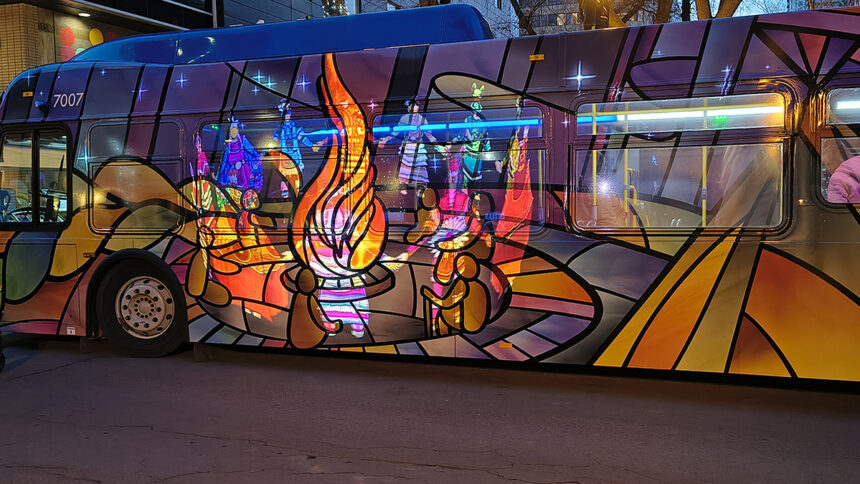
Edmonton bus wrapped in Indigenous was inspired by Indigenous Seniors. Photo supplied by Edmonton Transit by Chevi Rabbit, Local Journalism Initiative Reporter (ANNews) – When the Aboriginal Seniors Centre in Edmonton was approached to help design a new ETS bus wrap, the idea quickly evolved into something far more meaningful than an art project. It became a community conversation, a cultural teaching, and a rare moment of visibility for Indigenous seniors who too often feel unseen. For Milly Karhioo-Saadeh, Indigenous Relations Strategic Planner with the City of Edmonton, the project reflects what meaningful relationship-building truly looks like. “For me, this work is fundamentally about relationships — and the only way to build relationships is by being present with Indigenous people and communities,” she explained. Listening First: Creating Space for Seniors’ Voices The idea of a bus wrap began months earlier, when Karhioo-Saadeh brought a group of City staff to the Aboriginal Seniors Centre in April 2024. Executive Director Deborah Rose invited them to join the seniors for tea and bannock — a simple gesture that opened the door to powerful conversations. “Many Indigenous seniors feel invisible, and their voices often go unheard,” Karhioo-Saadeh said. “They want to be seen, acknowledged, and listened to by the City.” During that visit, seniors shared stories of resilience, struggle, reconnection, and culture. They also expressed their needs and wants: access to culturally safe spaces, opportunities for social connection, programs that honour Indigenous traditions, and recognition of their role as knowledge keepers and community builders. Research shows that Indigenous seniors often face barriers such as limited access to healthcare, transportation, and culturally relevant support, making these voices crucial for meaningful city engagement. When ETS later sought guidance for their next bus-wrap collaboration, the Seniors Centre was one of the first organizations Karhioo-Saadeh recommended. A Community-Led Design Process What followed was a long, thoughtful, and respectful design process — one led by the seniors themselves. The Centre is one of the busiest Indigenous organizations in Edmonton, active every single day. Because of this, discussions unfolded slowly and meaningfully. Seniors talked about what the wrap should say: What does it mean to be an Indigenous senior? What emotions, teachings, and lived experiences need to be represented? What do they hope the city and its residents understand about their daily lives and challenges? ETS staff listened deeply, repeating back what they heard, checking their understanding at every step. “It was a genuine back-and-forth,” said Karhioo-Saadeh. “The final design only moved forward when it truly resonated with the seniors — with their experiences, their beliefs, and the way they see their community and culture.” The Design: A Gathering Place on Wheels The resulting artwork — created by Ray Au, Manager of Creative Services for the City of Edmonton — reflects the heart and spirit of the Centre. “All of the stories told by the artwork on this bus came from direct and honest conversations with members of the Edmonton Aboriginal Seniors Centre and their leaders,” Au said. “Transforming the visual surfaces of the bus into a flowing, glowing canvas of light and colour that tells part of this story, I hoped to create the visual spark that lights the thought, ‘Tell me more!’” One of the design’s most powerful elements is the fire — a symbol of warmth, community, and cultural connection. “The tipi and fire are central to their summer gatherings,” Karhioo-Saadeh explained. “Many seniors described the Centre as a bright light in their lives. The artist worked to capture that feeling of lightness and warmth.” The wrap features teachings and imagery from First Nations, Métis, and Inuit cultures, honouring the diversity within the Seniors Centre community. Inside the bus, interpretive panels — created by the seniors themselves — tell the story of the Centre’s programs, services, and the deep impact they have on Elders’ lives. This includes highlighting programs that meet their specific needs for community, health support, cultural continuity, and social engagement. A Bus with a Purpose The bus has already made appearances at community events — from September 30 commemorations at Fort Edmonton Park to Winterval — and will continue to attend festivals throughout the year. “Even when the bus is simply running its routes, it advocates for Indigenous seniors,” said Karhioo-Saadeh. “It helps them see themselves reflected in the city.” The project also brings to life the four roles within the City’s Indigenous Framework: Listener, Partner, Connector, and Advocate. ETS listened deeply, partnered respectfully, connected communities, and now advocates for seniors by bringing their stories into public view. What Edmontonians Should See Karhioo-Saadeh hopes the bus inspires reflection — not just for Indigenous community members, but for everyone who calls Edmonton home. “For Indigenous people, seeing culture represented around us matters — many of us didn’t grow up seeing that. For non-Indigenous people, this bus helps show the cultures, histories, and relationships that have shaped this land and this city. It reminds us what it means to be a treaty person and to be in good relationship — with each other, with the land, and with the environment around us.” More Than Art: A Moment of Recognition In the end, the ETS bus wrap stands as a vibrant, moving celebration of Indigenous seniors and the community they continue to shape. It showcases the strength of partnership, the power of listening, and the importance of creating space for voices that have long been overlooked. It highlights the needs, wants, and lived experiences of Indigenous seniors, ensuring that these essential voices are seen, honoured, and uplifted across the city they helped build.
Bus That Carries Stories: How Indigenous Seniors Shaped Edmontons New ETS Bus Wrap