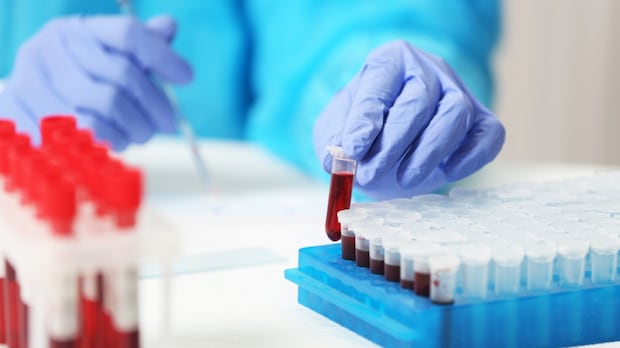
ManitobaThe reeve of a Manitoba municipality fears the province could still fall short in hiring and retaining laboratory and X-ray technologists needed in rural areas despite an increase in the number of training seats available.Province doubling number of seats for Manitoba students at Saskatchewan PolytechnicListen to this articleEstimated 4 minutesThe audio version of this article is generated by text-to-speech, a technology based on artificial intelligence.A file picture shows a lab worker moving a blood sample. The province is doubling the number of seats for Manitoba students in Saskatchewan Polytechnic’s laboratory and X-ray technology program. (Shutterstock)The reeve of a Manitoba municipality fears the province could still fall short in hiring and retaining laboratory and X-ray technologists needed in rural areas despite an increase in the number of training seats available.”Any time we can get specialists or highly trained people and create more seats for rural places, that’s a benefit,” said Maurice Saltel, reeve of Brenda-Waskada, about 90 kilometres southwest of Brandon near the U.S. border.”However, it’s really complex, and the complexity begins with just because you’re trained in one spot doesn’t mean you’re staying in that spot.” The province is doubling the number of seats it is supporting at Saskatchewan Polytechnic for Manitoba students to train in the program, beginning in January. Health Minister Uzoma Asagwara said 10 first-year spots, including five new ones announced on Tuesday, were secured in the program in Moose Jaw, Sask., to help address “a very serious staffing shortage in diagnostics in Manitoba.”Manitoba is supporting 10 spots, including five announced this week, at Saskatchewan Polytechnic in Moose Jaw, Sask., to train laboratory and X-ray technologists. (Matt Howard/CBC)Students graduating with the 2½ year advanced diploma have learned how to do laboratory testing, blood sample collection, electrocardiograms — also known as ECGs — and general routine X-ray procedures.Manitoba Shared Health will offer return-of-service agreements to the students accepted in the program, covering their tuition and academic expenses in exchange for 5,000 hours, or around three years, of work in rural and regional communities.”We’ve heard loud and clear that we’ve got to take a grow your own approach,” Asagwara said. More laboratory and X-ray technologists are needed to service rural communities like Brenda-Waskada, but the reeve is concerned it might be hard to ensure the students being trained at Saskatchewan Polytechnic will return to Manitoba and later decide to stay. Brenda-Waskada was one of eight communities that signed on to a resolution from the Association of Manitoba Municipalities calling on the province to create “rural-focused retention strategies” to directly support lab technologist staffing in rural and northern communities. “What you don’t want as a province is to train people and then they go to other provinces,” Saltel said. Besides better salaries, improvements in housing and transportation infrastructure are needed to enhance the chances of retaining health-care professionals in rural communities and prevent most of them from moving to urban areas, Saltel said. “Winnipeg is a vortex that pulls a lot of people,” he said. “Bu the quality of life in rural places is quite high. We just need to get more kids out there to work.” Assiniboine College program in 2027The province expects the 10 Manitoba seats at Saskatchewan Polytechnic to be filled for the semester starting in January. About $180,000 was allocated to pay for the training of the five additional students announced this week. The spots will be a bridge while Manitoba’s Assiniboine College launches its 20-seat program for laboratory and X-ray technologists in September 2027, the province said. When it starts, Manitoba will reduce reliance on out-of-province training. “We want to train people in their own communities,” Asagwara said. The resolution signed by the eight Manitoba municipalities calls for the laboratory and X-ray technology program at Assiniboine College to be expedited and begin before 2027, as well as for an increase in the number of seats in Manitoba’s existing diagnostic training programs. “You have to just do the infrastructure pieces first and then go for it,” the Brenda-Waskada reeve said. “Rural places have a bright, bright future ahead of it, and we’re not quite there yet, but we sure are getting there quickly.” ABOUT THE AUTHORSantiago Arias Orozco is a journalist with CBC Manitoba currently based in Winnipeg. He previously worked for CBC Toronto and the Toronto Star. You can reach him at santiago.arias.orozco@cbc.ca.With files from Meaghan Ketcheson
Manitoba reeve concerned about laboratory technologist retention in rural areas despite new funds for training