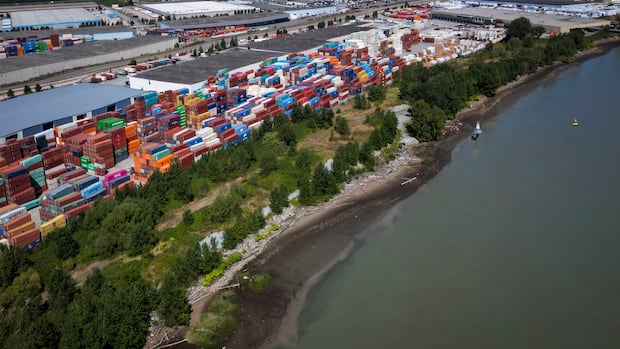
From the outset of its landmark claim for Aboriginal title, the Quw’utsun (Cowichan) Nation claimed its beef was not with private property owners.In May 2017, lawyers for the Quw’utsun, the federal Crown, B.C and Richmond spent two days in a Victoria courtroom debating the merits of notifying more than 100 Richmond landowners about the legal battle that would see a judge grant Aboriginal title over their land eight years later.The federal Crown argued private property owners needed to be there — as a matter of fairness. But the lawyer for the Quw’utsun “vigorously” opposed the notion of an order giving formal notice — which he said was “unnecessary, inappropriate and unwarranted.” “It foments adversity and unnecessary hostility to frame this as a claim against private property holders,” David Rosenberg told B.C. Supreme Court Justice Jennifer Power, the judge who oversaw early stages of the litigation.”We don’t want to argue about settlers’ interests versus First Nations’ interests — we want to argue about what the Crown did wrong.”‘It’s pitting interests against each other’Earlier this year, B.C. Supreme Court Justice Barbara Young declared the coexistence of Aboriginal title alongside private property title — known as fee simple — on land owned by around 125 Richmond residents within the Quw’utsun’s roughly 325-hectare claim area.The Quw’utsun have not made a claim for the return of the private lands, and Young insisted “the property rights of the private landowners are not undermined.”WATCH | Court ruling grants Aboriginal title in Richmond, B.C.:Tension between Aboriginal title and private property ownership simmers in B.C.Homeowners are still trying to seek clarity after a B.C. Supreme Court judge ruled the Cowichan Tribes have aboriginal title over a parcel of land in Richmond, B.C. As Jason Proctor reports, the ruling has become a source of anxiety for some private property owners and the province says it will appeal the decision. Nevertheless, her decision set off a storm of political debate about the ability of two seemingly conflicting interests to coexist on the same piece of land.And many of the homeowners the Quw’utsun insisted they did not want to fight in 2017 were left asking why they didn’t even know a legal battle was brewing.The answer is contained — in part — in the record of that earlier proceeding, which followed a federal Crown application that would have forced the Quw’utsun to notify up to 200 private property owners that their interests might be impacted by the case.The application was supported by B.C. and the City of Richmond, which argued that placing Aboriginal title on private property could affect the marketability of the land. The Quw’utsun objected, arguing formal notice would essentially be an invitation for hundreds of people to join the litigation, gumming up the case and shifting the court’s attention away from the responsibilities of the Crown.”This shouldn’t be set up as a dispute between the First Nation and the tenure holder,” Rosenberg told the court.”It would be wrong. It’s wrong morally, it’s wrong legally. It’s pitting interests against each other when the person who caused the problem is the Crown.”A claim grounded in historyCBC News has listened to the proceedings of the 2017 hearing and obtained copies of both the application and the documents filed in response as part of an effort to explain the Quw’utsun decision and its implications.Young’s decision concerns an area just east of the Massey Tunnel that hosted a Quw’utsun settlement known as Tl’uqtinus — rich in berries, roots, fish and game — prior to the assertion of Crown sovereignty in British Columbia in 1846.British Columbia’s first governor, James Douglas, promised to exempt Indigenous settlements from sale or claims from settlers. (B.C. Archives/Wikipedia)The Quw’utsun’s claim was grounded in a promise British Columbia’s first governor, James Douglas, made in 1859 to exempt Indigenous settlements like Tl’uqtinus from sale or claims from settlers.But Young said the chief commissioner of land and works at the time bought waterfront Quw’utsun property himself, establishing a decades-long pattern that saw the Crown grant land to “prominent, absentee settlers” who left it “largely idle and unoccupied.”The land is worth billions today, made up of lots owned by private landowners as well as the City of Richmond and the federal Crown, which has assigned administration of its property to the Vancouver Fraser Port Authority.Citing Douglas’s original instructions and the honour of the Crown, Young said the province lacked authority to sell or distribute the land in the decades and centuries that followed.She invalidated title held by the federal Crown and Richmond, suspending her ruling on that part of the decision for 18 months, but said Aboriginal title could coexist on private property — calling on the Crown to “negotiate and reconcile” any conflict with private interests.’They’re entitled to be heard’In her final decision, Justice Power reminded the parties involved in the litigation that they were free to give informal notice to the public at any stage of the proceedings.But federal Crown lawyer Kathy Ring argued in favour of official notification, foreseeing a ruling that could have a “profound adverse effect” on the “legal and financial interests” of private landowners.A B.C. Supreme Court judge held two days of hearings in 2017 related to an application that would have seen formal notice of the Quw’utsun’s land title claim given to private property owners. (David Horemans/CBC)Ring said the court was in “unchartered waters” on the relationship between Aboriginal title — which promises the exclusive right to use, occupy and benefit from land — and fee simple title, which conveys absolute ownership of private property in B.C.”The present uncertainty in the law regarding the relationship between private fee simple title and Aboriginal title over the same land militates in favour of providing notice to the private landowners,” Ring told the judge.”They have a substantial, direct and profound relationship to the claim area as owners of fee simple title. And they’re entitled to be heard on the issue.”According to the Crown’s application, Canada and B.C. asked the Quw’utsun to amend their claim to exclude private property, but the Quw’utsun refused, saying they weren’t trying to invalidate fee simple title on the private lands as they were on land held by the Crown.”[They] appear to have chosen to pursue less than their full asserted rights against the private landowners as a diplomatic effort to maintain good relations or to consider further options at a later date,” British Columbia said in a response to the federal Crown’s application.”Nevertheless, the fact remains that the [Quw’utsun] seek a declaration of existing Aboriginal title … that, if granted, impugns the integrity of the private landowners’ titles.”City of Richmond lawyer Brent Olthuis also argued the case would deter governments from buying the land and shrink the pool of private resale purchasers.”The value of the property would be detrimentally affected. It would not be a matter of uncertainty. It would be a matter of reality,” Olthuis warned the judge.”We would have a situation in that case in which parties who were not even given notice of the proceedings would have their rights very materially impacted.”‘It’s our village — that’s the point’A veteran lawyer, Rosenberg was lead counsel on one of the key cases underpinning the architecture of Aboriginal rights in Canada: the 2014 Supreme Court of Canada Tsilhqot’in decision that saw Indigenous title confirmed outside a reserve for the first time.”No court has ever ordered that notice of Aboriginal title litigation be given to private property holders,” he told the judge.Quw’utsun lawyer David Rosenberg argued for the Tsilhqot’in in a groundbreaking Supreme Court of Canada case, which saw Indigenous title confirmed outside a reserve for the first time. (Adrian Wyld/Canadian Press)Rosenberg cited a decision from the B.C. Supreme Court judge who heard the original Tsilhqot’in claim in 2002 and rejected similar arguments concerning the need to notify tenure holders, lease holders, angling guides and trapline owners.Justice David Vickers said there was “nothing to preclude British Columbia, if it is so advised, from advertising the fact of these proceedings.””However if all parties having an interest in the subject lands were to seek to be added as parties in the action, it would, for practical purposes, put a halt to these proceedings,” Vickers said.”Such a process is not in the interests of the administration of justice.”Rosenberg argued that court-ordered notice would have been an implicit invitation for private landowners to join the litigation — which would have all but doomed a case already projected to take years to conclude.He said the Quw’utsun deliberately targeted the Crown as the “responsible party” for selling the land a century ago — not the property holders who hold it today.”It’s our village — that’s the point. They have responsibility for giving it away to these people,” Rosenberg said.He cited Vickers again, saying that if the ruling meant private landowners got “something less than what they bargained for” — then they should take it up with the Crown, not the First Nation the land was taken from.”We’re only asking that the Crown be held accountable … It’s not private parties that have a duty to consult and accommodate,” Rosenberg told the judge.”From the Aboriginal perspective, we’re asking the court to let us have our settlement lands back if they’re in the hands of the Crown. And if the Crown has given some of that land away wrongfully, we want the court to say it was wrong — so the Crown can try to make it right.”A chance to make their case?Power’s decision is only eight pages long, and while the judge said she wasn’t persuaded that the precedents Rosenberg cited “definitely decide the issue” — she ruled against ordering the Quw’utsun to notify the private property owners.She rejected Ring’s argument that “uncertainty in the case law in and of itself should cause the court to order notice.””I have determined that the counter-argument is more persuasive, uncertainty in the case law weighs against court-ordered notice,” Power said.”Private landowners will have an opportunity to make all arguments, including that they were not given formal notice, in any subsequent proceedings against them if any such proceedings are brought.”Eight years later, Young’s decision is under appeal by all parties, and a proposed B.C. Supreme Court class-action lawsuit has been filed on behalf of homeowners inside and outside the Quw’utsun claim area.It’s unclear when private property owners will get their day in court — but they are now well aware of the proceedings.
‘It would be wrong’: Why Richmond, B.C., residents weren’t told about First Nation’s claim to title