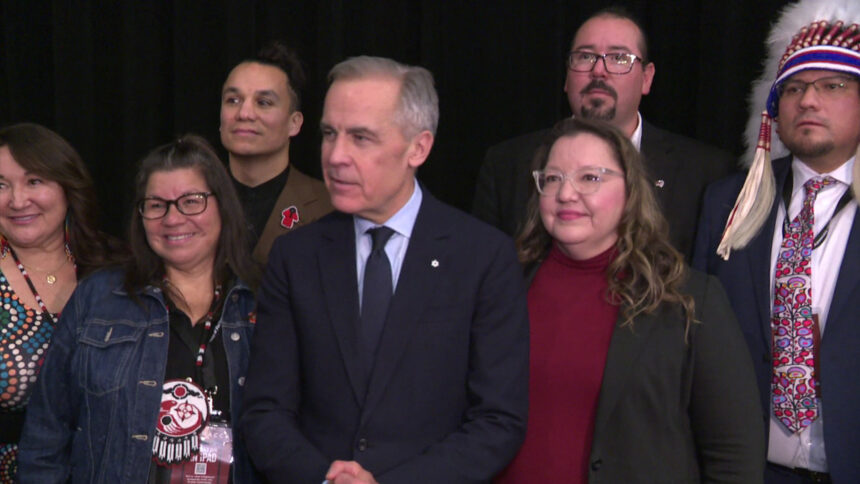
Prime Minister Mark Carney met Wednesday with chiefs representing Treaties 6, 7 and 8 on Parliament Hill, who expressed openness to the idea of pipeline ownership days after Carney signed a memorandum of understanding with Alberta that opens the door to get one to B.C.’s coast. Piikani Nation Chief Troy Knowlton, speaking to reporters outside the door where he and other chiefs met with Carney, said First Nations need a stake in any project proposed on their lands. “We’re not against economic growth or benefits to the region, to our people, to the greater population,” Knowlton said. What he is against is harms to the environment and potential health impacts caused by destruction of the waterways. “But if we’re real co-owners, then the concerns we have, we can ensure that we’re addressing those concerns: environmental health and safety, employment and recognition of the area’s First Nations ancestral places,” said the chief representing a First Nation in southern Alberta. The agreement between Ottawa and Alberta commits the two governments to working toward building an oil pipeline to the West Coast — and opens the door to changes to the coastal tanker ban. It says Ottawa’s commitment is contingent on the pipeline being approved as a project of national interest, and on the project providing “opportunities for Indigenous co-ownership and shared economic benefits.” Despite that vague promise of Indigenous co-ownership, no First Nations leaders were consulted on what the memorandum of understanding would look like — not even those like Knowlton who are open to the idea of one. The meeting between Carney and chiefs came a day after chiefs at the Assembly of First Nations’ special assembly voted unanimously to reject the agreement, and to press the federal government to uphold the coastal tanker ban. Alberta does not have a regional representative at the Assembly of First Nations, and not all chiefs in the province participate in the advocacy body’s functions. Chiefs in B.C. are generally united in their opposition to the removal of the tanker ban, which was passed in legislation in 2019, putting legal teeth behind a non-binding moratorium that had been in place in the region since the 1970s. It bars oil tankers carrying more than 12,500 tonnes of crude oil from stopping or unloading at ports from the northern tip of Vancouver Island to the Alaska border. Carney addressed the Assembly of First Nations gathering on Tuesday, where he tried to quell concerns from chiefs about the agreement with Alberta and his government’s major projects agenda. Energy and Natural Resources Minister Tim Hodgson was scheduled to speak in front of the Assembly of First Nations Thursday, but was pulled from the agenda Wednesday along with National Defence Minister David McGuinty. Hodgson found himself in hot water last week when he brushed off concerns from Coastal First Nations about failing to meet with them before the pipeline agreement was signed with Alberta. “It’s called Zoom,” Hodgson quipped on CBC’s “Power and Politics” when asked about Coastal First Nations president Marilyn Slett’s inability to make the trip to Vancouver on short notice for a meeting. Read More: Neskantaga losing patience as government once again delays tabling of First Nations clean water law He apologized for those remarks, saying on social media it was a “poor choice of words” and offering to meet with the First Nations “at their convenience.” Carney vowed on Tuesday to meet with Coastal First Nations as soon as possible. Chiefs from that province were not invited to meet with Carney on Wednesday. “We don’t have to live like this,” Quisess said. “A lot of developments get benefit from our lands. And here we are suffering for water.” Story by Alessia Passafiume and David Baxter with files from Nick Murray Continue Reading
Carney meets with Prairie chiefs outside Assembly of First Nations gathering


Leave a Comment