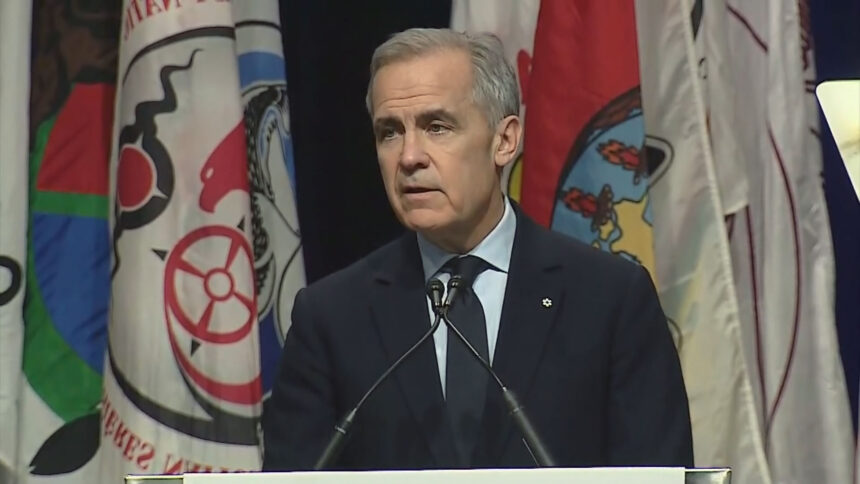
The Assembly of First Nations Special Chiefs Assembly opened this week with a blunt assessment from National Chief Cindy Woodhouse Nepinak, who told delegates the federal government had fallen short on key promises. “What generational investments were included in the budget for First Nations education?” asked Woodhouse Nepinak in her opening remarks. Woodhouse Nepinak also addressed the long-promised water bill—that was expected this fall—that has now been delayed until the Spring of 2026 and several priority files that are stalled. “That silence you hear sounds like Canada’s response. Education is one example. Closing the discriminatory First Nations infrastructure gap is another. First Nations policing, the First Nations Procurement Authority, and the states of emergency that chiefs have called all over the country — all were ignored in this budget. Yet the government still says, ‘Trust us.’” But the national chief also marked one significant win, an agreement securing a First Nations seat at the First Ministers meeting. It was a commitment she has pressed for repeatedly. Prime Minister Mark Carney announced he would grant that wish, on the second day of the assembly. It was Carney’s first appearance at an AFN assembly and his first meeting with chiefs since he called a leaders’ summit last July. When he made the announcement, the reaction in the room was immediate — applause, surprise, and a visible shift in the national chief’s expression as she realized what he was offering. Carney’s remarks drew more applause when he spoke about sharing wealth and advancing co-ownership models. But once chiefs moved to the microphones, the tone changed. Many said Carney still has a long way to go to rebuild trust, pointing to issues such as the federal government’s memorandum of understanding with Alberta that some fear could open the door to a new pipeline. ”Mr. Carney, our title is not a policy issue,” said Terry Teegee, AFN Regional Chief for B.C. “The Assembly of First Nations in assembly here this morning voted unanimously to affirm the North Coast Declaration and reject any proposed pipeline to B.C.’s Coast… Do you respect the direction of the rights and title holders?” Chief David Monias of Pimicikamak Okimawin First Nation (Cross Lake) says trust is still an issue. While Carney has reassured First Nations leaders that projects will not go ahead without their input, that has failed to reassure chiefs. “ Well, what we’re not hearing necessarily (is) involvement. Our full involvement, with respect to our people getting involved in these projects,” Chief David Monias of Pimicikamak Okimawin First Nation (Cross Lake) in Manitoba. “We see the provinces getting involved into partnerships with Canada, but not with First Nations directly. We still have not had consultations with our people at the grassroots level where they approve of this or not. I mean, we are leaders, selected by our membership, right? We’re a sovereign nation, but I take direction from our people.” Bill S-2 amendments to end discrimination face critical Senate vote Tuesday Chiefs grill ministers on major projects and child welfare failures at AFN assembly Carney’s address to AFN stresses building, trust, and First Nations partnership Second Generation cut off Sen. Paul Prosper and ISC Minister Mandy Gull-Masty present different views on how to end the second generation cut-off to chiefs. Alongside the political tensions, one of the most closely watched debates at the assembly centred on Bill S-2 — originally proposed legislation meant to restore status under the Indian Act to a few thousand people who lost it under historic enfranchisement provisions. It was drafted and introduced in the Senate to comply with a B.C. court ruling and faces an April deadline to pass. But senators expanded the scope dramatically. After weeks of testimony at the Senate Standing Committee on Indigenous Peoples, Sen. Paul Prosper introduced amendments that go far beyond the court-mandated fix. His changes would eliminate the second-generation cutoff entirely — a rule that allows someone with 6(2) status to hold legal recognition, but prevents them from passing it to their children unless they partner with another status person. “ It’s gonna happen now. It’s going to happen today. We will wait no longer,” said Prosper to applause from chiefs. The Senate has already passed Prosper’s amendments at report stage, though the bill must still clear third reading in the Senate and three readings plus committee review in the House of Commons. At each stage, the amendments could still be reversed. Indigenous Services Canada Minister Mandy Gull-Masty has cautioned that the Senate may have gone further than the government intended and that broader changes require deeper consultation. ”Everybody in this room, everybody on this panel, including myself, seek and have the will to address the second generation cutoff,” said Gull-Masty. “While I am in this space of being a minister, my pathway is different. I have to uphold the legal and constitutional duty to consult.” The AFN has passed multiple resolutions over the years calling for an end to the second-generation cutoff. They passed another at this assembly, showing support for the passage of S-2. Tags: AFN, C-5, Development, First Nations, Indian Status, Major Projects Office, Mark Carney, Oil and gas, OneCanadain economy law, Ottawa, S-2, second-generation cut off, Special Chiefs assembly, Water Continue Reading
Prime minister faces applause, skepticism at AFN special chiefs Assembly

Leave a Comment