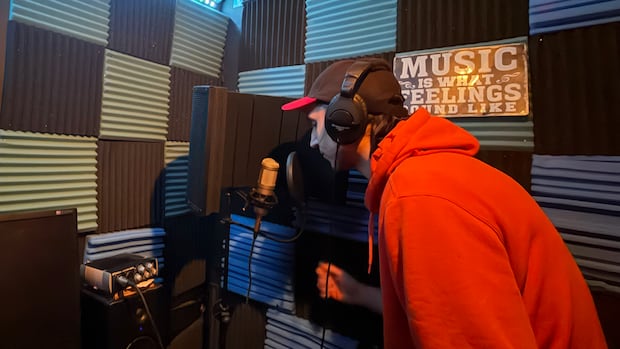
NL One of the only Indigenous rappers in N.L. says he uses the struggles he faced as inspiration for his music. He part of CBC’s radio and web series called Future Ancestors. He told CBC what it took for him to get from where he came from, to where he is now. Mi’kmaw hiphop artist says he uses his past and culture to connect with his audiences. CBC News · Posted: Dec 05, 2025 3:26 PM EST | Last Updated: 5 hours agoListen to this articleEstimated 3 minutesThe audio version of this article is generated by text-to-speech, a technology based on artificial intelligence. (Lauren Ella Burke/CBC)One of the only Indigenous rappers in N.L. says he uses the struggles he faced as inspiration for his music. Growing up on the rez wasn’t exactly easy, said Brandon McDonald, AKA Lil Banjie. McDonald grew up in Miawpukek First Nation, a Mi’kmaw reserve on the island portion of the province. He said back then the reserve, also commonly known as Conne River, felt cut-off and sheltered away from the outside world. “The only thing I knew back then was just ‘on the rez’. It seemed like everybody outside always hated us,” McDonald said. Just a few decades ago, many L’nu in N.L. felt disliked and ashamed just for being Indigenous. ‘Dirty Indians’ was one of the many slurs Mi’kmaw people were often called. Now people are a bit more educated and it’s not quite like that anymore, said McDonald. Growing up in a community that felt disliked and disconnected was just one struggle McDonald said he faced. He started creating music when he was 12 years old and going through a hard time. He uses hiphop as a tool to express himself, he said. “I use music and poetry to release my feelings,” said McDonald. “I got a speech impediment, so I got a hard job talking. So, when it comes to music, it just flows natural.”Creating music has come a long way from when he started, McDonald said. Back in the day, his grandmother’s basement was his studio, YouTube provided the beats, and a LG Rumor cellphone was his mic. Now he works from a studio he built in his shed. He has all the professional equipment needed to create his own instrumentals, record his own vocals, and mix and master it all together. McDonald represents himself as an Indigenous man through his Lil Banjie character. It’s a cartoon of a smiling guy with two thumbs up, he’s wearing an Indigenous ribbon shirt and headdress. (Subbmitted by Brandon McDonald)Lil Banjie is releasing a new album in early 2026, and recently dropped a new single called Different. He said along with his own personal struggles, he also uses his culture as inspiration for his lyrics. On some of his previous albums he has songs about important Indigenous topics. He has one song called The Bigger Picture, it talks about the inhumane treatment children suffered through at residential schools, and the mass unmarked and undocumented graves that were found. He also has a song called FCG that speaks about the discrimination and mistreatment towards Indigenous people by the Canadian government, government entities, religious organizations, and societyIt doesn’t seem like there are many other Indigenous hiphop artists in this province, said McDonald. But the advice he would give to any new rapper, is don’t worry about what people think. “Keep trying until you get your stuff sounding exactly how you want it. It takes practice, and lots of hard work, and dedication,” he said. McDonald grew up on the south coast of Newfoundland Island in Miawpukek First Nation. He said while he’s thankful to have been raised in such a beautiful place, it still was difficult at times. (Submitted by Brandon McDonald)Things have come a long way since the early days of his music career, said McDonald. He now lives in a comfortable home in Conception Bay south, he has a beautiful wife and two brilliant little boys, and he has a fulltime job working offshore as a fisherman that supports his family and music.“Some support me, some say it’s a waste of time,” said Mcdonald. “But, you know, you gotta chase your dream no matter what.”
It wasn’t easy: Lnu rapper shares what it was like growing up in N.L.