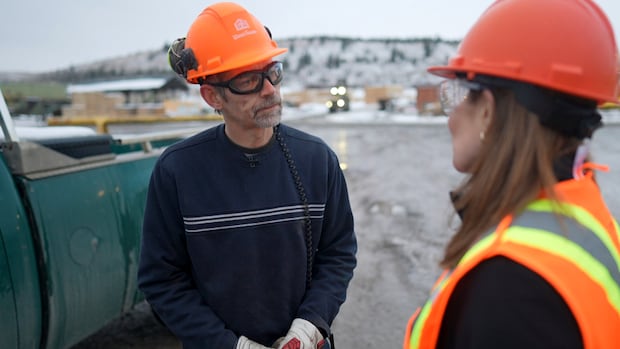
British ColumbiaThe closure of a lumber mill in British Columbia’s South Cariboo has local officials warning the impact will reach far beyond the more than 100 people directly losing their jobs.100 Mile House mayor says she is lobbying for government support, trying to attract new business to community CBC News · Posted: Dec 08, 2025 11:44 PM EST | Last Updated: 3 hours agoListen to this articleEstimated 2 minutesThe audio version of this article is generated by text-to-speech, a technology based on artificial intelligence.West Fraser Timber Co. announced it would shut its mill in 100 Mile House by the end of the year throwing 165 people out of work. The small town of 100 Mile House, B.C., has relied on the jobs from local sawmills for decades, but that last mill is about to close. The National’s Lyndsay Duncombe travelled there to find out how the closure could change the community.The closure of a lumber mill in British Columbia’s South Cariboo has local officials warning the impact will reach far beyond the more than 100 people directly losing their jobs. West Fraser Timber Co. announced it would shut its mill in 100 Mile House by the end of the year, saying it couldn’t reliably access enough economically viable timber either locally or further afield. Its closure will put more than 165 people out of work as a result. The CBC’s Lyndsay Duncombe visited 100 Mile House as the community deals with the closure. “The impact — emotionally, physically, spiritually — when these things happen is very devastating,” said 100 Mile House resident and longtime forestry worker Sven Birkner. B.C.’s forestry industry has taken major hits over the last few years, as escalating U.S. duties on softwood lumber imports have piled atop challenges like a major beetle infestation and wildfires, leading to thousands of jobs lost. 100 Mile House Mayor Maureen Pinkney says she is lobbying federal and provincial governments for cash, and is trying to attract new business to the community of around 2,000 people. She knows other communities are doing the same. “You think things are just perfectly fine and then a major industry just stops,” she said. “But it’s happened to a lot of towns, literally across Canada.”With files from Akshay Kulkarni
Sawmill closure ‘devastating’ to small B.C. community