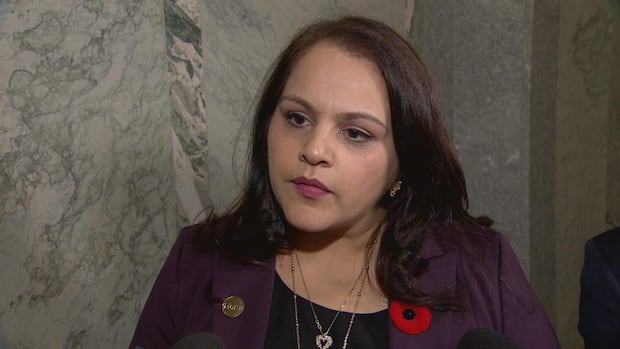
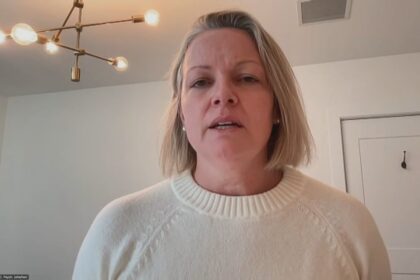
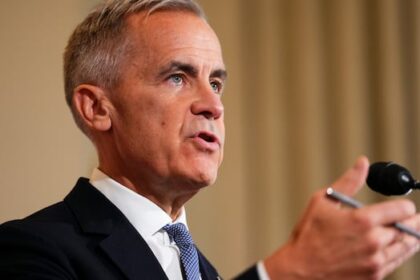
British ColumbiaLeaders of a First Nation on British Columbia’s northern coast met with Alberta’s minister of Indigenous relations on Friday. They say they expressed their opposition to any changes to Canada’s tanker ban needed to service a potential new pipeline.Gitga’at First Nation met with Alberta’s Indigenous relations minister on FridayCBC News · Posted: Dec 08, 2025 5:16 PM EST | Last Updated: December 9Listen to this articleEstimated 4 minutesThe audio version of this article is generated by text-to-speech, a technology based on artificial intelligence.Leaders from a First Nation on B.C.’s North Coast have told Alberta’s Indigenous relations minister they object to any changes to the federal oil tanker moratorium that has been in place along the province’s north coast since 1972, but only formalized in 2019. (Jonathan Hayward/The Canadian Press)Leaders of a First Nation on British Columbia’s northern coast say they met with Alberta’s minister of Indigenous relations on Friday to express opposition to any changes to Canada’s tanker ban needed to service a potential new pipeline.The Gitga’at First Nation says in a statement they met with Minister Rajan Sawhney in the coastal village of Hartley Bay and presented her with scientific and historical evidence affirming there is no proven method for recovering bitumen spills on B.C.’s North Coast, which it says has some of the highest tidal ranges on Earth.Sawhney, speaking with CBC Radio’s Daybreak North on Monday, said it was important to have “early engagement” and that there were “lessons learned from the past” about making decisions before consulting with Indigenous communities that could be affected by proposed developments.But she suggested there was “quiet support” from some Indigenous communities for a pipeline carrying diluted bitumen from Alberta’s oilsands to the coast. Alberta Indigenous Relations Minister Rajan Sawhney told CBC’s Daybreak North that there was “quiet support” for a bitumen pipeline to B.C.’s North Coast among some First Nations. (Richard Marion/Radio-Canada)While concerns about the environment and the possibility of a tanker accident were top of mind, Sawhney told host Carolina de Ryk she also fielded questions about economic development opportunities for their communities.She said she would not divulge which Indigenous communities she spoke with “out of respect and confidentiality.”But, in the Gitga’at First Nation statement, Chief Councillor Bruce Reece said the nation remains opposed to any removal or weakening of the oil tanker moratorium that has been in place for more than 50 years, and the nation will uphold its responsibility to safeguard marine ecosystems.Gitga’at Deputy Chief Cameron Hill says in the statement that the nation’s members source 60 per cent or more of their diet directly from the ocean, and the risk of a spill is too great.WATCH | Number of First Nations express pipeline opposition:B.C. First Nation leaders fear oil spills if new oil pipeline is builtMaureen Nyce, the elected chief councillor of the Haisla Nation, says there’s little Ottawa could do to get her community on side with a new oil pipeline through B.C. That echoes B.C. Energy Minister Adrian Dix who is against a pipeline and says there are better alternatives. Prime Minister Mark Carney and Alberta Premier Danielle Smith signed a memorandum of understanding (MOU) last month on steps that would happen if a private company is found to want to build a pipeline to the northwest coast. There is no private sector proponent that is proposing such a pipeline at this time.The MOU also included the provision for Ottawa to adjust the tanker ban “if necessary.”The plan has faced heavy pushback, particularly from Coastal First Nations who say the project is never going to happen. Last week, the Assembly of First Nations chiefs voted unanimously to call on the federal government to withdraw from the MOU during their annual meeting in Ottawa. “When it comes to approving large national projects on First Nations lands, there will not be getting around rights holders,” AFN National Chief Cindy Woodhouse Nepinak said in her opening remarks to the group of 630 chiefs. WATCH | Why the waters off northern B.C. are considered risky for oil tanker traffic:First Nations, experts warn of catastrophic risk in lifting B.C. oil tanker banA potential new oil pipeline from Alberta to B.C. is shedding light on the dangerous B.C. waters that tankers would have to navigate if it’s built. CBC’s Janella Hamilton dives into the implications and the worries. The federally-imposed ban currently prohibits oil tankers from carrying more than 12,500 metric tons of crude oil, or persistent oil products, in B.C.’s North Coast waters.Although the federal restriction was only formalized in 2019, the moratorium has been in place since 1972. It stretches from the B.C.-Alaska border and Haida Gwaii, all the way south to the mainland coast, across from the northern tip of Vancouver Island. The ban protects the waters of the Dixon Entrance, the Hecate Strait — which separates Haida Gwaii from the mainland — and the Queen Charlotte Sound.WATCH | Assembly of First Nations votes to uphold tanker ban:AFN adopts emergency resolution to uphold oil tanker ban A Special Chiefs Assembly of the Assembly of First Nations has adopted an emergency resolution tabled by B.C. First Nations leaders to support upholding the current oil tanker ban on the B.C. coast. There is also a voluntary tanker exclusion zone, in place since 1985, stretching about 100 kilometres from the west coast of Haida Gwaii. British Columbia’s NDP-led government has also express its opposition to changing the moratorium. Premier David Eby co-signed a declaration last month, along with coastal First Nations, urging Ottawa to keep the moratorium in place. With files from CBC Daybreak North, Carolina de Ryk, Shaurya Kshatri, Nick Logan and The Canadian Press
First Nation leaders in B.C. tell Alberta minister they’re against changes to tanker ban