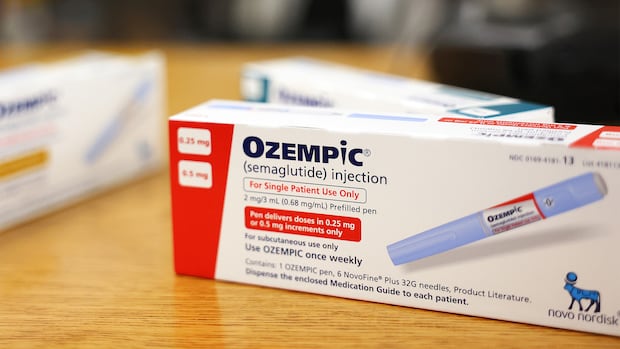
PEIAs the World Health Organization conditionally recommends the use of GLP-1 medications to treat obesity, a Halifax-based expert says the change likely won’t bring immediate improvements for Prince Edward Islanders.Only 20% of Canadians have access to these medications through insurance, says nurse practitionerThinh Nguyen · CBC News · Posted: Dec 07, 2025 5:00 AM EST | Last Updated: 5 hours agoListen to this articleEstimated 5 minutesThe audio version of this article is generated by text-to-speech, a technology based on artificial intelligence.The World Health Organization on Monday issued its first guideline on the use of GLP-1 therapies for obesity, conditionally recommending them as part of long-term treatment for the condition. Ozempic (semaglutide injection) is one of two GLP-1 medications currently listed under P.E.I.’s drug programs, and requires special authorization for the treatment of type 2 diabetes. (Mario Tama/Getty Images)As the World Health Organization conditionally recommends the use of GLP-1 medications to treat obesity, a Halifax-based expert says the change likely won’t bring immediate improvements for Prince Edward Islanders.The WHO on Monday issued its first guideline on using GLP-1 agonists as part of long-term treatment for the condition. The class of medications includes drugs sold under brand names like Ozempic, which were previously reserved for type 2 diabetes.It’s big news for people like Kara Evers, the nurse practitioner and co-ordinator of the Halifax Obesity and Bariatric Surgery Clinic — a program that Islanders may be referred to for treatment off-Island.“It’s important in a number of different ways. It continues to shine a light on obesity as a chronic disease,” Evers told CBC’s Island Morning.“This is going to become an epidemic. One in three Canadians are currently living with obesity, and in 10 years, that number is going to change to about 50 per cent, so this is really an opportunity for policymakers to take action.”LISTEN | WHO conditionally recommends GLP-1 drugs for obesity:Island Morning9:58WHO conditionally recommends GLP-1 drugs for obesityThe World Health Organization has released its first guideline on prescribing GLP-1 medications for obesity treatment. Kara Evers, a nurse practitioner and the co-ordinator of the Halifax Obesity and Bariatric Surgery Clinic, joins us to unpack what this means.The WHO’s first conditional recommendation advises the use of GLP-1 drugs by adults, except pregnant women, for long-term obesity treatment, while the second suggests interventions like a healthy diet and physical activity to be offered alongside the medicines.Evers says these medications have gone through long-term studies and have been proven safe and effective.But she stressed that it’s crucial to ensure that “these drugs are prescribed by qualified prescribers and that there’s appropriate follow-up and advice that goes along with these medications.”Access barriers remainWhile the WHO decision is encouraging, Evers said access remains a major hurdle for many Islanders, and for Canadians in general.She said only about 20 per cent of Canadians can access GLP-1 medications through insurance.Evers said the Pharmacare program in the majority of provinces, including in Atlantic Canada, does not cover the cost of GLP-1 drugs for obesity because it has not yet been recognized as a chronic disease.“We are advocating within Canada for coverage of these. Obesity Canada is leading that charge,” she said.“And hopefully the World Health Organization and their declaration is one more united voice, a global voice to get these medications recognized, covered and more readily accessible to those who need them.”People need to move away from calling GLP-1 drugs weight-loss medications and instead call them medications for obesity, which gives them an accurate medical context, says Kara Evers. (Nova Scotia Health)In a statement to CBC News, P.E.I.’s Department of Health and Wellness said GLP-1 drugs are not covered for weight loss under the province’s drug programs.It said Ozempic (semaglutide injection) and Rybelsus (oral semaglutide) are the only GLP-1 medications currently listed, and these require special authorization for the treatment of type 2 diabetes.“P.E.I. follows national review processes before listing medications on our formulary. Currently, no GLP-1s for the indication of weight loss have successfully completed this national review process,” the statement reads.“The government of P.E.I. recognizes obesity as chronic disease and remains committed to reviewing our formulary as new products complete national processes. Our goal is to ensure Islanders have access to the most effective coverage while maintaining the sustainability of our drug programs.”GLP-1 drugs can help prepare for surgeryEvers says using GLP-1 medications can be beneficial in conjunction with bariatric surgery — a procedure that reduces the size of the stomach to help those with obesity manage their weight and overall health.“We have a relatively long wait time access to obesity care and bariatric surgery,” she said.“It’s poor in the Atlantic provinces, and P.E.I. is a fantastic example of that. Unfortunately, there is no established bariatric surgery program on the Island at present.”WHO backs GLP-1 medications to treat obesityThe World Health Organization has backed GLP-1 medications for the treatment of obesity, which some advocates hope will open up access for those in need. The drugs — sold under brand names such as Ozempic and Wegovy — are already wildly popular in North America.She added that her clinic in Nova Scotia is small and under-resourced, yet serves patients across that province and on P.E.I. as well.For some people, GLP-1 medications may be a lifelong treatment. For others, Evers said the drugs can be a key stepping stone to get approval for — or prepare for — bariatric surgery when their initial body mass index (BMI) puts them outside surgical safety parameters.“Sometimes we have a person who’s living with a higher BMI… and that medication might make the difference for that patient receiving bariatric surgery or not,” she said.Stigma around medications still strongEvers says more education is needed to address misconceptions about obesity and the medications used to treat it.A number of high-profile celebrities have recently unveiled dramatic weight changes, oftentimes linked to drugs like Ozempic, drawing public criticism that Evers says is rooted in long-standing stigma.“There’s no more polarizing topic than weight, and a woman’s weight in particular. You know, there’s been a bit of ‘Damned if you do, damned if you don’t.’ ‘You’re too big. Now you’ve taken the easy way out and now you’re too thin,’” she said.“Why are we making these comments in this day and age? I think it would be helpful if there was some kind of acknowledgement that these are people that are living with a disease, and they’ve taken a treatment for that disease, and there is no shame in that they’re improving their overall health.”Evers said people need to move away from calling GLP-1 drugs “weight-loss medications” and instead call them “obesity medications,” which gives them an accurate medical context.ABOUT THE AUTHORThinh Nguyen is a digital reporter with CBC P.E.I. He can be reached at thinh.duc.nguyen@cbc.caFollow Thinh Nguyen on XWith files from Island Morning
WHO backs GLP-1 meds to treat obesity, but many Islanders can’t access them