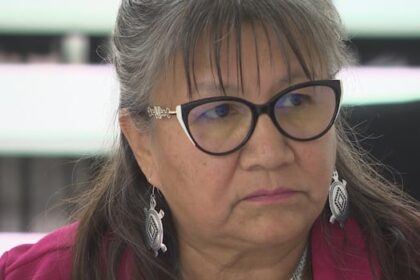
The First Nation of Na-Cho Nyäk Dun is suing the territorial and federal governments for $150 million, accusing it of negligence in the Eagle mine disaster and failing to uphold its treaty rights. A statement of claim was filed in Yukon Supreme Court on Dec. 9. It names Canada as a defendant, noting it’s a treaty partner to the First Nation’s final agreement and responsible for the protection and management of fish and fish habitat. Chief Dawna Hope told APTN News on Wednesday the legal action is “long past due.” “We’re still grieving this disaster,” she said. “This catastrophe could have been prevented, and our citizens – they can’t even trust the land anymore and exercise their rights within this area.” A heap leach failure at the Eagle mine last summer near the community of Mayo in northern Yukon released hundreds of millions of litres of cyanide-contaminated solution from its containment area. Some of the material escaped into the surrounding environment on Na-Cho Nyäk Dun’s traditional territory, contaminating groundwater and a fish-bearing creek. “It’s destroyed our fishery, our grayling fishery, and any hope for any return of salmon in that area,” Hope said. “We’re concerned that our grandchildren won’t even know what salmon look like in the water.” Hope said her First Nation feels there’s been little accountability since the disaster took place, especially from the Yukon government, the mine’s regulator. She said citizens chose to move forward with a lawsuit at its general assembly earlier this summer. Hope said as signatory to its final agreement, the government has a duty to co-manage the First Nation’s lands and resources. “We’ve had enough,” she said. “Yukon fails to work with us, as our treaty requires.” Read more: From mining reform to school board funding – here’s what Yukon community leaders want from the next territorial government Na-Cho Nyäk Dun and Yukon sign agreement for land-use plan The lawsuit also accuses the government of failing to develop a land-use plan for nearly half of its traditional territory. A land use plan helps provide certainty for First Nations and governments by allocating how land and resources in a specific area should be used and protected, including areas where resource development can take place. Despite entering into a memorandum of understanding to start land use planning earlier this summer, the statement of claim says the process will take years – if not decades – to complete. Hope said the First Nation has been waiting for a completed land use plan for over 30 years since its final agreement was signed. “These tools were supposed to usher in a new era of co-governance, but 30 years later, we’re still waiting for that era to begin,” she said. “These promises have been broken.” First Nation of Na-Cho Nyäk Dun Chief Dawna Hope. Photo: Jordan Haslbeck The lawsuit asks for a temporary ban on new mineral staking on its territory until either a land use plan is completed, mutually acceptable interim protections are put in place or the lawsuit reaches a conclusion. “If we don’t make changes now there’s not going to be anything left for our future generations, and we won’t have anything left to help us uphold our culture, our language and our ways of living on the land,” Hope said. Tim Kucharuk, a spokesperson with Yukon’s cabinet communications, said in a written statement it was aware of the lawsuit and is reviewing the statement of claim. “We remain committed to working respectfully with the First Nation of Na-Cho Nyäk Dun on priorities critical to our government-to-government relationship,” he said, noting it hopes to meet with the First Nation in the new year. This marks the second lawsuit filed in less than a week by a First Nation against the territorial government. The Tr’ondëk Hwëch’in First Nation is also suing the territory over alleged treaty rights violations. Continue Reading
First Nation of Na-Cho Nyäk Dun files $150M lawsuit over Eagle mine failure



Leave a Comment