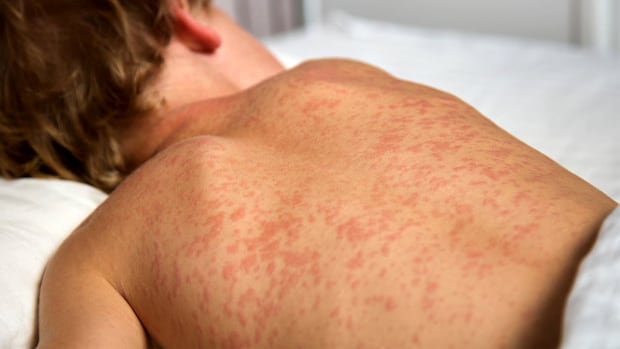
ManitobaManitoba health officials are warning the public about eight new confirmed measles cases and one probable case reported in the first week of December.278 confirmed measles cases, 23 probable cases reported in province since FebruaryLauren Scott · CBC News · Posted: Dec 12, 2025 1:39 PM EST | Last Updated: 1 hour agoListen to this articleEstimated 4 minutesThe audio version of this article is generated by AI-based technology. Mispronunciations can occur. We are working with our partners to continually review and improve the results.The characteristic measles rash typically appears several days after initial symptoms. (Aleksandr Finch/Shutterstock)Manitoba health officials are warning the public about eight new confirmed measles cases and one probable case reported in the first week of December.There have been a total of 278 confirmed measles cases and 23 probable cases reported since February, provincial data shows. The data was updated on Friday and covers up to Dec. 6So far this year, there have been 5,298 measles cases — 4,926 confirmed, 372 probable — reported across Canada, federal health data says. On Friday, Manitoba Health said there’s a new measles exposure site at an emergency room in Steinbach. Anyone who was at the Bethesda Regional Health Centre ER on Dec. 9 from 1:25 p.m. to 4 p.m. is asked to monitor symptoms until Dec. 31, a news release said Friday. Earlier this week, officials said members of the public also may have been exposed to measles at several locations in the Winkler area, about 100 kilometres southwest of Winnipeg, including an emergency department and a school. Anyone who was at Garden Valley Collegiate in Winkler on Nov. 26 from 8:25 a.m. to 3:10 p.m. should monitor for symptoms until Dec. 18, officials said in a news release Monday. Members of the public who were there on Nov. 27 from 8:25 a.m. to 3:10 p.m. should monitor for symptoms until Dec. 19.People who were at the Boundary Trails Health Centre’s emergency room last week may have also been exposed to measles, the province warned. Anyone who was at the emergency room on Dec. 2 from 6:25 p.m. to 10:10 p.m. should monitor symptoms until Dec. 24. Those who were there on Dec. 3 from 9:20 p.m. to 11:59 p.m. should monitor symptoms until Dec. 25. And people who were at Boundary Trails on Dec. 4 from midnight to 2:40 a.m. should monitor symptoms until Dec. 26.On Tuesday, health officials warned of two more exposure sites in southern Manitoba. Anyone who was at the C.J. Dyck Arena in Plum Coulee, about 90 kilometres south of Winnipeg, on Nov. 29 from 12:30 to 4:15 p.m., should monitor for symptoms until Dec. 21, the province said. People who were at the Gospel Mission Church in Winkler on Nov. 30 from 9:45 a.m. to 1 p.m. should monitor until Dec. 22, officials said.Measles is a highly infectious disease that spreads through droplets formed in the air when someone coughs, sneezes or talks. The virus can linger in the air for two hours, so even a few minutes in the same space as a sick person puts you at risk of infection. Symptoms of measles generally appear one to three weeks after exposure and may include a fever, runny nose, drowsiness and red eyes. Small white spots may also appear on the inside of the mouth or throat.The characteristic rash typically appears several days after initial symptoms.The disease can also lead to complications, including ear infections, diarrhea, pneumonia and brain inflammation. Manitoba Health said immunization is the only way to protect people from contracting measles. Nearly nine in 10 reported measles cases in Manitoba since February involved people who didn’t receive a single dose of the vaccine, provincial data says. Anyone who may have been exposed to measles is encouraged to check their immunization records and ensure they are up to date with the measles vaccine (MMR or MMRV).A two-dose vaccine program for measles, mumps, rubella and varicella (chickenpox) is routinely provided in Manitoba for children after they turn one and again from age four to six. If a child is exposed to measles, a second dose can be given earlier.ABOUT THE AUTHORLauren Scott is a Winnipeg-based reporter with CBC Manitoba. They hold a master’s degree in computational and data journalism, and have previously worked for the Hamilton Spectator and The Canadian Press.
8 more confirmed Manitoba measles cases reported in 1st week of December