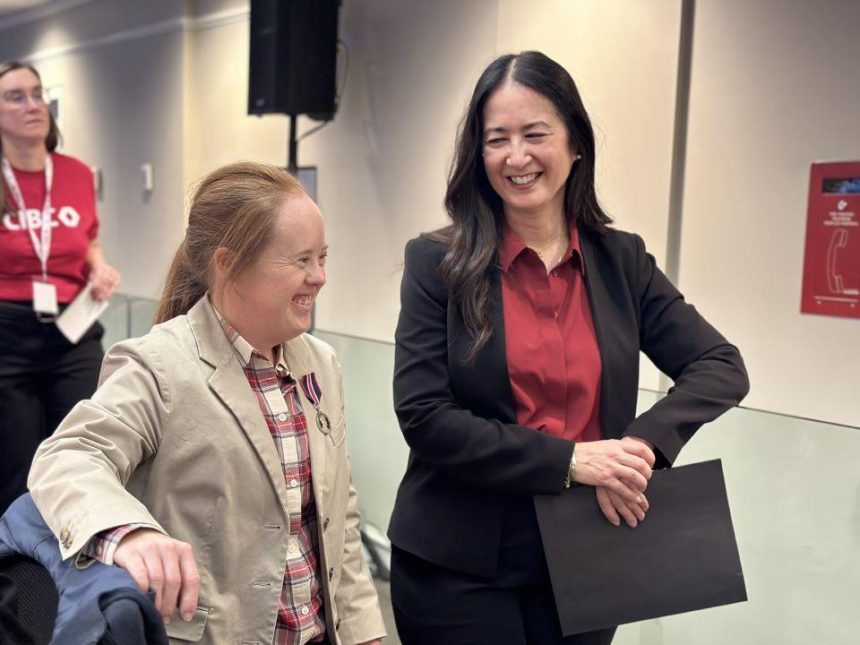
Published 8:12 am Tuesday, August 25, 2026 By William Koblensky Varela Local Journalism Initiative Northern News Service When Gail Hamamoto first became the CEO of Special Olympics Canada three-years-ago, she noticed that every province and territory had a chapter, except Nunavut. The work to start a chapter in Nunavut began over a year ago. “We’re actively trying to seek funding support from sponsors, government or foundations to try to help establish a chapter in the territory,” Hamamoto said. That funding will go towards training coaches, building teams of disabled and non-disabled athletes together around Nunavut and providing transportation for athletes to take part in competitions and training camps. Athletes of all ages with physical, intellectual and developmental disabilities are welcome at Special Olympics Canada. The organization currently has 19 sports at its summer and winter games, but Hamamoto wants athletes with disabilities to play Inuit games as well. “I don’t see a world where Special Olympics Canada goes in there and says we want to start a program, we want to access this facility. It really it looks like working with the local sport club to say, ‘How can we help you provide opportunities to people with disabilities in your community? How can we work together to do that?’” she said. The organization is a non-profit, and when a Nunavut chapter is established, Special Olympics Nunavut could apply for its own funding. This October, Special Olympics Canada will begin training disability workers at the Recreation and Parks Association of Nunavut (RPAN) conference on how to become coaches in sports. That training will include offering coaching for people with intellectual and developmental disabilities. Access to healthcare is among the benefits for disabled athletes with Special Olympics Canada, Hamamoto explained. “Athletes could have their eyes checked by optometrists and have prescription glasses created for them free of charge and then sent to them once they return home,” she said as an example. “Athletes could have their hearing checked. They could have a dentist look at their oral health. They could have a podiatrist look at their feet. They got health training and training in mental health, in nutrition.” The organization has 4,000 health specialists to visit athletes in their communities or at events and training camps. “My great hope would be that folks across Nunavut who have a disability have really quality access to sport and recreation… and that the coaches that are providing opportunities to them are fully trained,” Hamamoto said. So far, she has worked with the the Government of Nunavut’s Sport and Recreation Division and RPAN to build the chapter. She visited Nanook Elementary School when she was in Iqaluit and went to the Arctic Winter Games in Whitehorse to build support for a future Nunavut chapter. “We’ve had really wonderful support from Special Olympics Yukon and Special Olympics Northwest Territories, who are really interested in helping establish a chapter for Special Olympics Nunavut,” Hamamoto said. There has never been a Nunavummiut athlete at the Special Olympics Canada Summer or Winter Games, to her knowledge. One day, that could change. “Could we see a team Nunavut at our Special Olympics Canada Winter Games or Canada Summer Games? I would love nothing more than our national games to have a team from Nunavut,” Hamamoto said.
Special Olympics Canada on three-year path to opening Nunavut chapter