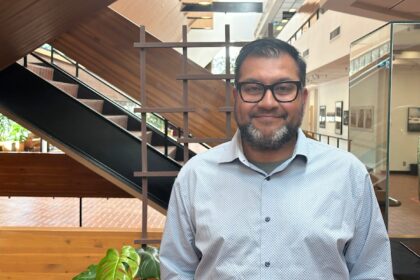
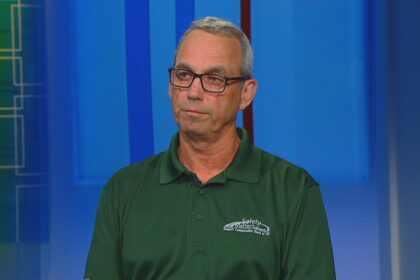
Dene leaders passed resolutions on education and child welfare at the 56th Dene National Assembly, calling for more stable school funding, stronger language and land-based learning programs, and greater First Nations involvement in decisions affecting Dene children and families. The education resolution, presented by Chief Elizabeth Wright of the Tetlit Gwich’in Band Council, called for multi-year funding, additional student support, and improved teacher recruitment and retention. “Education is a treaty right. That promise has never been fully kept,” Wright told delegates. Figures presented at the assembly highlighted persistent and significant gaps in educational outcomes for Indigenous students in the Northwest Territories. Wright said students in smaller communities face barriers that extend beyond the classroom, including overcrowded housing, inadequate teacher housing, limited course options and frequent teacher turnover. “Our smaller communities are set up to fail and that’s a huge statement,” she said. Some schools rely on multi-grade classrooms and online courses because of staffing shortages, Wright explained. High teacher turnover also makes it harder for educators to build relationships with students and understand their backgrounds. “Many of our students don’t have the curriculum or the funding to deliver real instruction in emerging for our language and our culture and our schools,” Wright said. She said programs often receive funding for individual projects before having to apply again, rather than having the certainty of longer-term support making it difficult to provide critical on-the-land learning. “What we are asking is that our schools receive multiple on the land immersion,” she said. For Wright, passing the education resolution was only the first step. She urged leaders to bring the work back to their communities and collaborate with schools and education councils to identify needs and secure support. “I want to, on my part, really support the education resolution going back into my community to work with the schools, to work with the education councils, and to ask them, how can we help?” she said. Roy Erasmus Sr., a longtime counsellor and educator who spoke as a delegate with the Yellowknives Dene First Nation, said that problems arise long before students reach high school and that many children in smaller communities are already behind academically when they begin Grade 1. Erasmus told delegates that figures presented at the assembly showed only about one in five students in smaller communities were meeting expected benchmarks by Grade 1. He also cited attendance rates of about 60 per cent, meaning students were missing school roughly two days a week.. “Everybody gets pushed ahead with their same age kids to get moved up. The first time they have to pass something is in grade 10,” Erasmus said. Margaret Ireland, an Elder from Tthets’ek’ehdeli – Jean Marie River spoke on behalf of Dehcho First Nation, and questioned whether teachers had the capacity to support students from remote communities. “I don’t think there are teachers educated enough to deal with children who have all these challenges,” Ireland said. “I think they are just being pushed ahead to be pushed out.” Chief Kele Antoine of Łı́ı́dlı̨ı̨ Kų́ę́ First Nation said education cannot be separated from health and wellness. He called for more qualified counsellors in schools to assess students’ needs and work alongside educators. “Education, health and wellness are all interconnected, you know that is our Dene worldview everything is interconnected,” Antoine said. “Our schools need these qualified counsellors to help our youth and make these assessments for services and work along educators to help them to deal with the struggles they are facing because a lot of that burden is placed upon them and that is not fair.” Throughout the three day assembly, conversations naturally flowed in and out of topics, but always came back to thinking about the next generation. The issue of child welfare reform was another agenda item, with delegates calling for greater First Nations involvement in decisions about children taken into care and more support to keep families together. Jennifer Drygeese, who heads the wellness division for the Yellowknives Dene First Nation, said Indigenous representatives need to be involved whenever children are apprehended by child and family services. “They [child and family services] treat our people not good, it’s really, really bad,” she said in her comments to the assembly. “We have to go in and ensure that, you know, our people are being represented. She said a lack of notification when children are taken into care prevents First Nations from advocating for families and contributing to care plans. “When our children are also apprehended, we’re not receiving any notifications, which is really, really concerning,” she said. Drygeese provided the example of First Nations in provinces, such as Ontario, British Columbia and Alberta, who receive notifications upon child involvement with the system and therefore can better contribute to care planning. She also stressed the importance of reunification with parents or extended family wherever possible, and called for training to help First Nations representatives understand their legal obligations and advocate effectively for families. “When children are apprehended, the longer they’re away from their families, it’s really hard to reunite them,” she said. Read More: Dene Nation establishes water council as leaders warn of tar sands tailings risks Part of the resolution included creation of a framework to develop a Dene child and family services law. The resolution identifies First Nations representation in child welfare decisions and immediate, consistent notification when children are apprehended as priorities. It also emphasizes maintaining children’s connections to their nations, languages and traditions. It calls for a working committee with representation from every Dene region and for federal child welfare funding to flow directly to First Nations to support prevention, staffing and legal advocacy. Together, both resolutions reflect calls for Dene governments to have a greater role in the systems shaping their children’s lives, from education and access to support services to decisions about family care. Continue Reading
Dene leaders push for education reform and greater control over child welfare



Leave a Comment