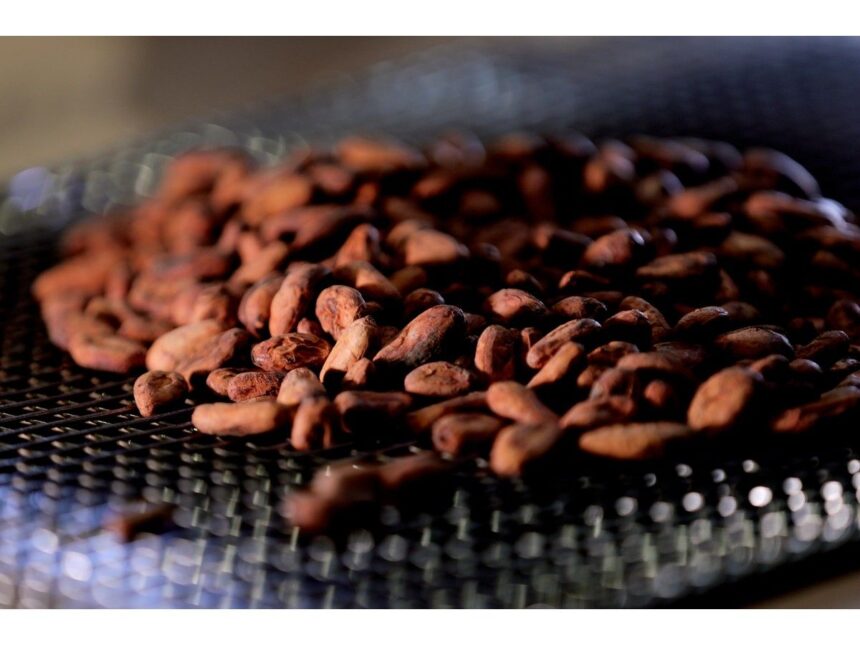
Article content Cocoa beans. Photo by David Bloom /PostmediaArticle contentThat volatility is no small factor in his business plan. As recently as 2022, the annual average price for a tonne of cocoa was $3,381, but that basically tripled in 2024 and 2025. At one point in December 2024, the cost for a tonne peaked at $18,457.Article contentThe market has since stabilized somewhat, with the current price standing at $8,333 per tonne. But Cavanagh is banking on continued unpredictability as his way to push farther into the marketplace with Kaffika, which he says RFINE can produce and sell for roughly 40 per cent less than the current price for traditional cocoa.Article content“There’s this big push in the food manufacturing industry right now to identify alternatives,” said Cavanagh, who is the company president and director.Article content“The outlook for cocoa is very bleak. We work with some of the largest food manufacturing companies in the world that deal with cocoa at the commodity and farm level. And the reality is, the issues that they’re having in growing it are persisting. And with a super El Nino coming in the pipeline, the industry is just a mess.Article contentArticle content“So it’s in short supply, and quality has reduced dramatically, as well. It’s all just gotten very volatile. And it’s not just that it’s expensive; it’s sometimes hard to come by. If you’re a local bakery in Nova Scotia, you might not even be able to get enough cocoa powder for your chocolate offerings, let alone at the lowest price. And the price moves around week to week.”Article content Cocoa beans, later made into organic chocolate, on the Island of St. Lucia. Photo by Veronica Henri /Toronto SunArticle contentThe second pillar of Cavanagh’s endeavour is at the environmental level. He says on his company website “more than 11 million tonnes of spent coffee grounds are generated worldwide annually — that’s 3,000 tractor-trailer loads. If landfilled, that volume creates nearly 9.8 million tonnes of CO2e (carbon dioxide equivalent) emissions.”Article content“So it’s a couple things,” he said. “One, from avoiding it going to the landfill and doing something better with it, whether it’s soil amendment, animal bedding, or our cocoa extender, we see a 99 per cent greenhouse gas emissions reduction by not having it go to landfill and not having it anaerobically decompose and produce methane. That’s really the key greenhouse gas that we’re avoiding by giving it a second life. Methane is a potent greenhouse gas that’s very harmful for the environment.Article contentArticle content“Why the cocoa extender is that much more exciting and sustainable is our customers now use less cocoa. Cocoa is a very carbon-intense ingredient. It’s, again, riddled with not just carbon sustainability issues but ethical challenges, forced labour — you name it. It’s just a dirty, dirty crop and commodity that really needs some alternatives. So we’ve got low-cost, sustainable and ethical alternatives in that regard. ”Article contentCavanagh first started work on the venture in 2021 while he was still a Dal student and incorporated the company a year later. Since graduating in 2024, he’s been ramping up operations and is pushing forward with patents and approvals.Article content“It’s going the best it ever has,” he said.Article content“It’s been a long, hard road of (research and development) and scale-up work. I see this type of business having three key milestones, the first one being supply. Do you have enough of this raw material to justify a business case? That was a big focus from 2022 to, basically, 2024. How can we get enough of this stuff in the quantity, quality and consistency we need to make a food improvement? That’s where we leaned into onboarding these big factories, which we got under our belt.
Nova Scotia company pioneers method of turning used coffee grounds into valuable cocoa alternative