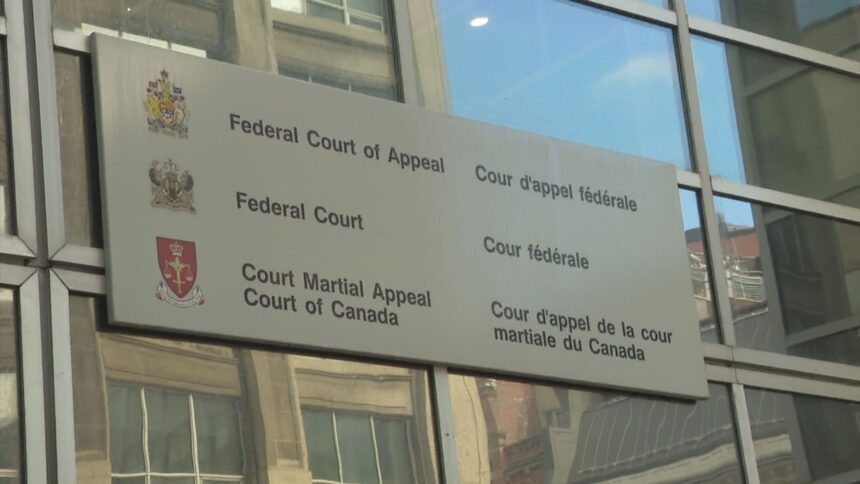
The Federal Court of Appeal has rejected Kebaowek First Nation’s demand to have the approval of a low-level nuclear waste facility located west of Ottawa revoked. The court also ruled that the Canadian Nuclear Safety Commission (CNSC), is not required to consider the United Nations Declaration on the Rights of Indigenous Peoples (UNDRIP) when making a decision about the project. The court handed down its judgment Friday and comes as a setback for Kebaowek in its fight to stop the project. This decision is the latest in a twisting series of legal moves between Kebaowek First Nation (KFN), an Algonquin Anishinaabeg community in western Quebec roughly five hours north of Toronto, and the federal nuclear regulators as well as nuclear operator CNL. How we got here Established in 1944 about 200 kilometres northwest of Ottawa, Chalk River Laboratories is famous for research that led to the development of the CANDU (CANada Deuterium Uranium) reactor, one of the most efficient and safe nuclear reactors ever created, according to officials in the industry. The site was eventually absorbed into Atomic Energy Canada, a Crown corporation that contracts out to a company called Canadian Nuclear Laboratories (CNL) to operate it. Kebaowek said the issue is that CNL is currently in the midst of a government-funded $1.2-billion facelift. Before it can transform the current site into a state-of-the-art nuclear campus, it must do something with nearly 80 years of radioactive waste. That’s the Near Surface Disposal Facility (NSDF). The proposed site will hold about one million cubic tonnes of waste and will be about the size of 32 football fields. The CNSC initially approved the NSDF for low-level radioactive waste in January 2024, and the next month, KFN filed for a judicial review of the approval in Federal Court. In February 2024, Justice Julie Blackhawk — a member of the Mohawks of Bay of Quinte Nation and the first Indigenous woman appointed to the Federal Court — partially granted the judicial review. Justice Blackhawk said that since Parliament had adopted UNDRIP into law through the federal UNDRIP Act, 2021, known as the UNDA, demands on administrative tribunals like the Canadian Nuclear Safety Commission to meet the duty to consult and accommodate (DTCA) had increased. The CNSC initially found it did not have the jurisdiction to apply the UNDA to its functioning, so did not consider UNDRIP in the process of seeking to consult with First Nations potentially affected by the waste site. Blackhawk found the CNSC had erred in not applying UNDA to their process of consultation, and also erred in determining the Crown had fully carried out its duty to consult. Accordingly, the Federal Court sent the matter back to the CNSC, finding it had additional obligations based on UNDRIP it had yet to resolve. The Federal Court did not, however, cancel the CNSC’s approval of the NSDF site outright. The Federal Court of Appeal ruling Today’s ruling is the product of CNSC’s demand that the court dismiss (“set aside”) the Federal Court’s decision. At the same time that CNSC appealed, KNF also counter-appealed with a demand that the original CNSC approval of the waste site be scrapped. Friday’s decision by Federal Court of Appeal Justice Wyman W. Webb (supported by Justices K. A. Siobhan Monaghan and Justice Panagiotis Pamel), dismisses the KSF’s counter-appeal, and grants the CNSC’s appeal to set aside the Federal Court demand that CNSC fulfill additional UNDRIP obligations. Webb writes that though it did not do so according to UNDRIP, the CNSC carried out its duty to consult with KFN according to existing guidelines. He writes that he found “the Commission’s finding that the waste site is not likely to cause significant adverse environmental effects was reasonable.” Webb adds, importantly, that “Kebaowek, in this appeal, does not assert that the Commission erred in making this finding.” Noting that the current storage facility for the low-level radioactive waste is old and the current practices for storing low-level waste are ineffective, Webb writes that “while proceeding with the NSDF will not cause significant adverse environmental impacts, not proceeding with the NSDF and continuing to store the LLW in the existing sand trenches may have adverse environmental impacts.” No UNDRIP obligation The most potentially consequential portion of the court’s judgment is the finding that UNDA, which made UNDRIP part of Canadian law, did not retroactively apply UNDRIP to existing Canadian laws with which it conflicted. “There would be no need to implement into Canadian law any of the articles in UNDRIP that are already part of the laws of Canada,” writes Webb in his decision. “The issue is whether the articles that are inconsistent with existing Canadian laws have been implemented.” He said existing case law suggests that UNDRIP does not have the power to prevail over the laws of Canada which are inconsistent with the Declaration. Instead, Webb writes, the UNDA calls upon the Government of Canada “to take measures to ensure that the laws of Canada are consistent with UNDRIP. These provisions contemplate future action, not an immediate implementation of the articles as set out in UNDRIP into Canadian law.” Consequently, the Federal Court of Appeal found the CNSC, in approving the NSDF for construction, “is not the Government of Canada for the purposes of resolving any inconsistency between the articles of UNDRIP and the laws of Canada.” In short, the court found the CNSC had no obligation to attempt to harmonize its approval of the NSDF with UNDRIP. Disappointment: Kebaowek councillor Immediately following the decision, KFN Councillor Justin Roy was frank. “I’m a little bit emotional right now,” he told APTN News. “I didn’t have the best sleep last night in anticipation of waiting for the decision to come out today. And then now just dealing with it. It’s certainly weighing heavy. We’re deeply disappointed with the Federal Court of Appeal decision.” He framed the decision as a major setback for First Nations across Canada who had been looking at the UNDA as a meaningful step forward in recognizing, implementing and respecting First Nations rights. “That’s clearly not the case with this decision that came out,” he said. Nonetheless, Roy said he wasn’t fully surprised, considering changes to Canada’s political landscape since the election that made Mark Carney prime minister. “With the passing of C-5, the One Canadian Economy Act, and then now with the Bill C-39, Building Canada Strong Act, there’s been a huge shift away from respect and moving things forward for First Nation peoples in Canada, and it just seems like that appetite is no longer there,” he said, adding the decision would please government and industry. “It’s more in line with ‘Let’s build a stronger Canada and reap the natural resources of First Nation territories and completely disregard respecting their rights to those territories.’” Questioning the foundations of the ruling Roy had questions about the text of the decision, beginning with Justice Webb’s determination that the UNDA did not retroactively apply UNDRIP to existing Canadian law. “In the Supreme Court of Canada’s decision on [an Act respecting First Nations, Inuit and Métis children, youth and families], they stated that UNDA is a part of Canadian law. But now you have this new Federal Court of Appeal decision coming back and basically saying, ‘No, it’s not part of Canadian law.’ “If they said it’s part of Canadian law, how can a Federal Court of Appeal go against that?” Roy also took issue with the Court’s ruling that the CNSC ““is not the Government of Canada.” “It just doesn’t make sense,” he said. “It is Canada’s nuclear regulator. It has ‘Canadian’ in the name. They’re empowered by Parliament. How can we say they are not part of the government of Canada? To me, there’s no more black and white. They are a part of the government of Canada. But I guess in the eyes of the FCA [Federal Court of Appeal], they’re not.” This decision by the Federal Court of Appeal is serious, Roy acknowledged, and leaves Kebaowek’s leadership with only two options: either accepting the decision and admitting defeat, or fighting on to the Supreme Court. “If it was my decision, for Justin Roy, I could make it,” Roy said, “‘We’re pushing this all as far as we can, because we know it’s the right thing to do.’ But in saying that, it just came out.” Roy said emotions were high among Kebaowek leaders and no one had yet had the time to review the judgment in detail. At the same time, he noted that in order to attempt to appeal the case to the Supreme Court, they’ll need to begin work immediately. “We’re going to feel bad for ourselves today,” said Roy. “We’re going to rest up over the weekend, reflect, and come back on Monday, ready to pick this thing up, decide on next steps and remain committed to this fight. It’s the only thing we can do at this time.” With files from Tom Fennario Continue Reading
Federal Court of Appeal hands Kebaowek defeat on challenge to nuclear waste dump


Leave a Comment