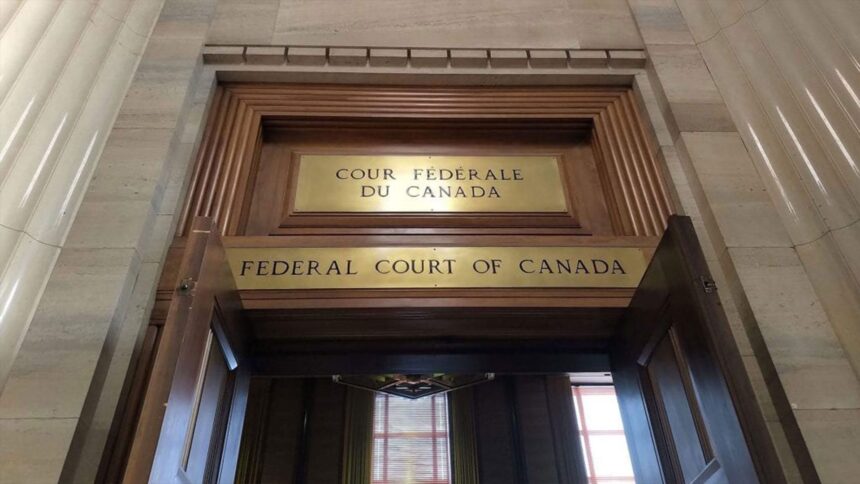
A lawyer representing Shamattawa First Nation says that if Canada is in control of what’s being built on reserve land, then it would also be responsible for addressing the needs related to clean drinking water and housing. “If you don’t take Canada’s money, the infrastructure does not get built, does not get operated, does not get maintained,” said defense lawyer Michael Rosenberg, during a hearing in the Federal Court of Appeal on Wednesday in Winnipeg. “That is the dynamic, because these First Nations have been put in this position of dependence.” In December 2025, Federal Court Justice Paul Favel determined that, in his rulings for two separate class-action lawsuits from Shamattawa and St. Theresa First Nations, that Canada had the obligation to provide these communities with access to housing and clean drinking water. In one of the decisions, Favel said that the federal government “exerted direct control over every facet of First Nations life through legislations, regulations, policies, and practices since at least the 1880s,” and that “this extends to matters such as water infrastructure.” However, Canada had appealed that decision, arguing that the lawsuit is based on policy and funding issues rather than a legally binding duty. During the first of a two-day hearing, a team of lawyers representing the federal government argued that because First Nations are self-governed, they would then be responsible for their own water treatment. Additionally, because Canada was not responsible for the water itself, the 2025 lawsuits were based on funding for infrastructure, which Canada has provided. Therefore, the government would have no obligation to solve the problems themselves. The government also argued that Favel had referred to previous cases when making his determination, which had concerned restrictions or decisions that would have interfered with people’s access to resources such as drinking water, “which left open the possibility that a positive obligation could exist, but did not go as far as recognize the general duty.” Canada’s lawyers called the obligation an “assertion,” which they said Favel backed with no new evidence beyond historical issues such as the impact of colonialism on First Nations, which face these barriers. Another argument made by Canada was that experts used in the original cases were not reliable. An example of this claim was Lawrence Reynolds, a retired doctor who had been consulted on the subject of drinking water, who had been “expressly and improperly charged with determining Canada had control over water.” This was because “water is not fixed and immovable; water migrates, it moves from place to place,” a lawyer said. Canada also pointed to the Constitution Act, which, according to section 35, “recognizes and affirms the existing Aboriginal and treaty rights of the Aboriginal peoples of Canada,” including the right to “responsibly spend funds,” lawyers said, meaning money which would be allocated to repairing water treatment plants on traditional land. Rosenberg said making the case about funding undermines the human rights concerns brought up by the communities in the original lawsuits. “When you exercise such close control, it does not allow Canada to say that when something goes wrong, First Nations have full responsibility,” he said, adding that Canada has full control over infrastructure on First Nations, down to the “colour of the pipes.” “Class members are between a rock and hard place because the defendant put them there,” he said. Rosenberg said that Favel had written about the “core of the relationship” between First Nations peoples and Canada, which is “creating a systemic disadvantage by confining them to remote and economic reserves where they’re dependent on Canada to make those lands livable,” and then “imposing restrictions on what they can do to live on reserve from both a regulatory and a fiscal perspective.” He said this is what would separate the case from “ordinary government spending.” “You heard my friends reference self-governance, the importance of ensuring that First Nations can govern their own affairs. But that cannot be an excuse to tell First Nations that they must make ends meet when they’re still subject to this [relationship] and they haven’t been restored to a position where they have the resources and the control to make their reserve livable. “Now ultimately, Canada’s role in creating and maintaining class members’ disadvantage will be critical to delineating the extent of the federal government’s obligations. Recognized class members do not call for unlimited government liability. They do not call for guaranteed outcomes. What they ask is the care to make reasonable efforts to assist to the extent that it is responsible for their inability to realize the promise of a reserve as a livable homeland.” According to the Indigenous Services website, there are 39 drinking water advisories in Canada from Newfoundland and Labrador to Alberta. The majority of them are in Ontario, where another lawsuit was launched against the federal government. Six of them are in Manitoba. In 2015, the Liberal government promised to end all water advisories. The court is scheduled to resume Thursday morning. Emma HoneybunOnline Journalist | WinnipegEmma is a Red River Métis with family roots in St. Malo, Manitoba. She graduated from RRC Polytech’s Creative Communications program in 2023 and went on to serve as a community journalist and photographer for the Free Press Community Review until she joined APTN in 2026. Equipped with a strong sense of justice, she enjoys covering stories in the central prairies for a larger audience. Her work has also appeared in Manitoba Inc. Magazine, the Free Press, and RRC Polytech’s student paper, The Projector. Continue Reading
Federal drinking water lawsuit not a case of government spending, says lawyer


Leave a Comment