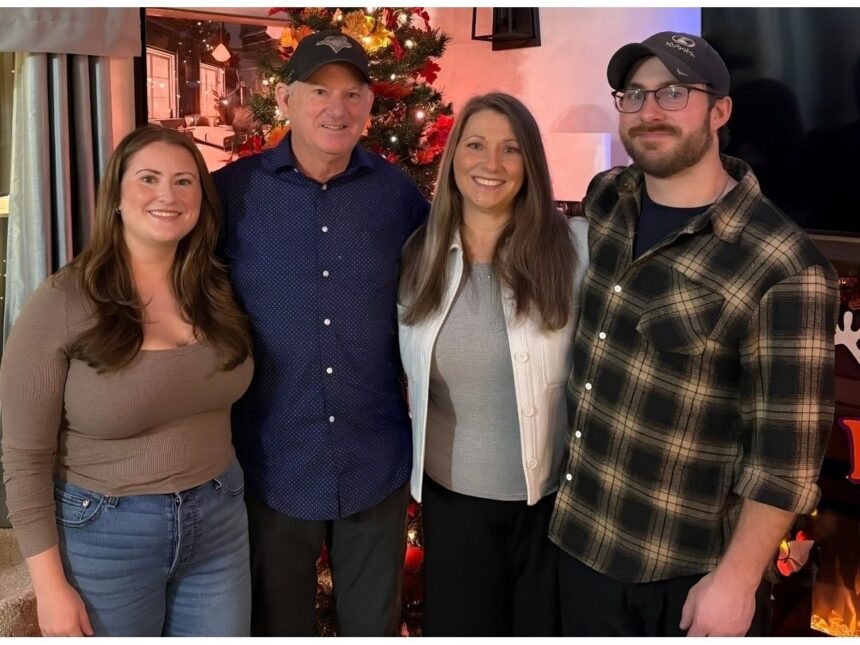
‘We’re actually more thankful than ever that we have a second chance at living life’Published Oct 30, 20268 minute readChris and Tracy Standing of Frenchvale, middle, with their children Brianna, left, and Jordan. The family is grateful for the lifesaving, double-bypass surgery that Chris received in early 2026 at the QEII Health Sciences Centre in Halifax. SUPPLIEDArticle contentYou can do everything right. You can stay active, eat well, know your family history, get the tests, and sudden illness can still affect you.THIS CONTENT IS RESERVED FOR SUBSCRIBERS ONLY.Subscribe now to access this story and more:Unlimited access to the website and appExclusive access to premium content, newsletters and podcastsFull access to the e-Edition app, an electronic replica of the print edition that you can share, download and comment onEnjoy insights and behind-the-scenes analysis from our award-winning journalistsSupport local journalists and the next generation of journalistsSUBSCRIBE TO UNLOCK MORE ARTICLES.Subscribe or sign in to your account to continue your reading experience.Unlimited access to the website and appExclusive access to premium content, newsletters and podcastsFull access to the e-Edition app, an electronic replica of the print edition that you can share, download and comment onEnjoy insights and behind-the-scenes analysis from our award-winning journalistsSupport local journalists and the next generation of journalistsRegister to unlock more articles.Create an account or sign in to continue your reading experience.Access additional stories every monthShare your thoughts and join the conversation in our commenting communityGet email updates from your favourite authorsSign In or Create an AccountorArticle contentArticle contentWhen that happens, what matters is whether lifesaving care is there when you need it most. The QEII Health Sciences Centre in Halifax, the most specialized hospital in our region, was there for Chris Standing when he faced two sudden and unexpected heart attacks just a few months ago.Article contentArticle contentAt age 59, he had just retired from a 30-year career serving in the military. He and his wife, Tracy, were following active lifestyles, and received regular care and checkups from their family doctor.Article contentBoth retired, the couple had recently relocated from North Sydney to a nine-acre property in Frenchvale where they were spending lots of time on renovations and yard work, with long stretches on the road in their new motorhome. Life was good, and neither of them saw a heart attack coming – let alone two.Article contentTHOUGHT IT WAS HEARTBURNArticle contentChris’s cardiac care journey started in late February 2026, while he was helping his son, Jordan, move. When lifting furniture, Chris suddenly felt an uncomfortable feeling in his chest. He assumed it was a panic attack and stepped away to catch his breath before they finished loading the truck.Article contentThe very next day, Chris and Tracy left for a long-planned trip to Turks and Caicos. Chris spent most of the trip with a lingering, subtle pain in his chest, not mentioning it as he didn’t want his travel companions to worry.Article contentArticle contentBy the time they got home, the pain hadn’t let up. Chris assumed it was heartburn and called his daughter, Brianna, who lives nearby and works at the Northside General Hospital as a nurse, to ask for Aspirin. After asking him some questions, she recognized the signs of cardiac distress and took her father to the Cape Breton Regional Hospital, where an electrocardiogram (EKG) and bloodwork confirmed what no one saw coming. Chris had suffered a heart attack.Article contentArticle contentCAPE BRETON TO HALIFAXArticle contentWhile in hospital in Sydney, Chris suffered a second cardiac arrest, moving up the timeline on how quicky he needed intervention from a heart specialist. He was airlifted to the QEII for further assessment.Article contentHis family simply assumed Chris was being flown to the QEII to test to see if he’d need a stent.Article content“We were reassured because he looked so healthy otherwise,” Tracy says.Article contentIt wasn’t until a surgeon called with the results that the full picture became clear. Chris had two major heart blockages, one at 95 per cent and the other at 92 per cent. A stent wasn’t an option. He would need open-heart surgery – a double bypass – to regain heart function and save his life.Article contentThings moved very quickly after that. Tracy and Brianna drove to Halifax the next day, while Jordan stayed behind to take care of everything at home. Chris didn’t have to wait long for the care he critically needed and was booked for surgery within three days.Article content QEII cardiac surgeon Dr. Phillipe Tremblay performed the seven-hour, double-bypass surgery on Chris Standing of Frenchvale. “Essentially, I’m bypassing blockages by using a conduit to bring blood and oxygen to the heart muscle past the area that’s narrowed,” said Tremblay. SUPPLIEDArticle contentROAD TO RECOVERYArticle contentWhen Chris was first assessed in Sydney, his heart function had already dropped to 45 per cent. After the second cardiac episode, it fell further, to somewhere between 23 and 25 per cent so surgery was becoming increasingly urgent.Article contentThe double bypass surgery, performed by Dr. Phillipe Tremblay, took seven hours. Surgeons were able to use two arteries from Chris’s chest wall rather than a vein from his leg, sparing him a second incision.Article contentTremblay, a QEII cardiac surgeon and surgical director of the transplant and mechanical circulatory support programs, explains that cardiac bypass is a major surgery where surgeons need direct access to the heart. The surgical team must open the breastbone and put the patient on a heart-lung machine to perform the bypass, stopping the heart and lungs during the procedure.Article contentArticle content“Essentially, I’m bypassing blockages by using a conduit to bring blood and oxygen to the heart muscle past the area that’s narrowed,” said Tremblay.Article contentChris’s surgery was a success, but recovery had its own hurdles as he developed some complications. Through it all, the care received from experts at the QEII never wavered.Article content“I’ve got nothing but wonderful things to say about the staff. They were all fabulous,” Tracy says.Article content“Nothing short of fantastic,” Chris adds.Article contentTremblay says that after cardiac bypass surgery, the road to recovery begins almost immediately. Patients are encouraged to get moving within a day or two, sitting at the bedside and taking a few small steps in a safe, supported environment, because early mobilization helps recovery.Article contentThe follow-up care Chris received after he returned home helped keep his family reassured despite setbacks, including a QEII heart specialist who travelled to Sydney in May 2026 for a follow-up visit, and a 30-day remote monitoring app that let Chris log his blood pressure and weight so his QEII care team could flag concerns early, providing guidance on what to do if a reading looked off. The Standings say they never had trouble reaching the team when they needed to and found everyone they dealt with helpful.Article contentArticle contentFor Tremblay, overall success after bypass surgery is measured by quality of life.Article content“First and foremost is to return to a good quality of life,” he says, meaning an active lifestyle free of symptoms, and the ability to return to work and the activities a patient loves. It also means a lasting result. “The bypasses can hopefully last for decades.”Article contentA FAMILY HISTORYArticle contentHeart disease runs deep in Chris’s family. His mother and father both had heart attacks, his father underwent a triple bypass, and his mother had a stent placed. Tracy lost two brothers to heart disease, one at 51 and the other at 52, and her own mother had open-heart surgery.Article contentBecause of that history, Chris and Tracy had taken a Framingham risk assessment the year before – a test that estimates the odds of a cardiac event over the following decade. Both were placed on a cholesterol medication as a precaution. The odds, Tracy says, were in their favour.Article contentChris had a heart attack within a year anyway. Their family doctor was stunned by the diagnosis as she’d seen the couple just before it happened.Article contentThe ripple effect of Chris’s cardiac journey moved through their whole community. Friends changed their eating habits, Chris’s brother booked bloodwork, and their son Jordan, who carries the same family risk on both sides, has started paying closer attention to his own heart health.Article contentChris’s case, Tremblay says, is a reminder that prevention has limits. Both for prevention and post heart-attack care, he recommends a healthy diet, regular exercise, controlled cholesterol and blood pressure, good glucose management for those with diabetes, and not smoking. But genetics can’t be changed.Article content“Unfortunately, in some patients, genetics or predisposition makes it so that despite doing all the other things properly and ensuring that you modify all risk factors that are modifiable, you may still end up with coronary disease,” he says.Article contentIn those cases, the goal is to seek medical attention early, once symptoms begin, and to diagnose coronary disease before it leads to a major cardiac event.Article contentArticle contentThose early symptoms don’t look the same for everyone. Angina, which is chest pain with exercise that eases with rest, and a classic dull, crushing pain in the chest, jaw or neck are more common. Others simply notice shortness of breath, fatigue, or a drop in their exercise capacity, which can make coronary disease difficult to diagnose, especially in older patients.Article contentTracy also echoes that a nurse explained that symptoms may appear differently in women.Article content“She says that women are more often dismissed with heart attack symptoms as anxiety,” she said.Article content Chris Standing of Frenchvale and his family are thankful for the lifesaving care provided at the QEII Health Sciences Centre in Halifax. SUPPLIEDArticle contentCARE FOR THE WHOLE REGIONArticle contentChris’s journey from Cape Breton to Halifax reflects the role the QEII plays as a hub for specialized care across the Maritimes.Article content“We often have patients that come from these remote areas in Nova Scotia more distant to the Halifax Regional Municipality,” Tremblay says. “We do our best to offer equitable care to patients regardless of what their home address is.”Article contentThe goal, he explains, is to provide patients from other parts of the province with timely, crucial care, so they can then return to their home communities where local cardiologists and other care partners provide follow-up and help ensure long-lasting results.Article contentArticle contentThe need for this type of care is significant. Tremblay notes that the Maritime provinces have historically had relatively high rates of cardiovascular disease. There is no single definitive reason, he says, but strong genetic predispositions within many families combine with slightly higher rates of smoking, diabetes, obesity and sedentary lifestyles than in the rest of the country.Article contentLooking ahead, Tremblay says the QEII’s Division of Cardiac Surgery is constantly working to modernize the care it delivers, including the current development of a minimally invasive cardiac surgery program, supported by QEII Foundation donors. He’s also hopeful that they’ll establish a cardiac robotic surgery program in the next few years, and expand transplant and advanced heart failure therapies, with a donation after circulatory death (DCD) heart transplant program also on the horizon.Article content“We have the right pieces in place now to be able to deliver really cutting-edge, modern care to the residents of the Maritime provinces if we have the right tools and funds to support our program,” he says. “There’s lots of enthusiasm within our group, and there’s also the technical knowledge and know-how.”Article contentLIFE ON THE OTHER SIDEArticle contentToday, Chris says his energy is better than it’s been in a long time. He’s cleared for activity, has an echocardiogram and stress test scheduled this month, and is hoping to take the motorhome out again with Tracy soon, with a trip to Portugal planned for the new year. They are both so thankful for the lifesaving care provided at the QEII.Article content“We are so blessed to have that hospital here in Nova Scotia,” says Tracy. “They were fantastic from the moment we walked in. Every nurse we dealt with, every surgeon, the doctors, the entire staff, the entire experience.”Article contentToday, she and Chris don’t take a single ordinary day for granted.Article content“We’re actually more thankful than ever that we have a second chance at living life,” Tracy says. “And that’s exactly what we intend to do.”Article contentThe QEII Foundation funds advancements in cardiac care at the QEII Health Sciences Centre, Atlantic Canada’s largest and most specialized hospital, including minimally invasive technologies like the Minimally Invasive Cardiac (MICS) surgery program – procedures that, for eligible patients, mean smaller incisions, shorter recoveries, and faster returns to their daily lives.Article contentSarah Marshall is the manager, social media and special projects, with the QEII Foundation. Article content
Cape Breton man thankful for lifesaving double-bypass surgery at QEII