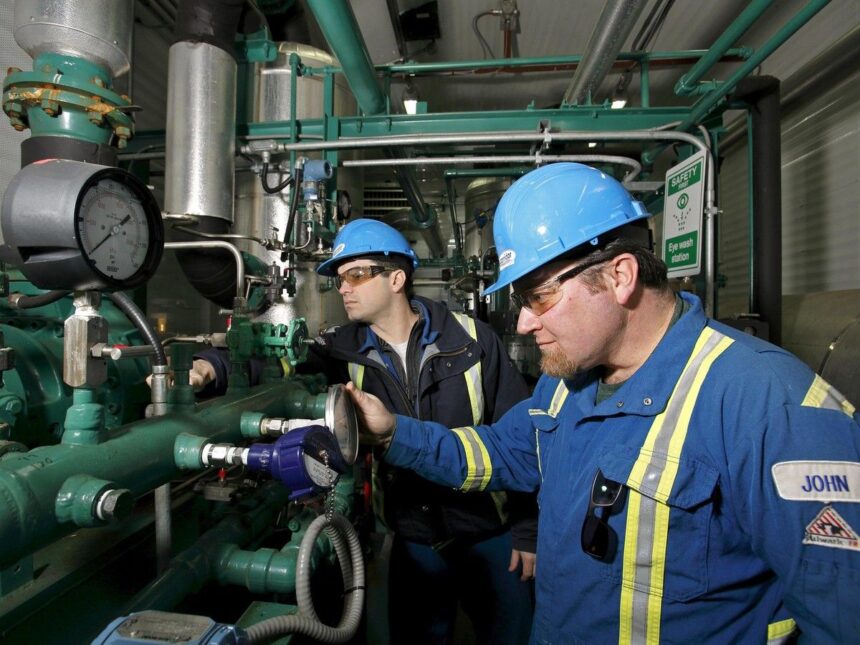
Premier Susan Holt says she wants a dialogue with communities, First Nations about extracting controversial resource that brings jobs, moneyAuthor of the article: John Chilibeck • Local Journalism Initiative reporterPublished Oct 30, 2026 • 4 minute readCraig Arbeau, left, and John Comeau work at the McCully gas processing facility near Sussex in this file photo. BRUNSWICK NEWS ARCHIVEThe Liberal government’s shale gas review faces its first real test Tuesday evening when it holds an inaugural public meeting about lifting the 12-year-old moratorium on developing the controversial resource.THIS CONTENT IS RESERVED FOR SUBSCRIBERSSubscribe now to read the latest news in your city and across Canada.Unlimited online access to articles from across Canada with one account.Get exclusive access to the e-Edition, an electronic replica of the print edition that you can share, download and comment on.Enjoy insights and behind-the-scenes analysis from our award-winning journalists.Support local journalism and the next generation of journalists.SUBSCRIBE TO UNLOCK MORE ARTICLESSubscribe now to read the latest news in your city and across Canada.Unlimited online access to articles from across Canada with one account.Get exclusive access to the e-Edition, an electronic replica of the print edition that you can share, download and comment on.Enjoy insights and behind-the-scenes analysis from our award-winning journalists.Support local journalism and the next generation of journalists.REGISTER / SIGN IN TO UNLOCK MORE ARTICLESCreate an account or sign in to keep reading.Access articles from across Canada with one account.Enjoy additional articles per month.Get email updates from your favourite journalists.THIS ARTICLE IS FREE TO READ REGISTER TO UNLOCK.Create an account or sign in to continue with your reading experience.Access articles from across Canada with one accountShare your thoughts and join the conversation in the commentsEnjoy additional articles per monthGet email updates from your favourite authorsArticle contentBilled as a community dialogue, the meeting is advertised on the Town of Sussex’s events webpage as taking place from 6 p.m. to 8 p.m. at the Sussex Lions Club.The provincial government did little to promote the event.Asked about it by a reporter at the legislature on Friday, Premier Susan Holt said her government chose Sussex because it’s closest to where natural gas has been extracted for many years.“We thought it was the right place to go first, to the people who will be most impacted by the development of this sector and who have already lived through the impacts of the development of the sector.”Battered by criticisms of her government’s record deficit spending, Holt announced a five-month public review of New Brunswick’s natural gas and fracking moratorium on Aug. 26.Her hope is that natural gas development will create jobs and generate taxes and royalties. Premier Susan Holt has changed her mind about developing natural gas in New Brunswick. Photo by John Chilibeck/ Brunswick NewsThe province is thought to have about 70 trillion cubic feet of natural gas deep underground, a lucrative resource mostly trapped in shale and tight sand formations in southern New Brunswick.By signing up you consent to receive the above newsletter from Postmedia Network Inc.Article contentArticle contentBut the Liberal government of Brian Gallant introduced a moratorium on shale gas fracking in 2014 a year after protesters clashed with police near Rexton over exploration work. Several police vehicles were torched, and scores were arrested.The Higgs Tory government that took over in 2018 wanted to end the moratorium but said it wouldn’t make sense until investors showed a renewed interest in fracking the resource. Instead, the Tories carved out a small piece of the province from the moratorium, the McCully field near Sussex, to allow extraction to continue there in limited quantities.Hydraulic fracturing – better known as fracking – is controversial because it uses lots of water and chemical additives to break rock deep underground and push the gas to the surface. Many people worry about the health and environmental risks of developing the industry. Community activist Mark D’Arcy talks to people outside Fredericton’s Boyce Farmers Market about the hazards of shale gas extraction. Photo by John Chilibeck/ Brunswick NewsOn the other hand, natural gas burns cleaner than coal or oil, and provides affordable, high-efficiency energy for homes, businesses, and heavy industry.Article contentPlaces that have successfully developed lots of natural gas are also awash with jobs and money. The shale gas blockade in Rexton came to a violent end on Oct. 17, 2013 when RCMP and protesters clashed. BRUNSWICK NEWS ARCHIVEThe Holt government says the review will include consulting with First Nations – many of which were opposed to shale gas 12 years ago. It will also look at the latest scientific and technical developments when it comes to capturing the gas, and gauge the economic benefits and public support for such projects.Opponents are furious, arguing the gas should stay put, warning that that burning the fuel will contribute to global warming. They also say the industry will pollute the air, ground and water.“We have scheduled the town hall and are getting ready to go and share information with the people of Sussex to listen to their experiences with this industry over the last number of years and to hear their questions, concerns, and feedback,” Holt said.The premier said her government had set up several working groups to examine different sides of the review. She said their findings would be made public.Article content“Once we can share that information with New Brunswickers, then we can engage with them to say what do you think about this information. We’re all learning what the economic case, what the environmental case looks like today. Then we can take their reaction to it and incorporate that with the questions that they told us they had through the surveying that we’ve done.”One of the biggest opponents of shale gas was Arren Sock, who in 2012 became chief of Elsipogtog. He led protest marches in 2013 against the gas exploration company SwN, eventually driving the American company out of the province.The leader of New Brunswick’s biggest Mi’kmaq community has been re-elected ever since. Elsipogtog Chief Arren Sock, third from left in blue shirt, protests with others over shale gas exploration in this file photo from October 2013. BRUNSWICK NEWS ARCHIVEThe premier said she had talked to Sock and others in the community about shale gas when she visited on Thursday to announce the opening of the first long-term care home operated by a First Nation, a 60-bed facility that will be established in Five Rivers, near Elsipogtog.“We had great conversations with Chief Sock and members of his team,” the premier said.Article content“Obviously, this is a sensitive subject for them because of the history. We’re talking about a different area, right? We’re talking about the existing area of development as opposed to the work that SwN had done getting up close to Elsipogtog in the past. But like all chiefs, he wants to understand what are the impacts, what are the benefits? What role can we play if we want to play a role? And so that conversation is ongoing with Chief Sock and with every other chief.”The previous Higgs government had strained relations with First Nations chiefs on several issues. Holt said her Liberal government was different.“Since day one, this government has been demonstrating respect for and a desire to partnership, to partner with First Nations on virtually everything we do, and so the relationship is in a good place. We can have really good back and forth conversations, express concerns, identify opportunities, and find new ways to work together. So that’s what’s happening.”The premier is scheduled to meet with the 15 chiefs in the second week of November to discuss shale gas again.She said she wanted to make sure that that the dialogue was constructive and “that we’re both moving forward together to get our questions answered, so that we can have a clear decision come the end of January.”Article content
Shale gas talks in New Brunswick come to the people