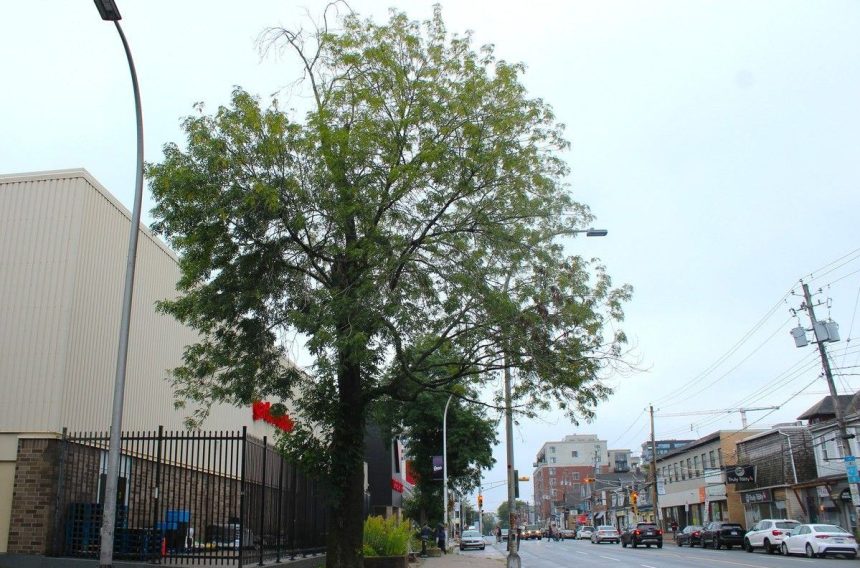
An ash tree on the corner of Monastery Lane and Quinpool Road seen on Sunday, likely infected with the Emerald Ash Borer. Researcher Peter Duinker is advocating for the city to save the tree until they can plant another tree species in its place. Photo by Emma Breton /The Chronicle HeraldArticle contentThe emerald ash borer, an invasive beetle causing the death of ash trees, continues to spread in Halifax and experts say the situation isn’t getting better.THIS CONTENT IS RESERVED FOR SUBSCRIBERS ONLY.Subscribe now to access this story and more:Unlimited access to the website and appExclusive access to premium content, newsletters and podcastsFull access to the e-Edition app, an electronic replica of the print edition that you can share, download and comment onEnjoy insights and behind-the-scenes analysis from our award-winning journalistsSupport local journalists and the next generation of journalistsSUBSCRIBE TO UNLOCK MORE ARTICLES.Subscribe or sign in to your account to continue your reading experience.Unlimited access to the website and appExclusive access to premium content, newsletters and podcastsFull access to the e-Edition app, an electronic replica of the print edition that you can share, download and comment onEnjoy insights and behind-the-scenes analysis from our award-winning journalistsSupport local journalists and the next generation of journalistsRegister to unlock more articles.Create an account or sign in to continue your reading experience.Access additional stories every monthShare your thoughts and join the conversation in our commenting communityGet email updates from your favourite authorsSign In or Create an AccountorArticle contentThe beetles travel from tree to tree and lay eggs within the trunk. Once hatched, the larvae start to eat away at the inside of the tree. They mine through the vascular tissue, cutting off water and nutrients from the upper branches and leaves.Article contentArticle contentArticle content The emerald ash borer is an invasive beetle that infests ash trees and eventually kills the tree. There is no cure or preventative treatment. Photo by D.B Lyons /Natural Resources CanadaArticle contentAsh trees will lose their leaves, eventually turn brittle and die.Article content“Emerald ash borer pretty much always results in mortality of a tree that it infests,” said Peter Duinker, founder of the Halifax Tree Project.Article contentThere is no cure or prevention against the beetle, and tree removal is the main solution.Article contentBut one Halifax tree removal company says it’s not so simple.Article contentWhat are the dangers around ash tree removal?Article contentClarence Talbot with Treeworks, a tree health and removal firm in Halifax, said his company has refused ash tree removal jobs because the trees are unsafe to climb.Article contentHe said they deteriorate quickly after the larvae hatch, and the branches and trunk can become unstable or break away after less than a year. It isn’t worth a worker’s safety to take on an ash tree that is too far gone, Talbot said.Article content The effects of the emerald ash borer on the vascular tissue of an ash tree. The larvae hatched by the beetle eat the inside of the tree and cut off water and nutrition from reaching the higher leaves and branches. Photo by Peter DuinkerArticle contentHe warns against property owners or unqualified workers attempting to do tree removal themselves, especially with ash trees. If people try to climb an infested ash tree, Talbot said, a branch could break and they could injure themselves or others.Article contentArticle contentTalbot strongly recommends property owners who have ash trees pay close attention to their health. The most common way to see that a tree is dying is by looking at leaf growth; an ash tree that isn’t showing green leaves in the spring or summer is a likely sign the borer has infected it.Article contentArticle contentWhere did the emerald ash borer come from?Article contentThe beetle originated in forests in northeast Asia and was likely transported to Canada through infected wooden materials.Article contentThe borer can’t fly long distances, Duinker said, so it often travels through infected wood such as firewood. This is why the Canadian Food Inspection Agency urges people to buy and sell firewood locally to prevent further spread, said Duinker.Article content“Long-distance travel, the beetles are hanging around in one life form or another on wood that gets moved long distances and then they emerge from that wood in their new habitat.”
Ash trees are being eaten to death in Halifax. Is there anything the city can do to save them?