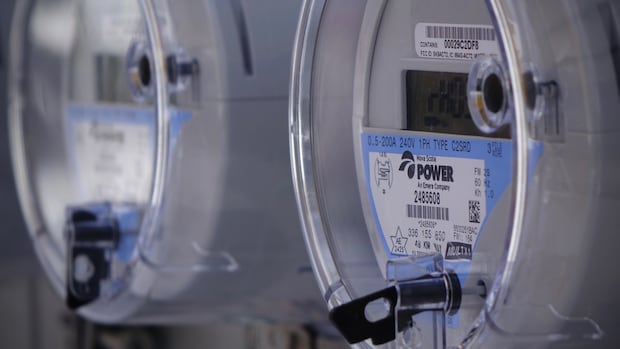
Nova ScotiaLaw professor Wayne MacKay says regardless of whether the lawsuit moves ahead or is successful, it could make companies more willing to focus on the interests of consumers.Lawsuit must be certified by the Supreme Court of Nova Scotia before it can proceedFrances Willick · CBC News · Posted: Dec 10, 2025 4:23 PM EST | Last Updated: 2 hours agoListen to this articleEstimated 6 minutesThe audio version of this article is generated by text-to-speech, a technology based on artificial intelligence.A class-action lawsuit has been filed against Nova Scotia Power after a cybersecurity breach earlier this year and subsequent billing practices. (CBC/Radio-Canada)A law firm has filed a class-action lawsuit against Nova Scotia Power over a cybersecurity breach earlier this year and subsequent billing problems.And a law professor says regardless of whether the class action is certified, or ultimately successful, it’s an important step toward accountability and transparency.”I think it’s really important that we have mechanisms to make privileged corporations with a monopoly accountable for meeting really high standards and protecting the interests of consumers at all levels,” says Dalhousie University law professor emeritus Wayne MacKay.The lawsuit, filed in the Supreme Court of Nova Scotia on Friday by MacGillivray Injury and Insurance, alleges negligence, misrepresentation, breach of contract and breach of various legislations, as well as unjust enrichment on the part of Nova Scotia Power.”Its systems were not secured to an appropriate standard relative to the sensitivity of the information it held,” reads the statement of claim. “Its practices and its responses to the data breach prioritized corporate convenience and interest over consumer protection.”The statement of claim says in order to deal with the “failure of its systems, NSP knowingly implemented a billing system that it knew was inaccurate.”Overbilling complaintsOn April 28, Nova Scotia Power disclosed that it was responding to a cybersecurity breach discovered on April 25. The breach had taken place more than a month earlier, around March 19.The breach compromised current and former customers’ banking information, social insurance numbers, names, addresses, birth dates, and other information.In the wake of the breach, Nova Scotia Power began estimating bills based on the previous year’s usage, and said bills would be adjusted later to reflect actual usage. However, some customers have reported that they were overbilled.The lawsuit claims the billing system implemented in the wake of the breach resulted in “inaccurate, inflated and unreliable bills, resulting in financial loss, confusion and other hardship,” according to the statement of claim.Nova Scotia Power told a committee of the Nova Scotia legislature last month that crews have been working around the clock to reconnect remote meter reading, and that they hope to have all meters reconnected by the end of March. Once the meters can be read remotely, the utility would stop billing customers using estimates.CEO Peter Gregg also said staff are working on finding solutions to address customer complaints. He suggested one solution could see the utility automatically reimburse people who were overbilled so that they don’t have to request refunds.”In spite of everything that has transpired since the initial cyberattack we are working very hard to restore all of our system functionality. We understand and are sorry for the frustration that our customers are experiencing,” Nova Scotia Power spokesperson Jacqueline Foster has previously told reporters.The CBC requested an interview with Nova Scotia Power about the class-action lawsuit, but a spokesperson said the utility had “nothing to add.”‘This is an essential service’The lawsuit alleges the security breach made customers feel “anxiety, stress, fear of identity theft and financial fraud,” and caused them to spend time and money to secure their accounts, monitor their credit and implement other safeguards.The representative plaintiff in the case, Danielle Fraser, said she had issues with inaccurate billing from Nova Scotia Power long before the fallout from the cybersecurity breach, so she started a Facebook page to see if anyone else was having similar problems.After the cyberattack, the page was inundated with stories of overbilling, she says.Danielle Fraser is the representative plaintiff in a proposed class-action lawsuit against Nova Scotia Power. (Radio-Canada)”It’s happening to thousands of customers. They are being overbilled,” Fraser said. “Nova Scotia Power has to understand that this is an essential service. Nova Scotians are entitled to have affordable and reliable electricity.… Some of them are trying to decide between food and electricity or mortgages and electricity and that’s not OK.”The proposed class action must be certified by the Supreme Court of Nova Scotia before it proceeds. MacKay said it’s likely to be months before a decision on certification is made, and if it is approved and proceeds to trial, that process could take years, especially if there are appeals.He said he believes there’s “a pretty good chance” the case would be certified.Wayne MacKay is a professor emeritus at Dalhousie University’s Schulich School of Law. (Nick Pearce)Nova Scotia Power has not filed a defence, but based on the statement of claim and what he knows about the issues involved, MacKay said “it’s a serious case with some reasonable chances of success.””On the flip side of that, Nova Scotia Power obviously has the money and resources and there’s enough at stake that they’re going to have very high-powered lawyers doing their best work,” MacKay said.Whichever way it goes, MacKay said the case has implications for consumer protection.”It’s a good statement that hopefully will make companies in these positions more accountable, more transparent and more willing to be focused on the real interests and risks to consumers.”John MacGillis, a spokesperson for MacGillivray, said since filing the case, the law firm has heard from more than 9,000 people who are interested in signing up to be part of the class action.He said if it goes ahead, class action members could see financial compensation.John MacGillis, a spokesperson for MacGillivray Injury and Insurance Law, says the proposed class action must be certified by the court before it proceeds. (Radio-Canada)”Our firm believes that it’s worth the time to determine whether or not Nova Scotians are entitled to damages,” MacGillis said. “We want to determine if there was negligence on behalf of Nova Scotia Power. That’s sort of the core question of this whole thing.”MORE TOP STORIESABOUT THE AUTHORFrances Willick is a journalist with CBC Nova Scotia. Please contact her with feedback, story ideas or tips at frances.willick@cbc.caWith files from Radio-Canada and The Canadian Press
Class-action lawsuit against Nova Scotia Power important for accountability, says law prof