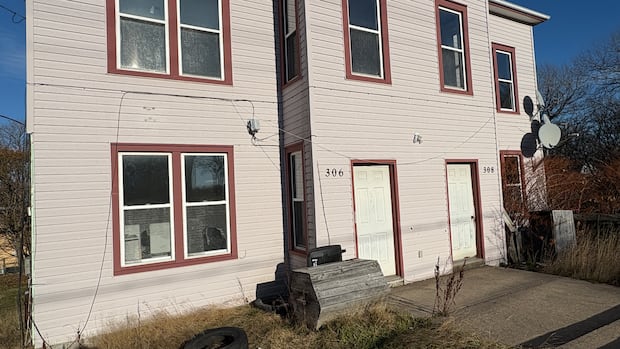
New BrunswickNew Brunswick is reviewing vacant properties as part of promises for tax reforms but any potential changes wouldn’t come until 2027. Saint John policymakers have been pushing for a vacancy tax for years to stop investors from buying properties and, in many cases, leaving them empty. Saint John policymakers have been pushing for vacancy tax for years to curb speculative investingNipun Tiwari · CBC News · Posted: Dec 10, 2025 5:00 AM EST | Last Updated: 2 hours agoListen to this articleEstimated 5 minutesThe audio version of this article is generated by text-to-speech, a technology based on artificial intelligence.A British Columbia group bought this west end Saint John building in 2021 for around $122,000 and sold it this year for over double that price. In the time between it being bought and sold, the building sat empty while the Saint John’s housing crisis worsened. (Nipun Tiwari/CBC)Investors who have been buying New Brunswick residential properties and leaving them empty — sometimes even benefiting from property tax reductions as the buildings deteriorate — have been frustrating Saint John policymakers for years. But the New Brunswick government is not planning any immediate action to combat the issue.”The treatment of vacant property will be amongst the considerations as we review the property tax system,” New Brunswick Finance Minister René Legacy wrote in an email to CBC News.”Our aim is to have recommendations and proposed amendments in place for the 2027 taxation year.”A statement from the City of Saint John said it is monitoring 175 vacant buildings and the high majority of them — over 90 per cent — are residential properties.City staff and councillors have long called for New Brunswick to adopt policies, such as those used in British Columbia and Ontario where dozens of communities can impose a special “vacancy tax” on residential buildings that are left empty by their owners for more than six months per year.In some cases these charges can exceed several thousands of dollars per year on an empty residential building. WATCH | Housing ‘not being rented or lived in’ contributes to shortage, researcher says:N.B. reviewing vacant buildings as part of property tax reform for 2027Saint John policy makers and housing researchers have long pushed for the government to tax vacant buildings bought and held by speculative investors in the city. The province says it’s reviewing the issue, but any potential new measures won’t be in place for at least another year.The City of Toronto explains on its website that the goal of the vacancy tax is to prod property owners with empty housing units to make them available as places to live by either selling them or renting them out.Saint John Coun. Brent Harris has been calling on the province to authorize a vacancy tax since 2021.Harris runs a non-profit called Vacant-To-Vibrant that works to acquire empty and often dilapidated residential properties and bring them back to life — which he thinks is possible for the majority of the city’s vacant buildings.“Let’s just say 80 can be repaired — that’s 200 plus units probably between those 80 buildings,” he said.”That covers more than the amount of homeless we have. It starts to bite into the working middle class that are looking for affordable rents. Like that is solvable, but there are currently no mechanisms to do that work”Saint John Coun. Brent Harris and other councillors have been pushing for a vacancy tax for years. (Graham Thompson/CBC)Building bought, then sold for doubleSaint John experienced a surge in real estate investment in the years following the COVID-19 pandemic and although most new buyers of residential properties have used them as housing, some investors have purchased buildings, only to leave them empty.In New Brunswick, municipalities are not allowed to levy a special charge on vacant housing and in many cases, the province has done the opposite, cutting property taxes on empty buildings for owners as they fall into disrepair.That happened with a four unit apartment building on Saint John’s City Line that was bought for $122,500 in the summer of 2021 by Vancouver company New Castle Institute of English Research Corp.Neighbours confirmed that the building was left empty over the following four years, even with a tightening housing shortage underway throughout Saint John. Nevertheless, the City Line investment still produced a return for the B.C investor. The empty building was sold to a new buyer earlier this year for $247,500 — more than double the original purchase price.Although more than 50 B.C. communities have vacancy taxes, New Castle Institute of English Research Corp faced no financial penalties for leaving the building empty in Saint John during the nearly four-year ownership.Instead, being empty helped it win a substantial New Brunswick property tax break The company applied to the province for a property assessment reduction on the building in 2024 — three years into its ownershipPart of the argument for the reduction, according to the application for relief, was that the apartment building was boarded up and would require extensive renovation for occupancy. This house, at 204 St. James Street, was owned by the New Castle group for roughly four years and remained empty the whole time. It was then sold this year for $40,000, which is 27 per cent higher than what it was bought for. (Roger Cosman/CBC)A provincial property assessor agreed and cut the building’s property assessment by more than half, saving the owner $2,873 on the property’s 2024 tax bill. Paul Hsu, who is listed as the president of the New Castle Institute of English Research Corp on the deed, did not respond to emails or phone messages asking for an interview about the company’s investments in Saint John.The City Line building was one of at least four residential properties the Vancouver-area group bought in the city since 2021 and left vacant.Julia Woodhall-Melnik, a University of New Brunswick housing researcher, said investors buying Saint John housing stock but not using it to provide housing has been an issue in the city for a number of years.She believes a vacancy tax is one of the ways New Brunswick could discourage investors from holding onto empty apartment buildings in the middle of a housing shortage. “If there’s housing that people could be living in that’s on the market, that’s not being rented out or not being lived in, that absolutely contributes to a housing shortage,” she said Toronto-based housing researcher Carolyn Whitzman agrees. Whitzman says there are a number of different measures that can be employed to encourage more housing and financially penalizing owners of empty residential buildings has been shown to work elsewhere.She said in a lot of municipalities, “part of the rationale for having a vacant unit tax” was trying to address “a really low vacancy rate.”ABOUT THE AUTHORNipun Tiwari is a reporter assigned to community engagement and based in Saint John, New Brunswick. He can be reached at nipun.tiwari@cbc.ca.
Councillors, researchers want financial penalties for investors holding empty Saint John buildings