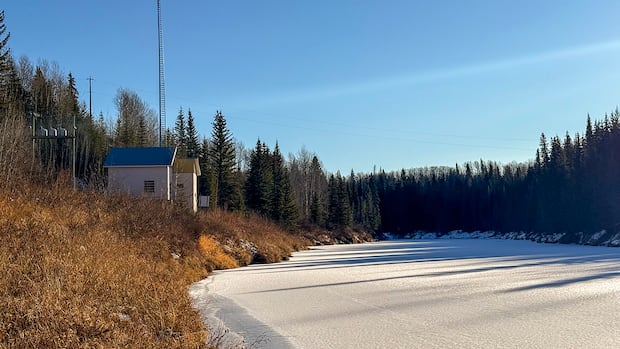
B.C. NorthThe city says it is still able to pump water from the Kiskatinaw River and maintain levels in its storage reservoirs, but chief administrative officer Kevin Henderson warns an extended cold snap — with windchills plunging to -40 C — could freeze river flows entirely.City says water reservoirs stable for now, but deep cold could freeze river flowsMatt Preprost · CBC News · Posted: Dec 13, 2025 6:32 PM EST | Last Updated: 3 hours agoListen to this articleEstimated 4 minutesThe audio version of this article is generated by AI-based technology. Mispronunciations can occur. We are working with our partners to continually review and improve the results.View of the Kiskatinaw River where the City of Dawson Creek currently sources its drinking water. (Matt Preprost/CBC)The City of Dawson Creek in northeastern B.C. has extended its local state of emergency as it braces for a potential water shortage this winter.The city says it is still able to pump water from the Kiskatinaw River and maintain levels in its storage reservoirs, but chief administrative officer Kevin Henderson warns an extended cold snap — with windchills plunging to -40 C — could soon freeze river flows entirely.”If this cold weather continues like we’re seeing today, it’s very possible that the river could freeze off and flows all but stop within, I would say, weeks to a month,” Henderson said.The state of emergency was first declared in October as the city works to secure provincial permits for a temporary water supply line from the Peace River, about 50 kilometres away. On Saturday, the city announced it had renewed the declaration to Dec. 23, 2025, “to keep response tools active during the drought.”The emergency order allows the city to move quickly if back-up supply from the Peace River is needed this winter. The plan would see temporary hose lines laid along local highways, with pumping starting as early as the new year if reservoir levels start to drop.Henderson says Dawson Creek currently has about 180 days worth of water stored, enough to last until May.”If we can hold off until April [or] May before we have to pump, there’s some advantages to that, just simply because of the weather,” he said. “We’ll see a reduction in costs just because we’re not dealing with such sub-zero temperatures.””We’re going to plan for the worst, but hope for the best.”WATCH | Dawson Creek’s winter water plan:Northern B.C. city plans highway hose line to avoid winter water shortageThe City of Dawson Creek in northeast B.C. is about to lay more than 50 kilometres of water hoses along the Alaska Highway. As the CBC’s Matt Preprost reports, it’s being done to prevent a local water shortage.That hope rests largely on the weather. The last time the Kiskatinaw River froze completely was January 2024, forcing the city to rely entirely on stored water for six weeks.”I hope we do get significant moisture throughout the winter and into the spring and that will position us differently,” he said. “But we’re going to plan as if we’re not and we’re going to have things in place.”Communities in the region have seen over 30 cm of snow over the past week, and remain under a snowfall warning that could drop another 15 cm Saturday, with more expected into next week.While that marks a more traditional start to winter for northeastern B.C., Henderson says four straight years of drought has left the city little room for complacency.”I’ve been watching forecasts like a hawk for a number of years, and these last few years we’ve seen above average temperatures, we’ve seen very little moisture,” Henderson said.”So this, although it’s not pleasant to deal with, some days it is pleasant to see in the sense that we’re seeing that snow come, and that’ll help us in the long run.”The Kiskatinaw River has been Dawson Creek’s only source of drinking water since 1942, supplying about 15,000 people in the city and the surrounding area, including the village of Pouce Coupe.At the same time, the city continues to advance plans for a permanent, in-ground pipeline and water supply system from the Peace River. It’s a project estimated to cost at least $100 million and take several years to complete. Dawson Creek is urging the province to speed up approvals to get construction underway as soon as possible.However, provincial agencies and local First Nations have recently pushed back on the plan as the city hopes to sell surplus water from a new pipeline to industrial users to offset the costs.The Kiskatinaw River near the community of Farmington, B.C., on Nov. 22, 2025. The Kiskatinaw River is at record lows due to ongoing drought conditions in the northeast B.C. (Matt Preprost/CBC)Subscribe to CBC’s Fort St. John Weekly for a round-up of the best news and stories from B.C.’s Peace and Northern Rockies.
Dawson Creek, B.C., extends local state of emergency as cold snap could freeze water supply