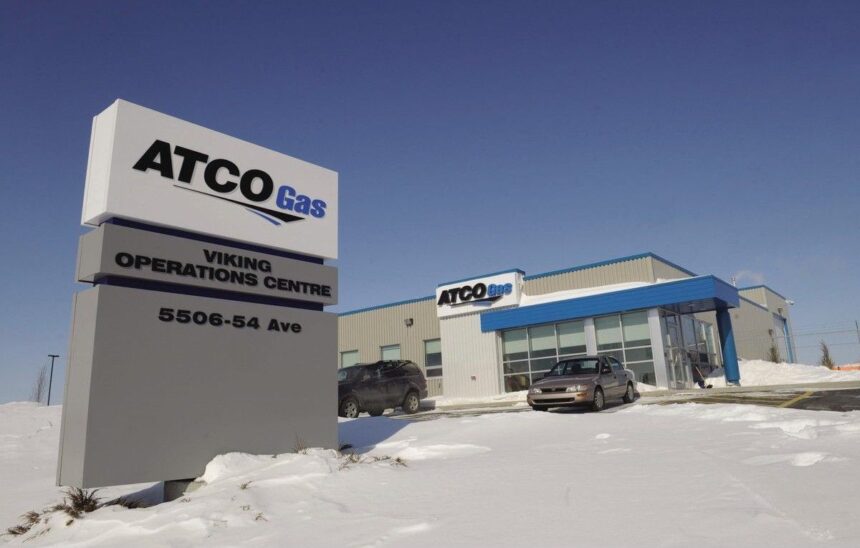
Article contentUntil closing, Emera, ATCO Ltd. and Canadian Utilities will continue to operate independently.Article contentAs part of the transaction, ATCO Ltd. will spin off its other businesses into a separate publicly-traded company. Nancy Southern will remain as ATCO’s chief executive.Article contentSouthern will serve as co-chair of the new company’s board alongside current chair Karen Sheriff.Article content“Bringing together Emera and Canadian Utilities is a rare chance to build on the strengths of two successful companies and create an even stronger enterprise, with greater capacity to invest, grow and help meet the evolving needs of customers and communities,” Sheriff said in a release.Article content“It will create lasting value for shareholders, customers, employees and communities for years to come.”Article contentEmera says operating businesses should remain unchangedArticle contentKey members of the current Canadian Utilities leadership team will join Emera’s executive team, including Bob Myles as CEO of Canadian Utilities. Leadership of the companies’ operating businesses will remain unchanged, according to a release.Article contentArticle content“This transaction represents a defining next chapter for ATCO,” Southern said in the release. “For nearly eight decades, our people have built businesses that provide essential infrastructure and services to communities and countries. Today, we are creating a structure that we believe unlocks the full growth potential of these businesses and positions them to play an even greater role in powering the future.Article content The ATCO Gas geothermal facility in Viking, Alberta. The 5,580-sq.-ft. facility draws on heat energy from within the earth’s crust from a depth of about 200 ft. Photo by SubmittedArticle content“The combined … company will have the scale, capabilities and capital to invest in critical energy and infrastructure projects that support growing demand, while New ATCO will be positioned to accelerate growth in housing, defence and industrial services.Article content“Together, these companies are expected to be better equipped to pursue opportunities created by economic growth, infrastructure expansion and increasing focus on security and resilience, creating long-term value for shareowners and Canadians alike.”Article contentImpact on ratepayers and stockholdersArticle contentEmera shareholders are expected to own about 60 per cent of the combined company. The transaction is expected to be accretive to adjusted earnings per share in the first full year following closing. Former ATCO and Canadian Utilities shareholders will receive approximately 40 per cent ownership in the combined company.Article contentArticle contentAsked about the impact on Nova Scotia’s ratepayers, Larry Hughes, a retired Dalhousie University professor and energy analyst, said the merger could potentially strengthen Emera’s purchasing power and provide access to additional expertise.Article content“I think it’ll be good for shareholders, and maybe this will bring in additional expertise or access to more equipment, transformers, whatever the case may be,” Hughes said in an interview Tuesday.Article content“I don’t see how it would be a negative. Emera’s staying here. They are going to be headquartered in Halifax and that’s a good thing. The head office probably will grow, so you’re going to have a larger presence. We have very few large corporate headquarters in the province, with Sobeys coming to mind.Article content“But I can’t see it really being that much of an impact on Nova Scotians other than those who bought shares in Nova Scotia Power and subsequently its parent company, Emera.Article content“It will all unfold in the fullness of time.”Article contentArticle contentWith files from The Financial PostArticle content
Examining Emera’s record-setting, all-stock merger that will create a Halifax-based utility powerhouse