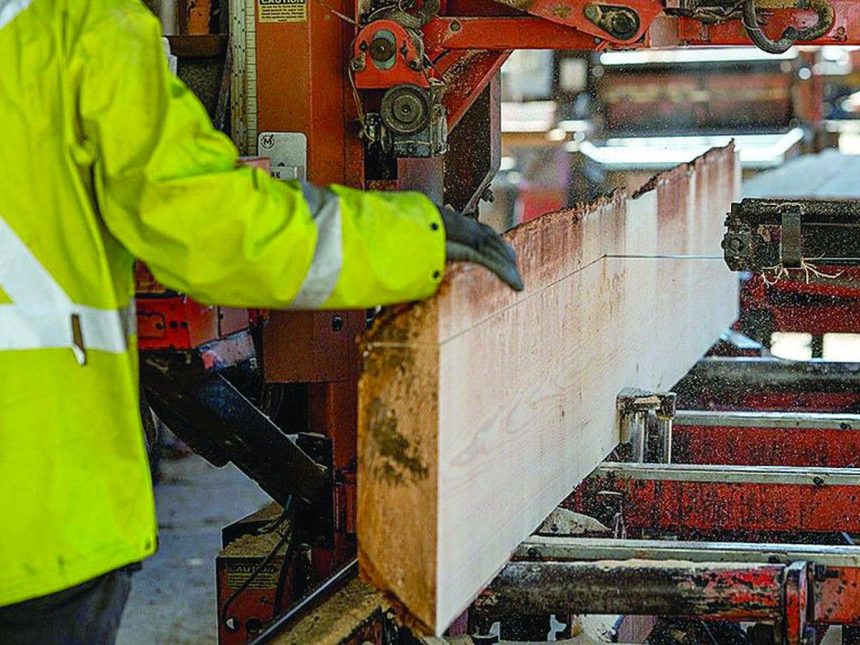
Forest Nova Scotia president says tariffs ‘will essentially kill the white pine market in Nova Scotia.’Published Aug 25, 2026Last updated 8 hours ago7 minute readNova Scotia’s softwood lumber exports south of the border have been spared from U.S. tariffs, but pine products from the province are facing steep new costs in the deepening trade rift between Canada and the United States. Photo by PostmediaArticle contentNova Scotia’s softwood lumber exports south of the border have been spared from Donald Trump’s tariffs, but pine products from the province are facing steep new costs in the deepening trade rift between Canada and the United States.THIS CONTENT IS RESERVED FOR SUBSCRIBERS ONLY.Subscribe now to access this story and more:Unlimited access to the website and appExclusive access to premium content, newsletters and podcastsFull access to the e-Edition app, an electronic replica of the print edition that you can share, download and comment onEnjoy insights and behind-the-scenes analysis from our award-winning journalistsSupport local journalists and the next generation of journalistsSUBSCRIBE TO UNLOCK MORE ARTICLES.Subscribe or sign in to your account to continue your reading experience.Unlimited access to the website and appExclusive access to premium content, newsletters and podcastsFull access to the e-Edition app, an electronic replica of the print edition that you can share, download and comment onEnjoy insights and behind-the-scenes analysis from our award-winning journalistsSupport local journalists and the next generation of journalistsRegister to unlock more articles.Create an account or sign in to continue your reading experience.Access additional stories every monthShare your thoughts and join the conversation in our commenting communityGet email updates from your favourite authorsSign In or Create an AccountorArticle contentAbout 60 to 80 per cent of Nova Scotia’s pine products — some $25 million worth — are shipped to the U.S., and they have been hammered with 50 per cent tariffs imposed by the president over the weekend.Article contentArticle contentArticle contentThe province’s forestry industry said the tariffs “will essentially kill the white pine market in Nova Scotia.”Article content“It’s concerning,” Breck Stuart, president of Forest Nova Scotia, said in an interview Monday. “The western half of Nova Scotia, where there’s a lot of white pine, that’s 30 per cent of our forest. That market basically went to zero overnight.Article content Prime Minister Mark Carney speaks during a news conference at the Davie Shipyard in Levis, Que., on Monday. Photo by Francis Vachon /Postmedia.Article content“Mouldings and doors and some of the value-added pine products are all on that tariff list. Most of the pine that we make goes into one of those value-added categories like tongue and groove, textured edge, pine mouldings, pine door frames, pine doors, all of those things.”Article contentStuart, who also serves as general manager of WestFor, the company that manages Crown land in western Nova Scotia for sawmill owners, said most of the province’s pine products flow through Freeman Lumber in Greenfield, Millett Lumber in Chester and Lewis Moulding and Wood Specialties in Weymouth.Article content“The U.S. has been a huge part of our market for us over the years,” he said. “We’ve really relied on that and fed into that market. It’s more profitable; it’s easy.Article contentArticle content“If we ship the raw materials to the U.S. and they did the value-adding part, the manufacturing, they would be happy with that. That aligns with what Trump’s been saying, that he wants the jobs in the factories there.”Article contentArticle contentThat’s why softwood lumber exports from the province have been protected under the Canada-United States-Mexico Agreement (CUSMA).Article contentStuart said he had been working with the Forest Products Association of Canada through the past week on the issue. But layoffs have already been issued.Article content“They’re basically working towards closures,” he said.Article content“The horses have left the barn. The sooner we can do something, if something happens quickly, the sooner we can get up and running. It takes time. The mills will stop buying pine from woodlots and wood owners and management companies. They’ll have to find something to do with the rest of the wood they have in their yards. But eventually that will stop and, over time, woodlot owners, especially the ones with a lot of pine, won’t be able to do anything.”Article contentUncertainty around blueberries, apples as they escape tariffsArticle contentTrump’s 50 per cent tariffs on roughly $28 billion in Canadian goods went into effect Saturday after negotiations between the U.S. and Canada fell apart Friday. The levies hit exports in plastics, machinery, dairy, certain wood and paper products, alcohol and some agricultural products.Article contentNova Scotia’s blueberries, the province’s largest agricultural export, escaped the latest tariffs. The products continue to be compliant under CUSMA for trade and haven’t been hit with new tariffs.Article content About 80 to 90 per cent of apples exported from Nova Scotia go to the U.S. Photo by Jason Malloy /PostmediaArticle contentThe province’s apple industry also missed this round of U.S. tariffs. Apples are exempt from tariffs as CUSMA-compliant goods.Article contentBut there remain concerns around the uncertainty of trade with one of the industry’s largest markets.Article content“Should the tariffs be applied to apples, particularly, we would be in enormous trouble,” said Emily Lutz, executive director of the Nova Scotia Fruit Growers’ Association.Article contentArticle content“Tariffs on apples would significantly impact Nova Scotia fruit growers, who rely heavily on the U.S. market for exports. While currently exempt, the threat of tariffs creates anxiety among farmers, who are exploring alternative markets like Asia to mitigate potential losses. The situation has also increased consumer awareness and support for Canadian-grown fruits and vegetables.”Article contentLutz said about 80 to 90 per cent of apples exported from the province go to the U.S.Article content“Farmers are used to dealing with things outside of their control,” she continued. “The weather is unpredictable. Government regulations can be unpredictable. Access to labour can be unpredictable. And now global markets are more unpredictable than they used to be. There’s a general sense of nervousness.Article content“We are hugely reliant here in Nova Scotia on the United States as a trading partner . . . and rely heavily on them to receive our exported fruit.”Article contentExploring other tree-fruit marketsArticle contentThe province’s tree-fruit industry includes apples, peaches, plums and cherries, but apples account for about 95 per cent of the sector.Article contentArticle contentNova Scotia apple exports generate close to $31 million per year, according to the provincial government.Article contentApple growers have exported to Vietnam, Hong Kong and Cuba, and the industry is looking to expand further into Asia.Article content“We’re currently doing work in Taiwan and Vietnam to try and expand markets there because we know, should the tariffs arrive on Nova Scotia apples, we will be in enormous trouble. We’re trying to prepare,” Lutz said.Article content“We have been exploring other markets and making headway into other markets over the last several years. But regardless, geography plays an enormous role when it comes to shipping produce because it’s perishable and the U.S. is our next-door neighbour. We are preparing a backup plan for sure.”Article contentWhile apple growers produce far more fruit than Nova Scotians consume, Lutz encourages residents to continue supporting local producers.Article contentShe said there’s been a groundswell of support for Canadian fruits and vegetables.Article content“It’s created a general awareness that Canadian fruit should be picked up first by the shopper, and it has definitely aided our efforts to try to encourage people to purchase local fruits and vegetables,” she said.Article content“Consumers are going to the grocery store and looking for Canadian products. We know retailers, grocery stores are doing much more work to get that Canadian and Nova Scotian label on things so that people can see and be aware when they’re shopping.”Article content Emily Lutz, the executive director of the Nova Scotia Fruit Growers’ Association, said about 80 to 90 per cent of apples exported from the province go to the U.S. Photo by Carole Morris-Underhill /PostmediaArticle contentHouston: ‘we cannot trust or rely on the United States as we once did’Article contentNova Scotia Premier Tim Houston said the tariffs are a sign the province needs to become more self-reliant.Article contentSome businesses may have to assess their decisions around the U.S. market.Article content“We will work together to do everything possible to protect the massive number of Nova Scotian and Canadian families, workers and businesses that have now been added to the large list of those directly impacted by President Trump’s devastating tariffs,” Houston said in a release.Article contentArticle contentHe said Canada can no longer rely on its southern neighbour and the only way forward is to build the province’s industries to fill the gaps.Article content“It’s clear that we cannot trust or rely on the United States as we once did. This reality must make us more determined than ever to make Nova Scotia and Canada stronger,” Houston said in the release.Article content“For Nova Scotia that means developing our own energy, developing our own natural resources and finding new markets for Nova Scotian goods and services. We have tremendous opportunities and I am fully committed to seizing them. Building up Nova Scotia is the only true path to protecting our future. Potential doesn’t build hospitals and roads. Turning potential into reality does.”Article contentLocal liquor strategy, right for pine?Article contentIn 2025, when Trump attacked Canada’s economy with a series of tariffs, Canadian provinces pulled American alcohol products, including in all Nova Scotia Liquor Corp. stores. U.S. alcohol remains off the shelves.Article contentArticle content“The NSLC . . . is not importing any products that are made, manufactured, or produced in the United States. Any decision regarding future imports of U.S. products rests with the province,” NSLC spokesperson Terah McKinnon said in an emailed statement Monday.Article contentThe move meant more shelf space and sales for Canadian and Nova Scotian products. At the time, the tariffs seemed to encourage consumers to embrace products made closer to home.Article content“Following the province’s announcement on March 4, 2025, we did see an increase in Nova Scotia product sales compared to sales from the previous year. Since then, sales of these products have tapered,” McKinnon said.Article contentOnly a couple of the province’s wineries sold to the U.S. In 2025. At Benjamin Bridge, the American market represented just under 0.5 per cent of its business.Article contentWine Growers Nova Scotia, which represents wineries that use 90 per cent Nova Scotia grapes, said local beverage and wine sales are up.Article contentOne bottle of Nova Scotia wine puts $95 into the province’s economy, while wines from outside the province create only about $14, the interest group said.Article content“We don’t fear the competition,” Melissa Herbin, the group’s executive director, told The Chronicle Herald recently. “We believe we have a really loyal base here.”Article content U.S. alcohol remains off the shelves at Nova Scotia Liquor Corporation stores. Photo by NSLCArticle contentStuart said that Canada-first focus is urgently needed in his sector. Other countries have been allowed to dump cheap pine products into Canada, making it increasingly difficult for domestic producers to compete.Article content“There’s no tariff on those laminated pine shelving units, mouldings and finger-jointed product from China, South America, the IKEA sorts,” Stuart said.Article contentHe said manufacturers in those countries face tariff restrictions when exporting to the U.S., prompting them to redirect products into Canada.Article content“China and the other countries have tariff restrictions into the U.S., as well, so they just dump their product into Canada,” Stuart said. “We can’t compete in our own domestic market because we’ve got all these cheap things coming in. And now we’ve been pushed out of the U.S. market.”Article contentStuart said he has been urging the federal government to take steps to protect Canadian manufacturers, including considering tariffs on Chinese wood products.Article content“We should be protecting our own market just like the U.S.,” he said.Article contentCanada announced retaliatory tariffs Tuesday. Those come into effect on Sept. 8.Article contentWith files from The Chronicle HeraldArticle content
Layoffs begin as Nova Scotia pine products hit by latest Trump tariffs