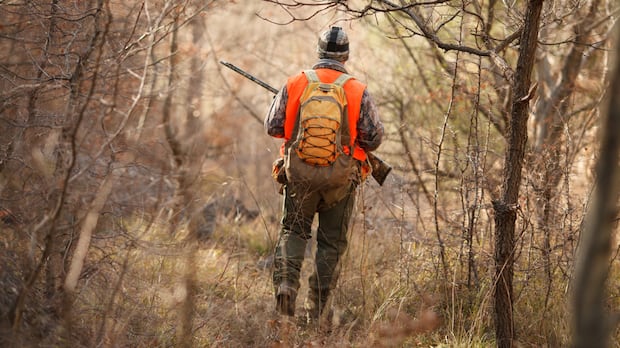
ManitobaThe chief of a Cree community in northern Manitoba says the province is disregarding her community’s food needs and treaty rights, after licences were issued for most of the moose the province estimated could be sustainably harvested in a nearby hunting area.Moose population will ‘collapse if nothing changes,’ says Misipawistik Chief Heidi CookOzten Shebahkeget · CBC News · Posted: Dec 03, 2025 6:00 AM EST | Last Updated: 6 hours agoListen to this articleEstimated 4 minutesThe audio version of this article is generated by text-to-speech, a technology based on artificial intelligence.Manitoba Natural Resources Minister Ian Bushie approved issuing licences for 12 of the 14 bull moose that his department estimated could be sustainably harvested in Game Hunting Area 10 this year, Misipawistik Cree Nation Chief Heidi Cook says. (Serova_Ekaterina/Shutterstock)The chief of a Cree community in northern Manitoba says the province is disregarding her community’s food needs and treaty rights, after licences were issued for most of the moose the province estimated could be sustainably harvested in a nearby hunting area.The December leg of licensed moose hunting season near Misipawistik Cree Nation, about 400 kilometres north of Winnipeg, opened Monday, Manitoba’s hunting guide says.In a letter dated Nov. 25, Misipawistik Chief Heidi Cook told Natural Resources Minister Ian Bushie that her community has a “firm expectation” that the province will immediately cancel December’s moose hunt across the community’s traditional territory.Earlier this year, Bushie said the province would grant a total of 350 moose hunting licences across four game hunting areas — including three that overlap with Misipawistik’s traditional territory: 10, 15 and 15A.Misipawistik launched a lawsuit against that decision in September, alleging it was unconstitutional and in breach of the province’s obligations under Treaty 5. None of the allegations have been proven in court, and a statement of defence has not yet been filed. Since filing the lawsuit, Cook says the province has shared licensing information with her community that shows the government issued licences for 12 of the 14 bull moose it estimated could be sustainably harvested in Game Hunting Area 10 this year.She says that decision disregarded her community’s food needs, which she alleges was a breach of Treaty 5. Misipawistik estimates it needs between 29 and 55 bull moose a year in order to satisfy the community’s on-reserve population.She worries more moose hunting closures will be imposed in the province if things stay the same.Fifteen game hunting areas are either completely or partially closed to moose hunters this year because of “lower than desired” population levels, Manitoba’s hunting guide says.”There’s just not enough moose to meet our food needs and to allow for licensed harvesting to happen at the same time,” Cook told CBC News on Monday.”Right now, our moose are being hunted to the point where the populations are going to collapse if nothing changes.”Misipawistik Cree Nation Chief Heidi Cook says her nation wants to work on a shared moose management approach with the government. (Submitted by Heidi Cook)The province is committed to ensuring that Manitobans can continue to hunt, while also protecting the moose population for generations to come, Minister Bushie said in a written statement to CBC News on Monday.”We’re going to meet with Misipawistik Cree Nation and we will continue to work with Indigenous communities, licensed hunters, and other stakeholders to support fair and safe access to hunting areas,” Bushie said.’One-way relationship’From 2011 to 2017, Misipawistik’s hunters harvested an average of 17 moose per year, Cook’s letter to Bushie says. In 2018, that number dropped to three, and it’s remained low since then.Results of a 2019 aerial survey the province conducted in Game Hunting Area 15 found the area had a “low density” of moose and suggested the population had “declined somewhat” since the last survey in 1994.Misipawistik’s members are reporting fewer and fewer moose sightings each year, Cook said.”I haven’t heard of anyone harvesting one yet this fall in our territory,” she said.However, Misipawistik is not considering using a checkstop or newspaper ads to discourage licensed hunters from coming to harvest, as other First Nations have recently done.Cook wants to find a solution with the province while the lawsuit is pending, and Misipawistik wants to work on a shared moose management approach with the government.”We’ve been sharing our data for years with the province,” Cook said.”The problem is they’re taking our information and there is no shared management. It’s a one-way relationship, and they’re not doing a really good job,” she said.”So we need to push, and this lawsuit is our way of pushing.”ABOUT THE AUTHORÖzten Shebahkeget is a member of Northwest Angle 33 First Nation who grew up in Winnipeg’s North End. She has been writing for CBC Manitoba since 2022. She holds an undergraduate degree in English literature and a master’s in writing.Email: ozten.shebahkeget@cbc.ca
Misipawistik Cree Nation urges Manitoba to cancel December moose licences as season opens