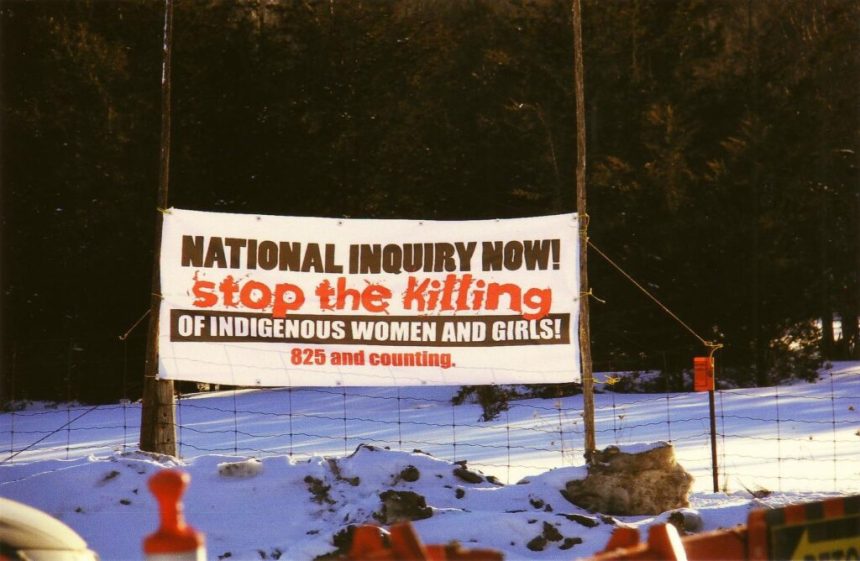
Auditor General Karen Hogan is launching an audit into federal spending regarding missing and murdered Indigenous women and girls. The decision comes after calls from MMIWG family members for accountability for the billions of dollars spent on the crisis. Since 2019, the year the National Inquiry report was published, the Canada has committed $24.7 billion until 2031 to address factors relating to missing and murdered Indigenous women and girls. However, advocates like Meggie Cywink point out that families still struggle to fund their own searches. That’s why over 400 family members signed a letter calling for a forensic audit, questioning why money flows to redundant committees and bureaucracy rather than frontline support. In Cywink’s words, “There are families who can’t even afford gas money to keep searching. Meanwhile, millions of dollars are moving through organizations, and families still don’t know where that money’s going.” Senator Michelle Audette suggests this bureaucratic approach is meant to “muzzle a movement.” The senator also highlighted the government’s failure to fulfill the National Inquiry’s calls for an Ombudsperson or an Independent Oversight Body. This lack of external accountability allows the government to monitor its own progress. This has resulted in the government forming task forces to continue studying recommendations that the National Inquiry already detailed years ago. Advocate Simone Page says this is a redundant measure, and an example of the government “dragging [its] feet.” With respect to the millions spent on annual reports and websites, she adds, “Unless you’re changing people’s material conditions… It’s basically just more bureaucracy.” It has been seven years since the National Inquiry into Missing and Murdered Indigenous Women and Girls released 231 calls for justice. Despite the government’s claims of meaningful advances, research by the Nation found that federal action on these recommendations declined between 2023 and 2026. This revelation reflects the brittle nature of progress, as the Canadian government prioritizes performative gestures over tangible reforms. In 2023, the CBC released a report card on the government’s progress on implementing the National Inquiry Report’s recommendations. At the time, Crown-Indigenous Relations Minister Gary Anandasangaree declared that “roughly 160” of the calls had been acted on. His claim contradicted the CBC’s report card, which said that only 114 calls were acted on, while about 115 were classified as “not started.” This discrepancy stems from a difference in definition: the government counts a call as actioned if initiatives are in the planning, analysis, or consultation stages. The CBC, and now the Nation, counts a call as actioned only when concrete changes are made on the ground. In 2023, the CBC found that only two of the 231 calls for justice had been implemented. That number remains the same today. The government’s self-reported data claims that 138 calls for justice were advanced by June 2025, and 163 were advanced by June 2026. But when the Nation applied the stricter standards introduced by the CBC in 2023, we found that 123 calls were classified as “not started” in 2025. That number fell to 117 by 2026, which marks a marginal short-term improvement. Yet, it remains higher than the 115 recorded in 2023, indicating the government’s work has regressed over the past three years. Administrative gestures, such as hosting roundtables and producing vision documents, function as a substitute for action. While the government may track jurisdictional gaps resulting in a denial of services like mental health and housing, it consistently refrains from ending the buck-passing between levels of government. “The government loves a matrix,” observed Meggie Cywink. “They love numbers, they love committees. There’s no practicality – just another meeting. And the government loves meetings.” When it comes to service outcomes, the government has invested in infrastructure, such as building 80 shelters or transitory homes, and expanding high-speed internet access. However, by prioritizing pilot projects and one-off grants over permanent funding, these changes remain time-limited and fragile. According to the 2026 Fragile Progress report, nearly half of all federal initiatives launched in response to the inquiry have already ended, or soon will. Annual funding for these initiatives is projected to drop by 51% in 2028-2029, from $3.7 billion to $1.8 billion. By introducing programs only to let them lapse, some accuse the government of enforcing austerity through expiration. Ottawa prefers ongoing analysis over operational change for institutions requiring profound reforms, such as policing and prisons. For example: despite years reviewing classifications that disproportionately place Indigenous women in maximum security, Correctional Service Canada has not changed the classification system. Meanwhile, the government has dedicated years to “co-developing legislation” around policing, rather than actually passing laws.
MMIWG Spending Questioned Federal Auditor General acts on families calls for accountability