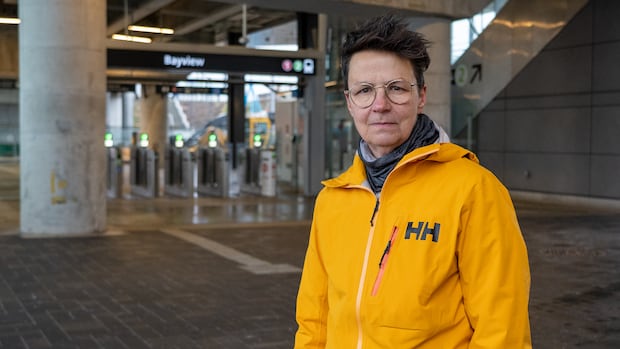
OttawaCatherine McKenney and Ariel Troster are calling on Ontario’s medical regulator to investigate a private addictions treatment clinic that they say has sown “chaos” in Ottawa’s Chinatown neighbourhood.Catherine McKenney, Ariel Troster say New Dawn Medical has sown ‘chaos’ in the neighbourhoodCameron Mahler · CBC News · Posted: Dec 11, 2025 4:00 AM EST | Last Updated: 2 hours agoListen to this articleEstimated 4 minutesThe audio version of this article is generated by text-to-speech, a technology based on artificial intelligence.Former councillor and mayoral candidate Catherine McKenney said the final LRT inquiry report shows council was misled about the project. (Francis Ferland/CBC)Two Ottawa politicians are calling on Ontario’s medical regulator to investigate a private addictions treatment clinic that they say has sown “chaos” in the city’s Chinatown neighbourhood.In a joint letter to the College of Physicians and Surgeons of Ontario (CPSO), Ottawa Centre MPP Catherine McKenney and Somerset ward Coun. Ariel Troster describe months of escalating concerns over New Dawn Medical Clinic.”It’s been a real nightmare since this clinic opened,” Troster said.Troster said community members have witnessed “a whole criminal ecosystem” crop up around the Somerset Street W. site. She said she and McKenney have tried repeatedly to work with the clinic, but they now believe it’s time for regulatory intervention.Their letter alleges doctors are absent, prescriptions are being issued virtually through iPad consultations, and the drugs prescribed are in quantities that enable “diversion” — the resale or exchange of prescribed drugs for stronger opioids like fentanyl. As a result, Troster says the activity has created “an unusual level of chaos” in the clinic’s vicinity.Troster and McKenney are asking the CPSO to examine the clinic’s prescription practices and physician involvement, and to determine whether it’s meeting regulatory standards. Catherine Boucher is president of the Dalhousie Community Association. (Francis Ferland/CBC)Dalhousie Community Association president Catherine Boucher believes the clinic is actually worsening the opioid epidemic.”This clinic and other clinics like it can’t be allowed to continue because they don’t provide safer supply,” she said. “All they’re doing is making sick people sicker, and maybe making new people sick, too.”Previously, a safer supply clinic called Northwoods Recovery moved in the same day the neighbourhood’s supervised consumption site was forced to close under provincial legislation. After months of community backlash, that clinic announced its closure. New Dawn Medical opened the following week at the same location.McKenney says the problems arose immediately.”You could witness people going in and out of this clinic, very, very high volumes [of drugs]coming out and diversion happening almost in front of the clinic,” they said.Both McKenney and Troster say they support harm reduction and safer supply when it’s paired with proper monitoring and wraparound care, but they argue New Dawn’s model lacks the oversight necessary to keep patients — or the neighbourhood — safe. Clinic refutes claimsIn an emailed statement, New Dawn Medical refutes that claim.The clinic says it’s “improving the community by reducing the use of street drugs, overdoses, and providing patients with excellent care, counselling and access to other recovery supports.” New Dawn Medical says it meet regulatory requirements, and says patients are “carefully assessed and monitored” by staff.“Patients in our safe supply program must visit the clinic daily to receive their medications, where a significant portion is administered under the supervision of a pharmacist,” the email reads.New Dawn Medical says all its patients are under the direct care of a physician.Somerset Coun. Ariel Troster is making a motion to ask staff to study an anti-renoviction by-law, using Hamilton’s first-in-Ontario by-law as a model. (Jean Delisle/CBC)But McKenney says local residents and businesses frequently see patients exchanging drugs for money or other substances.”It’s not hard to see when somebody has exited the clinic and walks around the corner, [a] car pulls up and there’s an exchange,” they said.In an email, a CPSO spokesperson confirmed the college has received Troster and McKenney’s letter, and said it investigates whenever a formal complaint is submitted.”The College takes any complaints brought to our attention extremely seriously,” the spokesperson said. The CPSO listed the potential outcomes of such an investigation:Taking no further action Advising the physician on improvements to practice or conduct Requiring remedial self-study Having the physician agree through an “undertaking” to improve or restrict their practice Referral to the Ontario Physicians and Surgeons Discipline Tribunal. For McKenney, the preferred outcome is clear. “I would like to see this clinic closed down,” they said.ABOUT THE AUTHORCameron is an Ottawa-based journalist with CBC News. He’s worked with CBC Kitchener-Waterloo covering elections, local news, and city council. Cameron also interned with CBC Toronto’s Enterprise Unit. Contact Cameron with story ideas at cameron.mahler@cbc.ca. Follow Cameron on X @cam_mahler
MPP, councillor call for investigation of Chinatown addictions clinic