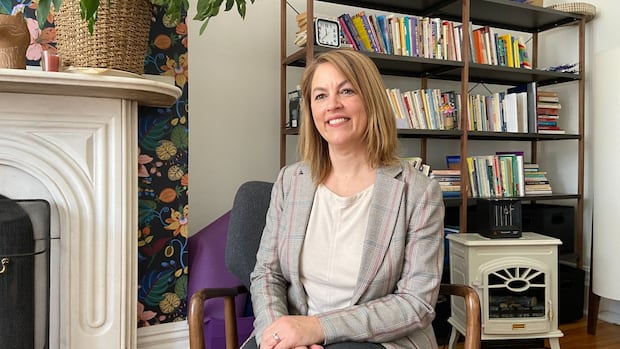
New BrunswickA new 50-bed addictions treatment facility is a welcome addition for the province, according to an addictions service provider, but also points to a need for increased after-treatment support.Sophia Recovery Centre’s Julie Atkinson urges province to also invest in after-treatment supportsSavannah Awde · CBC News · Posted: Dec 02, 2025 3:35 PM EST | Last Updated: 3 hours agoListen to this articleEstimated 4 minutesThe audio version of this article is generated by text-to-speech, a technology based on artificial intelligence.Julie Atkinson, executive director of the Sophia Recovery Centre, said a new 50-bed facility will address a long-standing gap in addiction care. (Rachel Cave/CBC)A new 50-bed addictions treatment centre slated to open next year is a welcome addition for an addictions service provider in Saint John.The province announced on Monday that the residential treatment centre will be located north of Saint John on the Kingston Peninsula, and be operated by Edgewood Health Network Canada. Julie Atkinson, executive director of the Sophia Recovery Centre, said the treatment option will make a big difference for those struggling with addiction. “It’s going to save so many lives,” Atkinson said in an interview on Tuesday.”It has been a longtime missing piece, and we know that people do wait a long time in order to enter residential treatment.”Information Morning – Fredericton11:46New treatment facilityWe get some perspective on the province’s plan for a new therapeutic community model rehab facility on the Kingston Peninsula, for people trying to overcome addictions. Colleen Kitts-Goguen spoke to Julie Atkinson, executive director of Sophia Recovery CentrePremier Susan Holt said Monday that at any given time, the province has about 200 people on a waitlist for inpatient treatment — which can mean a wait of up to nine months.The centre was promised under the previous government in early 2024, and is expected to be in operation by late summer of 2026.Although Atkinson welcomes the news, she cautions that it should not be treated as a “magic wand.”She would also like to see the province add resources to what she calls “after-care supports,” meaning support that follows a person after they leave residential treatment. “[People are] going back to their home environments, which were the places where they were experiencing the stressors that often led them to to turn to substances in the first place,” she said. “And without supports, it’s very common for individuals to relapse within pretty short order.”The centre will be built on an existing camp property on the Kingston Peninsula. (Silas Brown/CBC)Rob McKee, the minister responsible for addictions, said the province is now assessing where and how to expand treatment options.”The first step is acknowledging you need help,” he said in an interview. “And if somebody reaches out for help, if you don’t have that available to them immediately, we could lose them.”We could lose them to relapse, they could spiral even further, leading to tragic consequences.”In an email, Department of Health spokesperson Clarissa Andersen said people completing treatment will be eligible to attend online or in-person after-care once a week during their first year “with a detailed individualized transition plan to the community that includes processes that have clear links to continuity of care services.”She said a person’s continuing care plan has to include, at minimum, weekly participation in the program’s after-care group or a similar support network, attendance at community-based recovery groups, referral to other agencies for services as needed and contact with others who are in recovery.Atkinson also said she has questions about how people will access the residential treatment.”I think there’s a lot of things we don’t know yet, or … haven’t been shared yet, around how the referral process will work.”In her email, Andersen said people can refer themselves or be referred to the program through a primary care provider or an addictions and mental health worker, such as a psychiatrist, psychologist, social worker or counsellor.Rob McKee, the minister responsible for addictions, says the province is evaluating next steps to grow treatment options. (Allyson McCormack/CBC)McKee said people will not have to pay anything to access treatment at the centre.The publicist speaking on behalf of Edgewood Health Network confirmed in an email that there would be no out-of-pocket expenses for someone attending the treatment centre, and that those costs will be covered by the province. The centre will follow a therapeutic community model, McKee said, meaning residents will live with and support one another in their recovery. Atkinson said that group-based model is important to helping people see themselves as belonging to a community.”We know that in addiction, it can be extremely isolating and that loss of connection is a factor,” she said.”Restoring that sense of social connection is huge for people in finding new ways of interacting with those around them.”ABOUT THE AUTHORSavannah Awde is a reporter with CBC New Brunswick. You can contact her with story ideas at savannah.awde@cbc.ca.With files from Information Morning
New rehab beds will ‘save so many lives,’ addiction support provider says