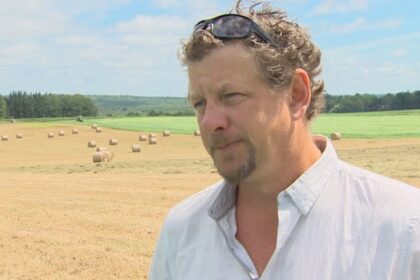
British ColumbiaResearchers and community volunteers in Surrey are studying the barriers that make African and Caribbean foods difficult to find and afford.Imported African and Caribbean foods are expensive and limited, restricting access for many: expertsListen to this articleEstimated 4 minutesThe audio version of this article is generated by text-to-speech, a technology based on artificial intelligence.A grocery store in North Surrey, where many culturally specific food items for African and Caribbean communities are sold. (Sohrab Sandhu/CBC)At his farm in Mission, B.C., Toyin Kayo-Ajayi says he has been trying to solve a problem that he sees frequently: Black newcomers to B.C. not feeling well because they can’t access the foods they grew up eating.“When they get here, after a year or two, they’re not feeling really healthy,” he said. “I started to wonder what’s going on.”The Nigerian-born farmer has been working on growing produce native to Africa such as waterleaf, garden egg, amaranth, ugwu, cassava and yam in B.C. since 2019.Kayo-Ajayi mixes clay, sand and goat manure to create the soil and after several years of work, he says the results are encouraging.Toyin Kayo-Ajayi, a farmer based in Mission, has been experimenting with growing African vegetables in B.C. as part of his effort to improve access to culturally familiar foods for community members. (Sohrab Sandhu/CBC)“After two, three years I was able to grow cassava and yam,” he said.These vegetables, he says, are difficult and expensive to find fresh in Canada.The stores that carry African and Caribbean foods have to rely on international shipping, which drives up costs that are then passed on to consumers. “I realize that [people] don’t really have access to those foods because they are very expensive by the time they get here,” Kayo-Ajayi added.The issue is now the subject of a broader effort in Surrey, where researchers and volunteers say they will be studying cultural food access among Black residents and the food insecurity many report experiencing.WATCH | Research on access to culturally preferred foods for Surrey’s Black community:Group researches access to culturally preferred foods for Surrey’s Black communityA group of volunteers from Surrey are taking on a project to research a lack of cultural foods. As Sohrab Sandhu reports, it’s an initiative to understand and address food insecurity among Surrey’s Black immigrant population.Surrey is home to B.C.’s largest self-identifying Black population, says Kwantlen Polytechnic University health sciences instructor Cayley Velazquez, who is leading the research and is receiving $600,000 in federal funding over the next five years for the study.“We want to better understand what is impacting the availability, accessibility and utilization of food for this community,” she says. “Some of the pilot data that has been collected tells us that food security, along with access to culturally preferred food items, continues to be problematic for this population.”Velazquez is collaborating with Seeds of Change Surrey (SOCS) and its Black, African and Caribbean advisory group to study factors that drive food security among community members.Early survey work by the advisory committee found 76 per cent of Black respondents in Surrey reported experiencing food insecurity, said Anna Spyker, co-ordinator of the advisory group.“Black and Indigenous households have a higher rate of food insecurity. Specifically, they are 3.5 times more likely to be food insecure,” she said.University of Toronto research found nearly 40 per cent of Black people were living in food-insecure households in 2022.Spyker says the point of their latest research is not simply to count how many people are struggling, but to understand why.Members of Seeds of Change Surrey’s Black, African and Caribbean advisory group visit a local grocery store as part of their research into access to culturally specific foods. (Sohrab Sandhu/CBC)“When we’re talking about food insecurity, a lot of the time the narrative is you’ve got at least something that should be good enough,” added Spyker. “But there’s dignity in your food and access to nutritious and cultural food is, and should be, a right.”“You should have the availability of food that would be appropriate for your culture and as well as your body and your health.” In Surrey, much of the region’s African and Caribbean food retail is concentrated in North Surrey, near the King George SkyTrain station, Spyker says. She says she has heard from people who often drive from across Metro Vancouver and even from Vancouver Island just to access food at these stores. The new study will track how these barriers affect residents and will work with community members to help shape future policy recommendations, says Velazquez.“The ultimate goal is to use what we learn to inform equitable food programs and policies that meet the needs of all people.”For Kayo-Ajayi, the study could also lead to local agricultural opportunities. He says many African crops can grow in B.C. if farmers receive proper support.“There’s a big market for this and the opportunity is massive,” he said.
New study to examine access to culturally preferred foods for Surrey’s Black community