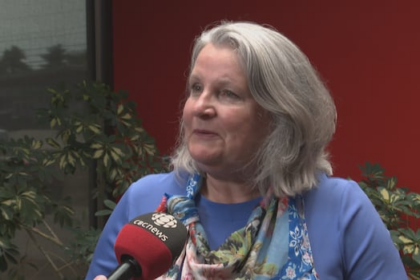
Roughly 200 people attended the launch of the P.E.I. Menopause Society, a new non-profit organization, at Red Shores in Charlottetown on Oct. 23. The group hopes to advocate for better quality of life for people experiencing menopause. Photo by Stu Neatby /The GuardianArticle contentMembers of the newly formed P.E.I. Menopause Society are pushing to ensure that Island women have accurate information and better access to menopause care.THIS CONTENT IS RESERVED FOR SUBSCRIBERS ONLY.Subscribe now to access this story and more:Unlimited access to the website and appExclusive access to premium content, newsletters and podcastsFull access to the e-Edition app, an electronic replica of the print edition that you can share, download and comment onEnjoy insights and behind-the-scenes analysis from our award-winning journalistsSupport local journalists and the next generation of journalistsSUBSCRIBE TO UNLOCK MORE ARTICLES.Subscribe or sign in to your account to continue your reading experience.Unlimited access to the website and appExclusive access to premium content, newsletters and podcastsFull access to the e-Edition app, an electronic replica of the print edition that you can share, download and comment onEnjoy insights and behind-the-scenes analysis from our award-winning journalistsSupport local journalists and the next generation of journalistsRegister to unlock more articles.Create an account or sign in to continue your reading experience.Access additional stories every monthShare your thoughts and join the conversation in our commenting communityGet email updates from your favourite authorsSign In or Create an AccountorArticle contentThe group, which kicked off its launch with an event at Charlottetown’s Red Shores on Oct. 23, also hopes to counteract what two founders called online misinformation about menopause.Article contentArticle contentDr. Annette Gallant and Dr. Laura O’Connor, two of the board members of the Society, say a group of local doctors began talking about menopause care in P.E.I. after attending a conference organized by the Canadian Menopause Society last fall in Montreal.Article contentArticle contentO’Connor said many physicians learn very little about menopause in medical school, even though it affects half the population.Article content“I had maybe one lecture in med school … on menopause. And so there’s a big deficit in what physicians know,” O’Connor said.Article contentO’Connor said many health providers may not be aware of the up-to-date research and evidence about treatments.Article content Executive members of the P.E.I. Menopause Society. From left: Leeanne Yeo, Dr. Annette Gallant, Dr. Kirsti Ziola, Susan Graham, Dr. Kathie McNally, Dr. Laura O’Connor and Dr. Michele Murray. The group held a launch event at Charlottetown’s Red Shores on Oct. 23. Photo by Stu Neatby /The GuardianArticle contentTreatment optionsArticle contentAs one example, she noted that many health providers throughout North America stopped recommending the use of hormone replacement therapy, a leading treatment of menopause-related symptoms, after a well-publicized but problematic 2002 study by the Women’s Health Initiative.Article contentThe headline that drew much of the attention from this study was that it linked hormone therapy to breast cancer, heart disease and stroke.Article contentHowever, as early as September 2002, the Journal of Obstetrics and Gynaecology Canada noted the data relied on women in the age range of 63, “many of whom were already presenting relative risks of diseases at randomization.”Article contentArticle content“The results of the WHI study do not put into question the validity of prescribing combined HRT in early menopause,” reads a September 2002 abstract from the Journal of Obstetrics and Gynaecology Canada.Article contentArticle contentBut the public perception created from that study ended up creating a barrier to prescribing of hormone replacement therapy, O’Connor said.Article content“It was like crickets for 20 years,” O’Connor said. “They misrepresented the data, I think, in the media. And it shut hormone therapy down for decades,” Gallant said.Article contentIn a presentation, Dr. Gina Colbourne, a P.E.I.-based obstetrician and gynecologist, said hormone replacement therapy is safe and effective. Colbourne noted there is still a perceived risk of hormone replacement therapy, from both health providers and patients, much of which is due to the Women’s Health Initiative study.Article content A research study completed by the IWK Foundation surveyed 27,317 individuals across the Maritimes, including 2,261 on P.E.I., on the subject of women’s health. Sixty-five per cent felt the current system does not meet their needs. Photo by Stu Neatby /The GuardianArticle contentColbourne said hormone replacement therapy is “very, very safe” for women under 60 and for women who are within 10 years of starting menopause. Colbourne noted the symptoms of menopause, such as night sweats or hot flashes, can, if left untreated, have significant impacts on women’s health.
P.E.I. Menopause Society aims to dispel misinformation and advocate for womens health