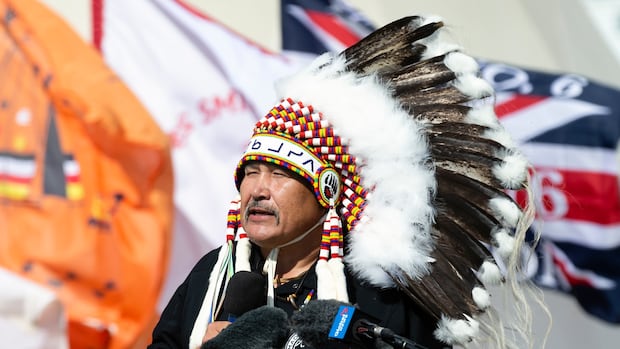
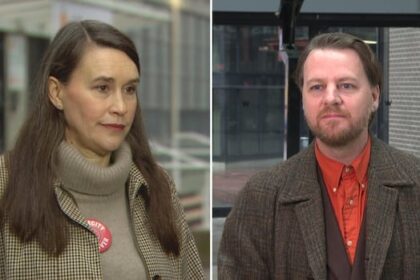
SaskatoonThe Prince Albert Grand Council is sharing the key takeaways from its community consultations that discussed the current policing model and what an independent police force could mean. Community consultations gathered input on what Indigenous-led police force would meanKendall Latimer · CBC News · Posted: Oct 15, 2025 6:21 PM EDT | Last Updated: 4 hours agoGrand Chief Brian Hardlotte of the Prince Albert Grand Council says he is optimistic the goal of realizing an Indigenous-led police force is within reach. (Brian Eneas/CBC)The Prince Albert Grand Council (PAGC) is yet another step closer to creating its own policing system. It’s been years in the making and there are likely years more to go, but Grand Chief Brian Hardlotte remains optimistic that the goal of realizing an Indigenous-led police force is within reach. “This is doable by working together and moving forward into the future and giving our young people the opportunity — and at the end of the day, making our community safe,” Hardlotte said Wednesday. He spoke to reporters during a break at the PAGC’s policing and community safety gathering that’s taking place Wednesday and Thursday in Saskatoon. The PAGC represents 12 First Nations spread throughout 28 communities in northern Saskatchewan. In 2024, the federal and provincial governments provided the council with $1.4 million to conduct the next steps in a feasibility study. Vice-Chief Joseph Tsannie said PAGC would use that money to consult in its communities about what community policing would look like. He said the consultation process was extensive and is now complete. “The challenge of our communities is so vast. We have a huge territory, 50-some thousand First Nation members within the grand council. Our further northernmost community is Fond du Lac. There’s no road access.” He said that for the consultation meetings, they provided food and met with as many community members as possible — conducting a survey and opening the floor for ideas, concerns and questions. “This is driven by the communities, the grassroots people,” Tsannie said. Community feedbackDavid Sanderson said one common theme emerged at the end of each consultation session: hope, namely, hopes for healthier relationships and communities. He is the public safety implementation adviser for the PAGC and spoke about key findings at the news conference Wednesday afternoon. Some common concerns with how communities are currently policed by RCMP included long response times, a lack of cultural understanding and a lack of presence in the community. Sanderson said people also feel there’s simply not enough boots on the ground. “There are not enough police officers in our communities. They’re under-resourced right now,” Sanderson said. Meanwhile, some people’s fears for their safety are growing. People reported fears around rising alcohol and crystal meth addictions, gang and gun activity and increasing violence. Sanderson said mental health workers have left communities because of safety concerns. One person reported hearing dozens of gun shots in one night in Pelican Narrows, a community in northeast Saskatchewan. Sanderson said one community was home to four unsolved homicides. “If you don’t feel safe, how are you going to live? How are you going to survive?”These problems require police, he said, but people don’t feel like the current model is working. The PAGC is hopeful its efforts to have more Indigenous police officers and an Indigenous-led police force working in the PACG communities can make things better. He said people want to see increased cultural understanding and communication from officers, more robust staffing and timely responses, and more mental health supports. “What we’re trying to build here is going to take some time,” Sanderson said. “Communities have solutions. We’ve just got to listen — listen to what they want.… They want to make change.” Grand Chief Hardlotte said the goal isn’t to replace all RCMP services, but rather it’s an attempt to form a partnership and better serve communities together. Hardlotte said the final report on the PAGC’s findings should be ready near springtime. After that, he said they’ll start negotiating what model to follow — whether it’s a tribal council model, an individual First Nation model or something different — and work to secure funding.
Prince Albert Grand Council inches closer to creating independent police force