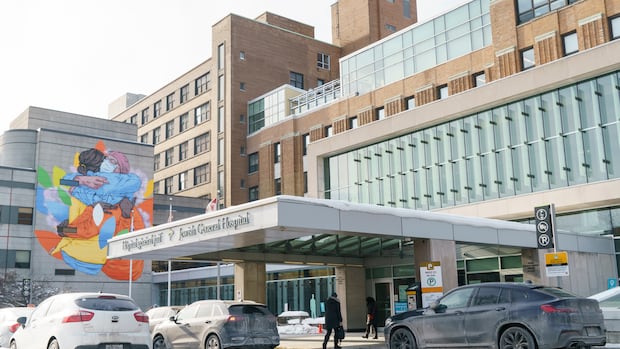
MontrealDaycares and other public institutions in Quebec that serve halal or kosher food are wondering how the province’s new secularism bill will affect them.Province’s secularism minister says it’s not complicated to serve food that isn’t halal or kosher Listen to this articleEstimated 5 minutesThe audio version of this article is generated by AI-based technology. Mispronunciations can occur. We are working with our partners to continually review and improve the results.The Jewish General Hospital is among the institutions that serve kosher food. (Paul Chiasson/The Canadian Press)Daycares and other public institutions in Quebec that serve halal or kosher food are wondering how the province’s new secularism bill will affect them. The bill, tabled last month, says no public institution can “offer exclusively a diet based on a religious precept or a tradition.” That’s creating some confusion. “I’ve heard very little in terms of how that detail would look like. I think it’s all up in the imagination right now,” said Steven Zhou, spokesperson for the National Council of Canadian Muslims. And at B’nai Brith, a Jewish advocacy group, things aren’t much clearer. “How do we navigate this?” asked spokesperson Paola Samuel. “How do we navigate the kosher food or the halal food or whatever other food restrictions other communities have?”Quebec’s government tabled Bill 9 last month, known as An Act respecting the reinforcement of laicity in Quebec, aiming to limit public prayer and extend a ban on religious symbols to subsidized daycare workers. The legislation builds on previous secularism laws, including Bill 21, which banned religious symbols for public employees in positions of authority.WATCH | Religious groups concerned about Bill 9:Outlawing exclusively kosher, halal menus at Quebec public institutions worries religious groupsBill 9, the CAQ government’s latest strengthening of secularism laws, forbids public institutions from exclusively serving food offerings that adhere to religious precepts or traditions. Some say this could create complex issues for places like public daycares. Other measures in Bill 9 include banning prayer spaces in public institutions, requiring uncovered faces for anyone in public education settings, phasing out subsidies for religious private schools, and ensuring public institutions also offer non-religious food options. Critics say Bill 9 unfairly targets religious minorities and amounts to political opportunism, with groups including the National Council of Canadian Muslims and the Assembly of Catholic Bishops calling it an infringement on rights. Opponents also warn the daycare rules could reduce staff, disproportionately affecting Muslim women. Secularism minister defends food rulesJean-François Roberge, Quebec’s minister responsible for secularism, says the proposed law isn’t that complicated when it comes to food.“They can serve kosher meals, but they will have to serve some other food too,” he said. “To enlarge the offer. It’s not prohibited to serve kosher meals.” This would mostly affect publicly funded or subsidized daycares. Jean-François Roberge, Quebec’s minister responsible for secularism, says Bill 9 isn’t that complicated when it comes to food. (Jacques Boissinot/The Canadian Press)Many of them offer exclusively halal or kosher menus, even to children who aren’t Muslim or Jewish, simply out of convenience. As Zhou points out, being halal doesn’t change the taste or nature of the meat. Halal and kosher foods follow Muslim and Jewish dietary rules, respectively, that require specific animal slaughter methods, bans on certain foods and strict handling methods to ensure the products meet each religion’s standards. Daycare association questions bill’s impactPhilippe Grand, the director of food services with the Association québécoise des centres de la petite enfance (AQCPE), a daycare association, said the proposed law raises questions.“It’s important to understand that those responsible for providing food in child-care centres have to work with limited suppliers and budgets,” he said.“So, what will a manager do if the only suppliers able to meet budgetary constraints offer, for example, only halal or kosher products?” In some cases, it could mean a daycare would need two separate kitchens.Samuel said a kosher kitchen is particular. If other food is brought into the kitchen, it is no longer kosher. “And so how do you navigate that while serving other communities and serving your community as well?” he asked. Jewish General Hospital serves kosherBeyond daycares, an institution that could be affected is Montreal’s Jewish General Hospital.According to its website, all of the hospital’s food preparation services are carried out in accordance with Jewish dietary tradition. It says meat and dairy products are never served during the same meal. However, a spokesperson for the hospital told CBC News that non-kosher meals are available, but didn’t offer any other details.The proposed law has people like Samuel asking if the hospital will have to also build a separate kitchen. Supporters of the bill, including the Parti Québécois, argue the legislation strengthens secularism and protects social peace, continuing Quebec’s long-standing effort to separate religion from the state dating back to the Quiet Revolution. Liberals back Bloc’s proposal to remove religious exemption from hate speech lawsRoberge has said the bill reinforces the “religious neutrality of the state” and equality for all citizens. In a statement on Roberge’s behalf, a spokesperson says there are no exceptions provided for in the bill. “However, it’s important to remember that we are still in the tabling stage,” the statement says. “Before answering more specific questions, it’s necessary to consult with stakeholders and have a detailed article-by-article review.” Muslim and Jewish groups say they’re ready to participate in that process. ABOUT THE AUTHORIsaac Olson is a journalist with CBC Montreal. He worked largely as a newspaper reporter and photographer for 15 years before joining CBC in the spring of 2018.
Quebec’s new secularism bill worries public institutions that serve halal, kosher foods