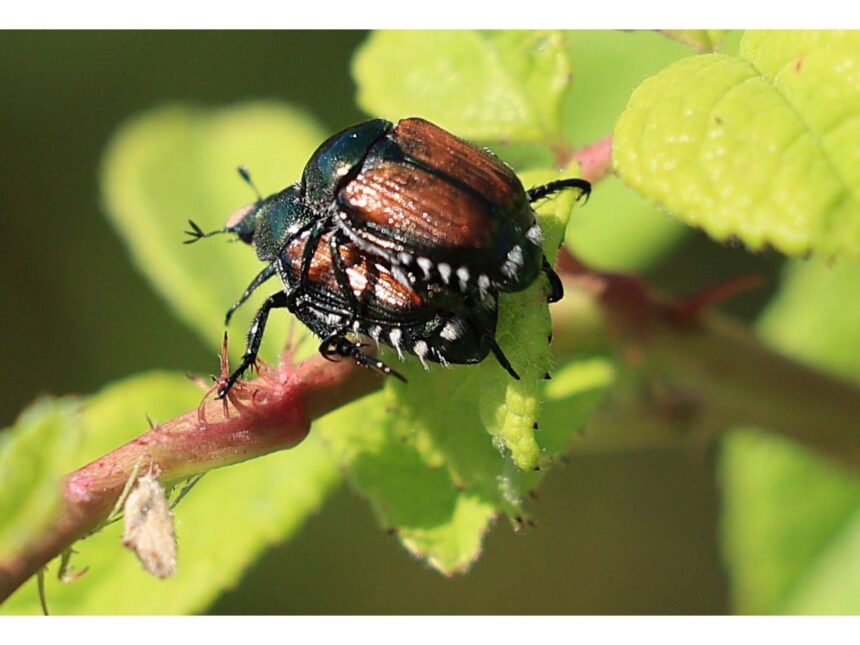
Japanese beetles are seen along the waterfront trail in Dartmouth Tuesday July 22, 2025. Photo by Tim Krochak /The Chronicle HeraldArticle contentThere are some indications of hope in the fight of Nova Scotia gardeners, farmers, grape growers and property owners against the destructive Japanese beetle. THIS CONTENT IS RESERVED FOR SUBSCRIBERS ONLY.Subscribe now to access this story and more:Unlimited access to the website and appExclusive access to premium content, newsletters and podcastsFull access to the e-Edition app, an electronic replica of the print edition that you can share, download and comment onEnjoy insights and behind-the-scenes analysis from our award-winning journalistsSupport local journalists and the next generation of journalistsSUBSCRIBE TO UNLOCK MORE ARTICLES.Subscribe or sign in to your account to continue your reading experience.Unlimited access to the website and appExclusive access to premium content, newsletters and podcastsFull access to the e-Edition app, an electronic replica of the print edition that you can share, download and comment onEnjoy insights and behind-the-scenes analysis from our award-winning journalistsSupport local journalists and the next generation of journalistsRegister to unlock more articles.Create an account or sign in to continue your reading experience.Access additional stories every monthShare your thoughts and join the conversation in our commenting communityGet email updates from your favourite authorsSign In or Create an AccountorArticle contentThe voracious invasive insect can strip leaves off trees, shrubs and plants in short order, especially if they arrive en masse. There are no real controls in place except picking beetles off leaves and dropping them into soapy water. Article contentArticle contentArticle contentBecause the beetle is invasive, there are no natural predators in Nova Scotia. But researchers at Dalhousie University and Agriculture and Agri-food Canada are trying to determine whether the winsome fly, which is fatal to the beetle, may be showing up in the province. Article contentThe fly is also native to Japan but has established populations in Maine, Quebec and Ontario, and some have been found in western New Brunswick. Article contentIt doesn’t kill the beetle directly but lays eggs on its back near the head. Once the egg hatches, the larva makes its way into the beetle and starts feeding on tissue. The beetle dies within a few days. Article contentProcess of confirmationArticle contentWhat researchers are looking at is whether photos that showed up online do indeed show fly eggs on a beetle. Article contentPaul Abrams, a researcher with Agriculture Canada, said beetles with a suspected larva found on the South Shore were sent to researchers at Dalhousie University for testing and then will go to the Agriculture Canada research centre in Kentville. Article contentArticle content“It wasn’t possible to tell from the photo on Facebook whether it was 100 per cent for sure that they were winsome fly eggs, but the person who posted it did send the actual beetles to a lab at Dalhousie,” Abrams said. Article contentArticle contentThere have been reports of possible eggs on beetles from other parts of the province as well, he said. Article content“I did see one other photo that looked good.” Article content A Japanese beetle lounges on the leaf of a plant in a vegetable garden behind a Halifax home on Friday, Aug. 16, 2024. Photo by TIM KROCHAK /THE CHRONICLE HERALDArticle contentThe two main ways to confirm whether the beetles are carrying one of the fly eggs is by an extreme close-up photo or DNA testing through the Kentville research station. Article contentScientists could also keep the beetle and see if what they’re looking at hatches. Article content“If they get a winsome fly coming out, that’s the 100 per cent for sure (verification),” Abrams said. Article content“If it confirmed it’s in Nova Scotia, it may have been there a little while at low levels,” he said. “We do know that it builds pretty slowly at first.” Article contentSo what if it’s here?Article contentIf the fly is becoming established, it’s good news, Abrams said. Article content“Once it’s really well established like it is in the Ottawa area and much of Quebec, it does look like it’s taking quite a bit off the beetle populations,” he said. “It never gets them down, as far as we know, to really, really low levels, but it’s definitely one of the things that helps keep the population down.”
Researchers working to confirm Japanese beetle-killing insect’s presence in Nova Scotia