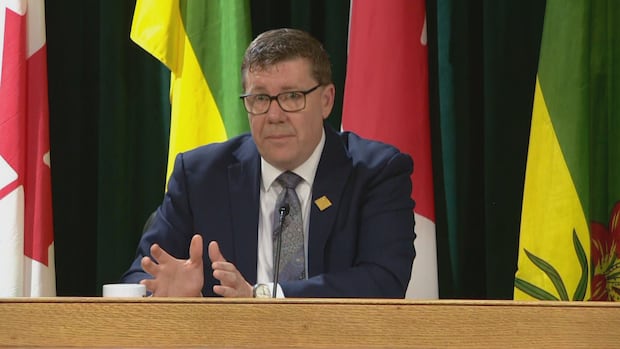
SaskatchewanIn its throne speech, the provincial government touted The Compassionate Intervention Act as a key component in its response to the ongoing drug addictions crisis.Compassionate Intervention Act would allow police, family to place people in treatment against their willAlexander Quon · CBC News · Posted: Dec 05, 2025 10:56 AM EST | Last Updated: 1 hour agoListen to this articleEstimated 2 minutesThe audio version of this article is generated by text-to-speech, a technology based on artificial intelligence.The Saskatchewan government is set to introduce its involuntary treatment legislation on Friday. (CBC News)The Government of Saskatchewan has introduced its long-promised involuntary treatment legislation on the final day of the fall sitting.The Compassionate Intervention Act is meant to support people with severe addictions who are not capable of seeking help for themselves, the government said in a news release.Currently, addiction treatment in Saskatchewan for adults requires voluntary participation.If passed, the new legislation would change that by allowing family members to request treatment for a loved one through the court system.Law enforcement would also be allowed to intervene if someone’s substance use “is putting their own life or the lives of others at serious risk.”Justice Minister Tim McLeod said the legislation will save lives, and strengthen families and communities.”Every person deserves the chance to heal, rebuild and thrive,” McLeod said in the news release accompanying the legislation’s introduction.Under the act, individuals could only be brought to a compassionate intervention assessment centre by police or peace officers, if they are referred by a medical professional, or through a judge’s warrant.It’s not clear where these compassionate intervention assessment centres would be located or if they would need to be built.The legislation was not introduced until final day of the fall sitting, which means it will not be passed until at least the spring.The Official Opposition has already said it supports involuntary treatment.NDP Leader Carla Beck told media in her response to the throne speech that she believes it is acceptable, but only as a last resort and only if an individual’s charter rights are not violated.”There may be a place and a time for ensuring people get stabilized so that they can start that that journey to recovery,” she said.Trade, health care dominate fall sittingThe fall sitting began in late October, with Premier Scott Moe’s government continuing to grapple with trade issues involving the United States and China as well as ongoing complaints on the state of health care in the province. Moe’s government also recently approved an additional $1 billion in spending, which comes after a mid-year financial report predicted the province’s deficit is to grow to $427 million.ABOUT THE AUTHORAlexander Quon is the provincial affairs reporter for CBC Saskatchewan. He has been a reporter with CBC Saskatchewan since 2021 and is happy to be working in his hometown of Regina after half a decade in Atlantic Canada. He has previously worked with the CBC News investigative unit in Nova Scotia and Global News in Halifax. Alexander specializes in freedom of information requests and data reporting. He can be reached at: alexander.quon@cbc.ca. FacebookTwitterWith a file from The Canadian Press
Sask. introduces involuntary treatment legislation as fall sitting ends