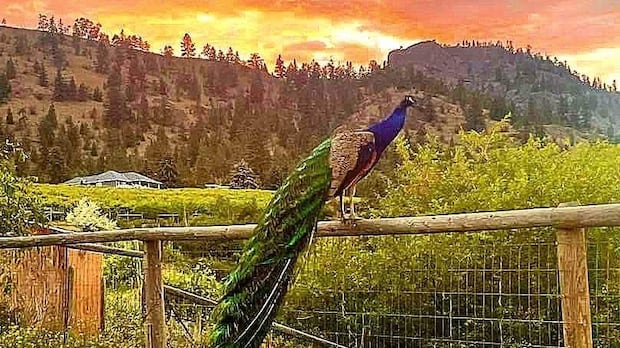
British Columbia·NewOfficials confirm beloved birds at Critterland animal sanctuary in Summerland tested negative for avian flu, and have been spared a controversial cull. Officials confirm beloved birds at Critterland sanctuary in Summerland tested negative for avian fluTom Popyk · CBC News · Posted: Dec 02, 2025 9:18 PM EST | Last Updated: 12 minutes agoListen to this articleEstimated 4 minutesThe audio version of this article is generated by text-to-speech, a technology based on artificial intelligence.Two beloved peacocks at the Critteraid animal sanctuary near Summerland, BC, tested negative for avian flu and escaped a possible CFIA cull. (Critteraid / Facebook )When avian flu spread through the Critteraid Animal Sanctuary near Summerland, B.C., last month, Lori Stewart feared dozens of animals, including two beloved peacocks, were facing a death sentence. News that the peacocks were spared from a possible cull sent the non-profit’s president and staff into celebration. “There were two of us randomly jumping up and down in the middle of the street and crying,” Stewart told CBC Radio West host Sarah Penton. “You’re just overjoyed.” The Canadian Food Inspection Agency (CFIA) confirms the birds escaped infection, and tested negative for the virus. CFIA staff are now standing down at the farm.”The premises [have] also been released from CFIA quarantine and restrictions after having completed all the necessary disposal and disinfection steps,” the federal agency wrote in a statement to CBC News. “It’s hard to find the right words. (Happy, Crying, Relieved, Sad),” the Critteraid team wrote, in a post on the charity’s Facebook page on Saturday. “This journey has been heavy, emotional, and at times overwhelming — but it has also brought incredible affirmation.”Flock fell ill last month On Nov. 7, the animal rescue group reported a flock of chickens had fallen ill at their sanctuary. Eight subsequently died, and test results revealed a positive case of the H5N1 avian influenza virus.Jake and Nicolaj, two beloved peacocks at the non-profit Critteraid animal sanctuary near Summerland, were spared from a possible cull after testing negative for avian flu. (Critteraid / Facebook )In a Facebook post, the sanctuary said it sits directly under a migratory bird path, and wild birds regularly landed on the property — potentially carrying avian flu in the process.After the virus was detected, Critteraid immediately closed its door to visitors, separating and quarantining their animals as required by CFIA regulations.The sanctuary also completed extensive cleaning and disinfection protocols, according to subsequent Facebook posts.After consulting with the CFIA, Critteraid decide to euthanize two chickens and five ducks. But the sanctuary’s two peacocks, Jake and Nicolaj, remained at risk.The sanctuary said they separated them from the ducks, and there was a “justifiable and manageable path forward that would allow them to be spared without compromising broader containment efforts.”LISTEN | A sigh of relief after peacocks spared from cull:Radio West17:19A sigh of relief for an animal sanctuary in SummerlandIn November Critteraid announced some of their birds had come down with avian flu. The quarantine has now been lifted on the farm, and their two beloved peacocks were spared from the cull. Lori Stewart is the president of the animal sanctuary.“If our systems were not in place, this is where we would have lost,” Critteraid stated.“Providing solid documentation, our dedication to cleaning and disinfecting daily, plus our historical data to show segregation … of our property was [single-handedly] the most important piece.”Ultimately, the two peacocks were spared from the cull and the sanctuary says they were “not exposed and are now exempt and safe.”Hundreds of ostriches culledThe outbreak was reported just a day after the CFIA completed a controversial cull of hundreds of ostriches at a farm in Edgewood, B.C., following a lengthy legal battle that went to the Supreme Court of Canada. Scott Weese, an infectious diseases veterinarian at University of Guelph who followed the developments at Universal Ostrich Farms and Critteraid, described how the two organizations approached the cull order from the CFIA as “a tale of two outbreaks.””This is the side of how you do things right,” he said of Critteraid’s handling of the case, noting that they took on the task of culling their animals themselves, allowing them to do so humanely and on their own terms, despite the high emotions.”They did what responsible animal owners do,” he added, also praising them for their fact-based updates shared on social media and willingness to work with the CFIA on finding a way to spare the peacocks and prevent spread to other animals on their property.LISTEN | Weese on how to best handle avian flu outbreaks:Radio West14:01Dissecting how the CFIA handled the ostrich cull, and what it could mean for future instances involving avian flu on farms in B.C.Scott Weese is an infectious diseases veterinarian at University of GuelphCritteraid president Lori Stewart says the end result of their work with the CFIA, and the survival of their peacocks, “is an affirmation” staff did the right thing. Critteraid has been invited to join several committees to learn from experts, and contribute to broader discussions about avian flu and how to protect small-scale flocks and farms. The non-profit organization’s four-hectare property is home to a multitude of rescue animals, including cats, dogs, cows, llamas, horses and goats.The farm has now reopened for animal rescues.“Thank you all for the compassion, patience, and calm you showed when we needed it most. The animals felt it. We felt it. And now we can finally breathe again.”
These B.C. peacocks were spared from an avian flu cull