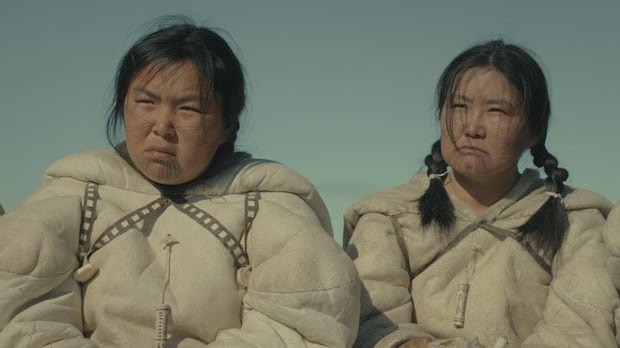
Arts·COMMOTIONToday on Commotion, two artists from Igloolik — Inuk filmmaker Nyla Innuksuk and Inuk actor Zorga Qaunaq — talk about how Zacharias Kunuk’s movies have influenced Inuit storytelling on-screen.Uiksaringitara (Wrong Husband) is an epic historical drama set in Igloolik, Nunavut in 2,000 BCAmelia Eqbal · CBC Arts · Posted: Dec 04, 2025 4:24 PM EST | Last Updated: December 4Listen to this articleEstimated 4 minutesThe audio version of this article is generated by text-to-speech, a technology based on artificial intelligence.A still from Uiksaringitara (Wrong Husband). (Kingulliit Productions)Zacharias Kunuk’s films are legendary for the way they show the beauty of Canada’s north and the richness of Inuit culture. His latest film Uiksaringitara (Wrong Husband) is an epic love story set 4,000 years ago. The historical drama centres on teenage lovers Kaujak and Sapa, who were promised to each other at birth, but later separated. As time goes on and suitors try to win over Kaujak, she holds out hope that her and Sapa will reconnect one day.Today on Commotion, two artists from Igloolik — Inuk filmmaker Nyla Innuksuk and Inuk actor Zorga Qaunaq — talk to host Elamin Abdelmahmoud about the film, and how Kunuk’s movies have influenced Inuit storytelling onscreen.We’ve included some highlights below, edited for length and clarity. For the full discussion, listen and follow Commotion with Elamin Abdelmahmoud on your favourite podcast player.WATCH | Today’s episode on YouTube:Elamin: What I’m hearing, from both of you, is this idea of recognition, right? Like, seeing a movie and feeling immediately like, “Oh, this movie talks like how I talk, and sort of thinks the way that I think.”… The pacing of the movie is a lot of meditative shots, a lot of shots that don’t even necessarily advance the plot as much as we are just kind of sitting with the characters…. There’s something really beautiful about being invited to sit in that place. Am I getting closer to what you’re reacting to with the movie?Zorga: Oh yeah, that’s definitely part of it…. When the first shot opened, I was crying, and I was like, “Come on, man. We’ve seen movies before. Why are we crying so much?” But it felt so authentic to being out on the land out there. When you’re in the city, you get all caught up with being places at certain times and all that. But when you’re out in the country or out on the land, wherever you are, you’re forced to just sit there.The North is so unique in that it’s so expansive, and a lot of spaces don’t have trees. So you can just see forever, and you realize — in the best way — how tiny and insignificant you are … in the sense that you are part of this giant world and universe. It is quite meditative, like you say, and it reminded me of ASMR videos or Studio Ghibli, where you just see a scene of somebody making soup. And that’s quite part of our culture. We’re taught to observe so that we can learn how to do things. And I talk very fast for an Inuk person, but Inuit often, especially the elders, will speak a lot slower, and take their time to say something.Nyla: I love that in the movie too, where you had shots of elders just teaching young people how to make an arrow…. That was so nice.Elamin: The other thing that also stood out for me, and I know it stood out for you as well Nyla, is … the music, right? The music that was composed for the film … by Piqsiq, an Inuit throat singing duo. They’re sisters.… What’s the thing that stuck out for you with the music? Nyla: I loved the simplicity of it … the notes that sounded kind of similar to throat singing, and the use of breath. It’s like they used some throat singing, but also just simple layered voices. And Charlotte Qamaniq … helped Zorga, and Anna and myself on throat singing for our last movie. So just even being able to recognize Charlotte’s voice, it’s such a different experience for us, I imagine, than for others. And it just makes it that much more special….I loved the music. I loved how simple it was — just the drum and the voice. It was beautiful. It created so much tension, and really kind of speaks to this shared breath, like, this idea that we’re all part of this community.You can listen to the full discussion from today’s show on CBC Listen or on our podcast, Commotion with Elamin Abdelmahmoud, available wherever you get your podcasts.Panel produced by Jean Kim.ABOUT THE AUTHORAmelia Eqbal is a Toronto-based writer and social media manager for Commotion with Elamin Abdelmahmoud. She has previously contributed to Q with Tom Power, CBC Books, and CBC News’ Entertainment unit. You can find her at amelia.eqbal@cbc.ca.
Zacharias Kunuks latest film makes Inuit audiences feel seen