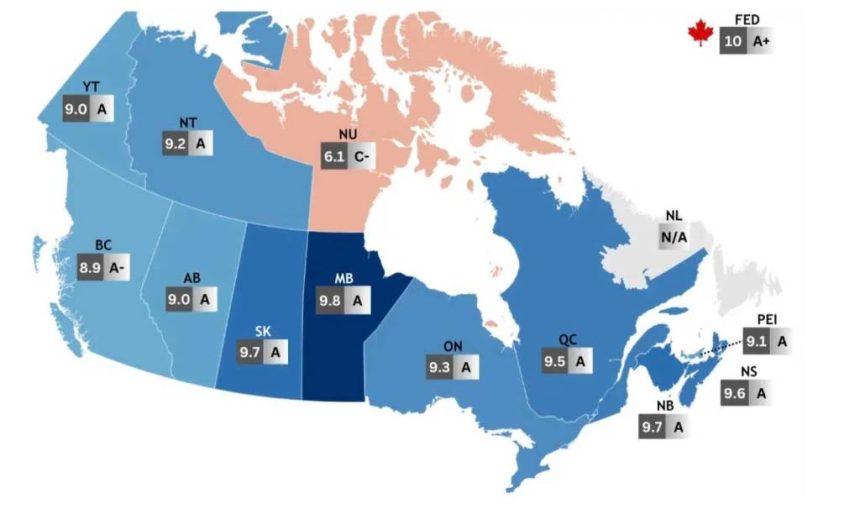
Nunavut has the most barriers to trade with other parts of Canada, according to the Canadian Federation of Independent Businesses (CFIB). While barriers may increase the cost of living, at least some of them are intended to prioritize Nunavummiut. Non-Nunavummiut Canadians don’t have the same ability to open businesses that operate hunting, fishing, trapping and wilderness tourism, or ventures involved in the sale of live animals, hides, skins and fur-skins. That’s because the Government of Nunavut listed those industries as its only exception to the Canada Free Trade Agreement, signed in 2017, which allows Canadians to operate businesses across the country. The Government of Nunavut has licensed 75 outfitters to operate in the territory. “For example, a Manitoba tourism business would not automatically be prohibited from applying for a licence,” said SeoRhin Yoo, senior policy analyst of interprovincial affairs at CFIB. “However, [an outside business] may be at a disadvantage compared to a qualifying Nunavut applicant because the territory is permitted to give preference to local applicants.” The GN also reserves the right to restrict out-of-territory businesses in commercial fisheries, animal breeding, alcohol, electrical energy, petroleum energy, electrical transmission, transportation and cannabis sectors. But the territorial government has not yet made restrictions in those industries. Nunavut scored 6.1 out of 10 on CFIB’s internal trade report card, published this month, with the second-worst performer — British Columbia — receiving 8.9 out of 10. But hunting, fishing and tourism protections weren’t the only reasons why Nunavut scored so low. Employee safety training and Workers’ Safety and Compensation Commission barriers were also a factor, Yoo explained. “Nunavut just does not recognize other provincial or territorial occupational health and safety requirements,” Yoo said. Employees trained on how to protect themselves from a fall in other parts of Canada have to retrain on how to do that in Nunavut, Yoo said. Workers’ safety and compensation board registrations outside Nunavut and the Northwest Territories aren’t recognized in Nunavut, and those employees have to register in Nunavut after coming from outside the territory. “It requires workers to re-undergo training in this front, and that’s another cost added to businesses’ bottom line,” Yoo said. The GN requires insurance brokerages, financial advisors, physiotherapists, engineers and architects to get Nunavut licences before practising in the territory, despite them holding Canadian licences from outside of Nunavut. There are also a number of products made outside of Nunavut that are permitted for sale in the territory but aren’t officially recognized by the government. Each product has territorial-specific standards, so something made in Saskatchewan may not fit Nunavut’s standards, even if it meets federal criteria. “For instance, this means products, such as building products, windows, doors, plumbing fixtures, can be sold. But a contractor may be unable to install them if the territory’s building code, electrical code or plumbing codes require different standards or certifications,” Yoo explained. The list of products from outside Nunavut that are permitted to be sold in the territory but are not recognized by the GN are: -motor vehicles parts -cannabis products -smoking and vapour products -electricity, heat, manufactured gas, oil -fireworks -lottery tickets -boilers and pressure vessels, electrical equipment and gas equipment -pelts and hides
Nunavut scores lowest in Canada for internal trade barriers due to hunting and fishing protections