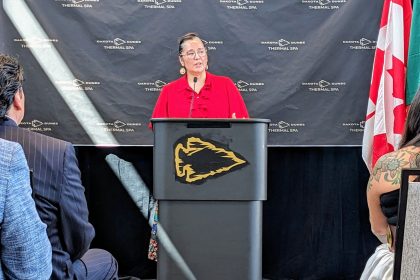
After backlash from the community on how Winnipeg Police were cracking down on open drug use in the city, they are changing course by working more closely with frontline organizations while continuing enforcement. At a news conference on Thursday, police shared the podium with Indigenous leaders and frontline service providers — signalling a new approach in which the service will continue enforcement but work more closely with outreach workers who are helping people access health care, shelter and other supports. “The marked difference you’re going to see will be the addition of the community outreach teams working with uniform officers to provide connections to resources and services or to assist those in need right there, right at the time,” Winnipeg Police Chief Gene Bowers said at the news conference at the Ma Mawi Wi Chi Itata Centre. Winnipeg police originally launched the controversial 10-day crackdown on the open use and trafficking of illegal drugs on June 24, assigning roughly 12 to 15 additional officers to areas where they said open drug use was most prevalent — primarily downtown. The operation caught frontline workers by surprise. Jackie Anderson, executive director of Ka Ni Kanichihk, said a community coalition of urban Indigenous organizations and non-Indigenous allied organizations formed as a direct result of the first police sweep. Now, the coalition will work alongside the police using an Indigenous model of care. “This model recognizes that many of our relatives remain on the streets because of trauma, complex needs and a lack of accessible resources. And it’s not because they want to be there,” Anderson said. The goal, she said. is to connect people with the services they need, including emergency shelter, help navigating systems, detox and treatment and, where appropriate, reunification with family or home communities. Anderson said the approach will be guided by people with lived experience, saying those she calls “our relatives” are the experts on what they need. “A key strength of this partnership is the shared commitment between the Winnipeg Police Service and Indigenous organizations to work together in a way that recognizes and builds on each partner’s strengths. Indigenous organizations lead the engagement through their trusted relationships, cultural knowledge and lived experience, while police provide support and resources where appropriate,” Anderson said. Police said the 10-day crackdown operation resulted in 106 arrests, including 93 people arrested on warrants or for breaching conditions. Officers also laid five drug-possession charges and three drug-trafficking charges and transported seven people to the new Protective Care Centre. They added that property crime fell 11 per cent , violent crime 17 per cent and emergency calls 6 per cent in the target area, while cautioning the 10-day operation was too short to prove a lasting effect. “Police listened to community partners, community partners spoke, and here we have people, agencies and police coming together, which I think is a powerful message to our community and a powerful message to those who are in need,” Winnipeg Mayor Scott Gillingham said. Police faced backlash over June enforcement Winnipeg Police Chief Gene Bowers File photo: Kathleen Martens Police admitted today that they faced backlash over the controversial 10-day crackdown. At the time, police and Gillingham said public complaints and safety concerns drove the operation, which aimed to stop open drug use in public spaces and target drug trafficking. “While there was a great deal of support for the enforcement actions we undertook to address public safety issues, there was also criticism about the lack of collaboration. At that time, I acknowledged that community organizations should have been part of our efforts,” said Bowers. Within two days of the crackdown, frontline workers began hearing concerns from clients, particularly along Main St., outside the access centre. Outreach workers said they saw police detaining people experiencing homelessness, while clients reported officers confiscating and, in some cases, destroying harm-reduction supplies. Police denied this. They said officers only seized items that contained illegal drugs, not unused needles or other harm-reduction equipment. On June 26, the North End Women’s Centre and other community organizations issued a statement warning that the operation could undermine harm-reduction efforts during Manitoba’s HIV public health emergency, discourage people from seeking health care and other services, and push drug use into more isolated areas where outreach workers and emergency responders would have a harder time reaching people. “North End Women’s Centre is deeply concerned that increased police enforcement around health and social services will discourage people from accessing life-saving supports. Public safety is strengthened – not weakened – when people can access health care, housing, and harm reduction services without fear,” said Cynthia Drebot, the centre’s executive director in a joint statement with the West Central Women’s Resource Centre and Resource Assistance for Youth. Bowers acknowledged at the June press conference that police should have worked more closely with frontline organizations before launching the operation. “I just want to say, in retrospect, we could have given our partners that we work with, the community outreach groups, a heads-up that we were initiating this program,” he said. Bowers said the criticism prompted police to reach out and begin working more closely with frontline organizations and Indigenous leaders, including some of those who had raised concerns about the crackdown leading them to today’s announcement of a new working arrangement. Read More: First Nations declare regional public health emergency in Manitoba over toxic drug supply, HIV and housing crisis Opioid deaths among First Nations in Ontario remain higher than rest of population, new report finds Healing works, but First Nation opioid crisis isn’t stopping APTN journalist awarded fellowship to research health issues affecting Indigenous communities in Canada What’s driving the crackdown? File Photo: APTN News There is no dispute that Winnipeg is seeing more open drug use. The crisis seems to be growing, and some have suggested the city’s restrictions on encampments have pushed people out of tents and into more visible public spaces. Gillingham rejected that and said the city does not move pe ople from encampments until some form of housing is available. But complaints about open drug use are not new, raising the question of why police chose to act now. Police said the difference is that they now have tools they did not have before, including new hospital procedures, a rapid response unit and the Protective Care Centre. Manitoba’s Bill 48, which came into force last November, also gives police new authority to detain some intoxicated people who pose a danger to themselves or others in these new designated centres. Another piece is about to fall into place. Manitoba’s first supervised consumption site — also the first Indigenous-led site of its kind in Canada — is scheduled to fully open Aug. 11, giving people a supervised place to use drugs and access health and social supports. While the aim of the supervised consumption site is to prevent deaths from overdose, or what is even more common – poisoning due to toxic additives in the supply – it also means people will be able to shoot, inhale or ingest drugs out of the public’s sight. The timing has also attracted a more cynical question. Police launched the first crackdown June 24, roughly a month before an independent firm was scheduled to conduct the Winnipeg Police Service’s biennial public-opinion survey. The police service and its board commissioned the biennial survey, which independent firm Prairie Research Associates began conducting during the week of July 27, asking residents about their views of police, crime and public safety. Gillingham has repeatedly rejected any suggestions that politics drove the timing, saying the truth is people in the city are driven by two fears at once. He said some residents are deeply concerned about open drug use and whether sidewalks, transit stops and neighbourhoods feel safe. Others fear that people already living with severe trauma will be pushed further into crisis or away from the services they need. “And there are so many Winnipegers who simultaneously hold both positions, both concerns, because both of the concerns are real,” Gillingham said. He said the challenge is finding a way forward that protects public safety while recognizing “that addiction is a health crisis that requires a path to care.” Continue Reading
After backlash, Winnipeg police will renew drug crackdown, this time with input from frontline partners



Leave a Comment