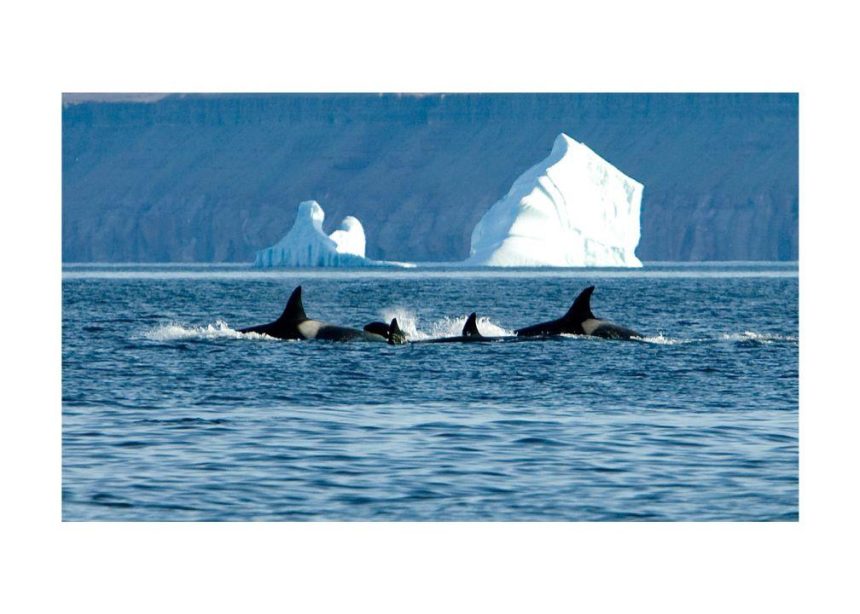
Published 7:50 am Tuesday, August 11, 2026 By William Koblensky Varela Local Journalism Initiative Northern News Service Around 200 killer whales are migrating through waters near Arctic Bay, and those numbers are increasing, according to Department of Fisheries and Oceans researcher Cory Matthews. The whales, also called orcas, don’t all come at the same time. The predators eat beluga, narwhal, bowhead whales, hurting the hunting opportunities for the local community. Matthews has been going to Admiralty Inlet to study killer whales and their impact on the environment since 2009, and he planned to return during the first week of August. Working with the Ikajutit Hunters and Trappers Association (HTA), researchers shoot tracking beacons using crossbows onto the orcas. “If we can find people who are interested in coming back year after year, and train them up the first year, and then have them work more independently in other years; then sometimes, with some communities, we just send up research equipment,” Matthews said. The Ikajutit HTA did not agree to an interview. Matthews hoped the HTA could find people in Arctic Bay to work on the study longer term. “When we first started working on killer whales in the Arctic, we had to rely entirely on what the HTA or the newbie hunters told us about killer whales,” Matthews said. Part of the Department of Fisheries and Oceans’ study is focused on where the orcas are coming from. Some killer whales migrate from as far away as the Mediterranean Sea between Europe and Africa, while others are coming from Iceland and the mid-Atlantic. Matthews said he’s found tropical barnacles growing on orcas near Arctic Bay, indicating how far they’ve travelled. Whales that are more common in the Arctic, such as belugas, narwals and bowheads, likely evolved throughout history to live in colder climates to avoid orcas, Matthews said. Melting sea ice due to climate change is allowing killer whales to reach their prey in places they couldn’t before. “We do know, from Inuit sightings and reports, that they are moving into areas where they previously were precluded from going due to sea ice, and now that that’s melting, it’s opening up both new areas for them to go to in the Arctic, but also to stay longer,” Matthews said. Orcas are also making incursions off the coast of Alaska and Russia as well, Matthews said. Some killer whales have made it as far as Hudson Bay, which previously had been free of the predator because of sea ice in the Hudson Strait between Baffin Island and Nunavik (Northern Quebec).
More orcas coming to Arctic Bay waters due to declining sea ice: researcher