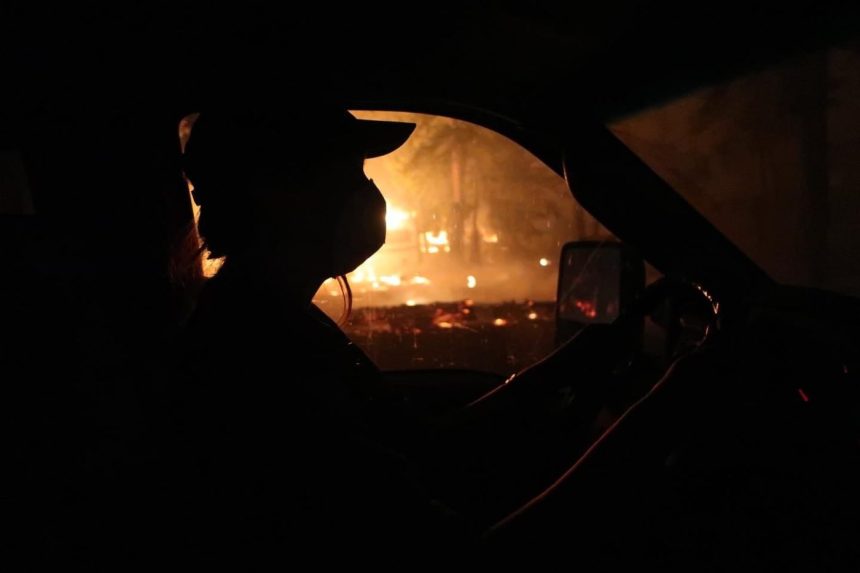
Googling air quality and wildfire updates has now become a pretty routine part of our summers. So as I prepared for a canoe trip to the interior of B.C., I typed in a query: “Murtle Lake air quality.” “The entirety of Murtle Lake and associated backcountry areas are closed by BC Parks due to nearby wildfire activity and safety concerns,” read Google’s AI-generated summary. There was just one problem: Murtle Lake was very much open, according to the BC Parks website. As for the sources Google cited for the closure? They included Facebook posts about two different park closures in the province — as far as six hours away. The error raised some questions: how could Google get this so wrong? What about people who take the information they’re being presented online at face value? And, in the face of natural disasters that keep increasing in both frequency and severity, what harm could AI misinformation pose? Thankfully, my colleague Michelle Cyca was already digging into exactly that for a piece we published this week. My experience was fairly trivial. But bad actors are circulating much more nefarious, potentially consequential (and sometimes comically inaccurate) untruths. One AI-generated graphic this summer falsely claimed 10,000 Albertans were under evacuation orders as of July 16, with a map showing Jasper National Park appearing to cover a large chunk of the province. Experts who spoke with Michelle said 2023 — the worst year for wildfires in Canadian history, so far — was a key turning point where wildfire misinformation reached a new level. Meta instituted a news ban on Facebook and Instagram that summer, ChatGPT was already on the rise and Elon Musk was the new owner of Twitter. It’s “faster, easier and cheaper than ever before to generate fake and misleading content with AI,” Carleton professor Chris Russill told Michelle. And when you see engagement, you can easily respond to ramp things up a notch. “Like, let’s make the smoke bigger. Let’s put a fleeing polar bear in there. Who knows, right?” Researchers don’t yet know how this sort of misinformation is putting individual lives at risk. But the rise of AI slop means wildfire agencies are now forced to put precious time and resources into combatting conspiracy theories — at a time when a lack of trust is already a huge strain on frontline firefighters’ mental health. That’s what freelance journalist Trina Moyles looked into for another story we published today. Last week in Alberta, six workplace safety charges were laid against the province’s Ministry of Forestry and Parks in relation to the death of a 24-year-old firefighter in August 2024. The tragedy highlighted both the dangers wildland firefighters face out in the field and the lingering effects when they get home, which crew members say isn’t dissimilar to returning from combat. Because of the nature of their work contracts, many wildland firefighters are forced to deal with the stressors on their own after wildfire season ends. It’s pushed a former firefighter — and his team of veteran wildland firefighters, occupational health therapists, psychologists and climate specialists — to launch their own peer-support network, which will be the first of its kind in the country. And firefighters aren’t the only ones facing health risks from a changing climate. Migrant workers in Ontario have suffered heat stroke and died while working outdoors in stifling conditions; two weeks ago demonstrators rallied in Toronto chanting “no more deaths.” As community and policy reporting fellow Rajpreet Sahota details in this story, temporary foreign workers are calling for better heat protections, health care access and increased pathways to permanent immigration status. Finally, a ray of sunshine amid the haze: wildfires didn’t stop 10 days of learning and connection to the land at Interior Salish culture camps in B.C., Indigenous journalism fellow Santana Dreaver reports. That included lessons about using fire for good: youth were able to harvest huckleberries in an area that was regenerating, seven years after a cultural burn. Take care and don’t be sloppy, Arik Ligeti Director of audience P.S. In the original email version of this newsletter, and a story that was shared in it, we used an image of fire crews participating in an Indigenous cultural burn — and not a wildfire. We’ve changed the image, and regret the error.
Googles Canadian wildfire misinfo and our AI slop problem