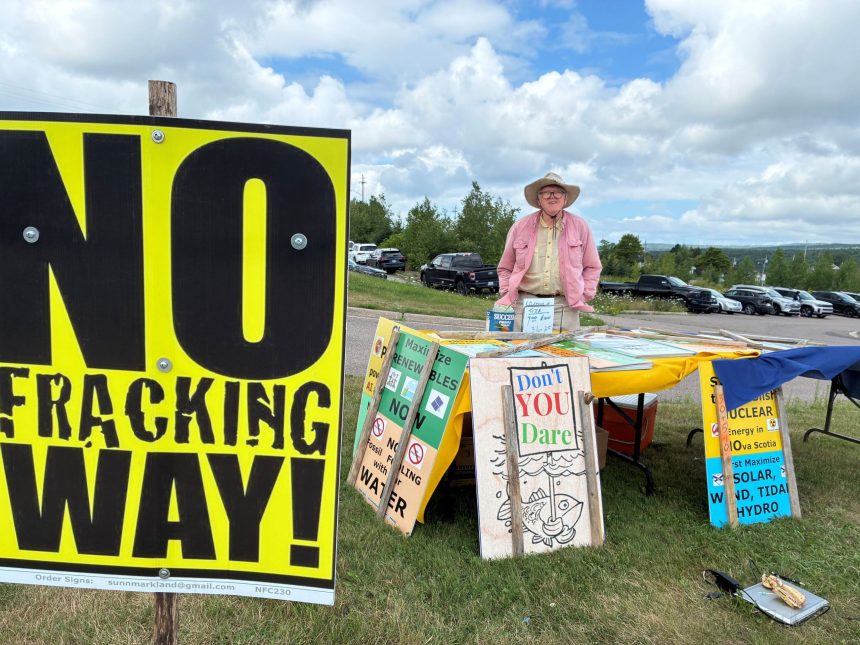
Article contentThe province’s plan to get off coal imports, which largely come from South America, is through large-scale renewable developments with a focus on wind that relies partially on natural gas when it’s not windy or sunny.Article contentExcess natural gas production, if it eventually occurs, could be exported and generate revenues.Article contentLarge-scale wind development is already underway, with farms going up across northern Nova Scotia. Trent Vichie, chief executive officer of EverWind, spoke before Houston.Article contentEverWind is proposing billions of dollars’ worth of onshore wind development, located largely across the Strait of Canso in Guysborough County. It is seeking off-take contracts with European utilities for its proposed green hydrogen/ammonia export facility at Point Tupper.Article contentArticle contentHouston is also pitching Wind West, a proposal to develop offshore wind on the Scotian Shelf and export it via yet-to-be-built electrical interties to the rest of the country.Article contentWind West, with a long-term goal of producing up to 60 gigawatts of power via offshore wind (about 27 per cent of Canada’s total demand), is part of the Atlantic Energy Strategy that has been shortlisted for approval by the federal government’s Major Projects Office.Article contentThe proposal has raised concerns among commercial fishermen about the potential of offshore wind to affect valuable fishing grounds.Article contentThe project would not only rely on large federal investments but also on an ability to attract billions of dollars in private investment.Article content“For years it felt like the wind was always in our face, pushing us back, now we have a chance to put it at our backs,” said Houston.Article content“And we are using this opportunity to ensure Nova Scotia will no longer be at the very end of the energy transmission lines. No good to be at the end of that line. Instead we have an opportunity to be the starting point.”Article contentArticle contentOppositionArticle content Pat Vinish of Noel has followed Premier Tim Houston around the province warning of the dangers of fracking. Photo by Aaron Beswick /The Chronicle HeraldArticle contentAfter Houston’s speech, only one of those who arrived to oppose his plans was still outside the Port Hawkesbury Civic Centre. Pat Vinish of Hants County has been following the premier around the province to each of his speeches and setting up his table with signs and information opposing fracking.Article contentHe said he lives near where a well was fracked before the former Liberal provincial government implemented a fracking moratorium in 2014 and hasn’t been able to drink his water since.Article contentVinish said that instead of subsidizing oil and gas companies to do exploration, the province should have offered small-business grants to create durable economic activity.Article contentAsked about the low turnout of those opposed to natural resource development and fracking, Vinish said the premier and media had driven people away by misrepresenting an incident in Wolfville in July. After Houston’s speech at Acadia University on July 14, protestors surrounded his car. One man climbed on its roof, and the vehicle’s windshield was broken.Article contentFor his part, Houston has begun stopping before his speeches to speak with those opposed to his plans, as he did in Port Hawkesbury and recently in Pictou County.Article content
Houston pitches natural resource, energy development to pay for rising social programming costs