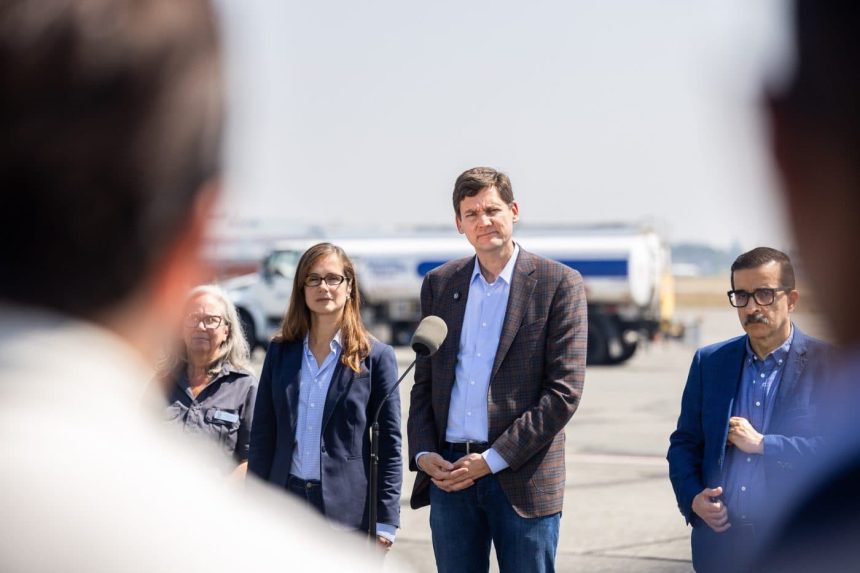
Summary By 2030, BC Hydro was supposed to be using only clean or renewable sources to generate electricity — but it just bought a gas-fired power plant. Energy Minister Adrian Dix said purchasing the plant will allow BC Hydro to provide reliable power while developing more renewable electricity. But some experts say the purchase shows B.C.’s emissions reduction ambitions are disconnected from reality. On Aug. 6, with much of southern B.C. blanketed in wildfire smoke, Minister of Energy and Climate Solutions Adrian Dix kicked off a Campbell River press conference by thanking wildfire fighters and the BC Hydro employees working to address infrastructure damaged by the flames. “The impact of climate change and the impact of wildfires presents challenges to BC Hydro,” Dix acknowledged, adding wildfires had knocked out power for about 24,000 B.C. homes over the previous week. A few days prior to the minister’s announcement, wildfires near the central B.C. communities of Clinton and Vernon had destroyed hundreds of homes and prompted evacuation orders affecting about 8,000 people. But Dix wasn’t on Vancouver Island to talk about the wildfires. He was there to announce the purchase of Island Generation, a 275-megawatt natural gas-fired power plant, by BC Hydro. Despite a mandate that all electricity generated in B.C. come from renewable sources by 2030, BC Hydro now says it needs to continue getting electricity from gas to meet an anticipated surge in power demand over the next few years: a 20 per cent increase by 2030 and a 50 per cent increase by 2050. That surge in demand is driven largely by mining and liquefied natural gas (LNG) projects, as well as increasing numbers of electric vehicles and heat pumps in B.C. homes. During the announcement of the province’s purchase of Island Generation, Energy Minister Adrian Dix called climate action “essential,” but said that the gas-fired power plant will allow BC Hydro to focus on developing renewable energy in the face of surging demand. Photo: Province of B.C. / Flickr Keeping gas in BC Hydro’s generation mix will allow the provincial power utility to focus on developing more renewable energy sources, Dix argued. “It’s better to continue to build out clean electricity and to ensure that resources like Island Generation stay in B.C. and support the system,” he said, calling climate action “essential” to B.C.’s environmental, economic, social and cultural well-being.“Surely things like our own wildfires, and then witnessing what’s happened, for example, in France, in Spain, in other parts of the world, demonstrate this,” he said. The day after the Campbell River announcement, the Bald Ridge fire ignited near Summerland in southern B.C., leading to the evacuation of more than 20,000 people. On Aug. 8, Premier David Eby declared a provincial state of emergency due to the wildfires. B.C. is now in its third state of emergency in five years, including those prompted by the November 2021 atmospheric river and the extreme wildfires of 2023. “Climate scientists have connected the dots to all three of those emergencies and been able to identify that climate change made them both more likely and more extreme,” Dan Woynillowicz, a climate policy expert and principal with Polaris Strategy + Insight, said after watching Eby declare a state of emergency. “And neither the premier nor either of his ministers made even passing reference to climate change in that whole press conference.” Some might say that connecting the “explosive and extremely dangerous” conditions driving this year’s wildfires to climate change is in poor taste while people are being displaced and losing their homes, but Woynillowicz takes a different view. “I think British Columbians are sophisticated enough to be able to hear those different messages,” he said. “What we need to continue to do to better prepare and adapt to a world in which we are going to be experiencing this with greater frequency and greater extremity, but also what we need to do to prevent even worse impacts in the future by reducing our combustion of fossil fuels that are that are creating the problem and making it worse.” Failure to plan for future electricity demand makes Island Generation purchase an ‘unfortunate necessity’ Gas isn’t a big part of BC Hydro’s electricity generation, about 2.5 per cent. The emissions reduction from BC Hydro ditching gas would not be huge, and there are arguments for keeping facilities like Island Generation online as energy demands grow across B.C.Island Generation is what’s known as a peaker plant, mostly called on to generate power at times of peak demand like hot summer days and cold winter nights. Over the past five years, it’s been running for about five days per year and BC Hydro expects that will continue. The plant can create enough electricity to power about 125,000 homes — about one-quarter of all the electricity that can be produced on Vancouver Island, making it an important local asset.Evan Pivnick, associate director of public affairs for Clean Energy Canada, called the Island Generation purchase an unfortunate necessity — one that shows BC Hydro’s planning has not kept pace with the growing electricity demand it faces. “This needs to be an opportunity to learn from those mistakes, so that we truly look at natural gas as an option of last resort, not as something that plays a growing role in our electricity systems,” he said. B.C. is set to achieve just half of its legislated target of reducing emissions by 40 per cent below 2007 levels by 2030, according to the most recent climate accountability report. “Rather than closing the gap to the 2030 target year after year, we’ve been getting further away from it,” Kathryn Harrison, a political science professor at the University of British Columbia who studies climate and energy policy, told The Narwhal. “Since that report was published [in 2025], the B.C. government has weakened some climate policies and, as far as I can tell, abandoned others,” she added, citing B.C.’s discarded pledges to develop an oil and gas emissions cap and reduce medium- and heavy- truck emissions, as well as the elimination of the consumer carbon tax. Though BC Hydro has a mandate to generate 100 per cent of its energy from clean or renewable sources by 2030, the provincial power utility now says it needs to continue getting electricity from gas to meet an anticipated surge in power demand over the next few years. Photo: Amber Bracken / The Narwhal Electrification — replacing fossil fuel power sources with electricity — is central to almost all of B.C.’s emissions reduction goals. But as B.C. fast-tracks energy-intensive resource projects, BC Hydro has yet to figure out how and when it would have those resources ready to supply them with power. “There was no accompanying electricity strategy,” Pivnick said. “There was a disconnect where the ambitions around electrifying industry, electrifying households, never translated into what does this mean for our electricity system and how do we think about the buildout of the supply that’s required?” Even the 50 per cent increase in electricity demand by 2030 that BC Hydro is currently working to meet is likely a conservative estimate. Woynillowicz noted the federal government’s electricity strategy projects a doubling in electricity demand across Canada by 2030. “BC Hydro has continued planning for, relatively speaking, a lower-growth future, and I think that is now coming back to bite,” Woynillowicz said.He wondered whether a more proactive planning approach could have allowed BC Hydro to develop renewable resources and avoid continuing to rely on Island Generation. Despite launching the CleanBC program in 2018 and investing $3.5 billion in its efforts to cut greenhouse gases, B.C. has not been successful at reducing emissions in the province and has admitted the program’s goals are no longer “accurate or workable.” “Hindsight is 20/20, but I think it raises questions,” he said. “Between BC Hydro and the government, was planning happening in the way that it needed to be? I would say that no, it wasn’t. That there was fundamentally a disconnect between CleanBC and the future that BC Hydro was planning for.” LNG ambitions could lead to electricity crunch and higher gas prices The pressing need for power that B.C. faces is relatively new. Before the NDP government committed to completing the Site C dam, some experts estimated the province would not need the 1,100 megawatts the dam can produce for a decade or more after it began operating. There were also those who argued renewable power sources would be a better bang for the B.C. government’s buck. But just electrifying all proposed LNG terminals in B.C. — something the government has made a condition for those projects to proceed — and some of the gas infrastructure to supply them would take 40,000 gigawatts per year. That’s 7.5 times the capacity of Site C, as noted in the CleanBC review co-authored by Woynillowicz and fellow climate expert Merran Smith. Electrification is key to the main marketing slogan for B.C.’s LNG, as Premier Eby emphasized during a recent press conference. “Our LNG is the lowest carbon in the world because it is electrified as much as possible throughout the chain [and] because we have high standards around methane leakage and emissions,” he said. “We take climate change very seriously, but we also recognize that B.C. can play a role in driving down carbon pollution around the world.” But the massive electricity demand for LNG could put B.C.’s electrification and emission reduction goals in peril. “If we don’t have enough electricity to power LNG and potentially also electric vehicles and home electrification and other industries, we will end up either not pursuing those projects or increasing our emissions,” Harrison said. She also pointed out that B.C.’s most recent emission projections don’t include some of the LNG projects the provincial government has been pushing hard to see built: LNG Canada Phase 2 and Ksi Lisims. If those facilities fire up, it will add “many millions of tonnes difference” to how realistic the province’s emissions reduction goals are. The Site C dam is capable of generating 1,100 megawatts, enough to power around 500,000 homes. But the expansion of LNG and mining projects in B.C., along with the adoption of electric cars and heat pumps, is driving a surge in demand: just electrifying all proposed LNG terminals in B.C. and the gas infrastructure to supply them will take 40,000 gigawatts per year. Photo: Province of B.C. / Flickr The economic opportunities offered by becoming a global LNG supplier are real, Pivnick said, but they may not outweigh the downsides. “The world would be very happy to see Canada and B.C. invest in more and more fossil fuel projects that ensure there’s a secure supplier available to purchase from as they go through their own transitions, but that’s Canada and B.C. choosing to invest as essentially a shock absorber for a world that’s trying to move away from our goods,” he said. A robust LNG industry will also mean much higher demand for natural gas in B.C. The province’s 2026 budget banks on a doubling of natural gas prices. That could be bad news for affordability in B.C. down the road, given natural gas accounts for about 31 per cent of all energy used in the province, while electricity accounts for about 18 per cent. “Whether we’re talking about burning natural gas in our homes or burning natural gas for electricity, continuing to have that reliance at the same time that we’re actively trying to secure higher prices, [that is] good for the oil and gas sector, good for the province in terms of royalties, but it’s actually pretty lousy for British Columbians from an affordability perspective,” Woynillowicz said. Back in April, Dix told the legislature Island Generation had been having trouble with its gas supply, an issue he attributed to demand from the Woodfibre LNG project in Squamish. In July, The Narwhal’s questions to the Energy Ministry, Island Generation and Woodfibre LNG about the supposed supply issue mostly went unanswered. At the Aug. 6 announcement, Dix said he is confident Island Generation will be able to get the gas it needs, but offered no further information. Woodfibre LNG in Squamish is one of the projects in B.C. driving increased demand for natural gas. The province’s 2026 budget forecasts a doubling of gas prices, something climate policy expert Dan Woynillowicz describes as “pretty lousy for British Columbians from an affordability perspective.” Photo: Jennifer Gauthier / The Narwhal Concern for climate change has spiked as wildfire smoke spreads, creating an opportunity for conversation A very dim silver lining to the summer’s wildfires is that they seem to have put climate change back on many Canadians’ radar. A recent Angus Reid poll found 21 per cent of Canadians put climate change as their top concern, up from 14 per cent in March. In B.C., 25 per cent of respondents said climate change was their top concern, putting the issue in third place behind cost of living and healthcare. That’s a notable shift from the past few years, when climate change has consistently polled low as a priority for many Canadians. But just because people aren’t telling pollsters climate change is a top concern doesn’t mean they aren’t worried about the impacts of a warming world, Harrison argued. “I don’t think it is the case that that means people are willing to sacrifice their safety from wildfires, their children’s health from breathing smoke, their elderly parents’ safety in extreme heat in exchange for a lower cost of living today,” she said. “They’re just not connecting those dots.” That lack of connection isn’t helped, she said, by politicians who claim they take climate change seriously while continuing to support fossil fuel development and failing to address emissions effectively. “Politicians are reassuring people, ‘Don’t worry, we’ve got the whole climate change thing in hand,’ and people at the same time are worried about the economy,” she said. Instead of offering reassurances that things will be okay, Woynillowicz wishes politicians would communicate what they are doing to directly and effectively address climate change. “One of the messages we’re hearing from government is that they’ve got our backs,” he said. “I would feel more comfortable that they’ve got my back and my kids’ backs if I knew that … they are actually being proactive, both in terms of helping make us more resilient to future impacts that we know are coming — but also what they’re doing to prevent even worse impacts in the future by doing more to reduce the pollution that’s causing the problem.”
BC Hydro just bought a gas power plant