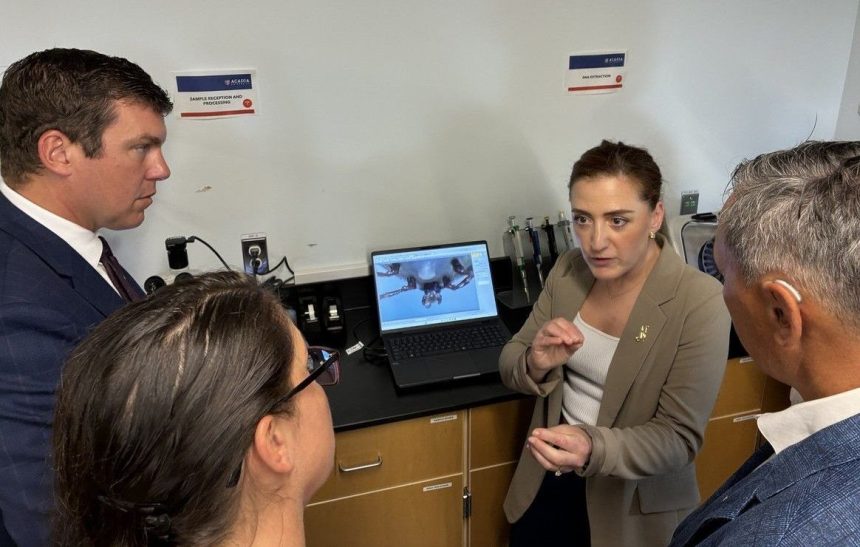
Nicoletta Faraone explains the work at the Canadian Tick Research and Innovation Centre at Acadia University after the official opening of the facility on Wednesday. On the screen behind her is a live feed of one of the ticks at the facility laying eggs as part of the lab’s breeding program. Photo by Ian Fairclough /The Chronicle HeraldArticle contentThe tick research centre at Acadia University got a financial boost as the provincial and federal governments provided more than $1.6 million in new funding. THIS CONTENT IS RESERVED FOR SUBSCRIBERS ONLY.Subscribe now to access this story and more:Unlimited access to the website and appExclusive access to premium content, newsletters and podcastsFull access to the e-Edition app, an electronic replica of the print edition that you can share, download and comment onEnjoy insights and behind-the-scenes analysis from our award-winning journalistsSupport local journalists and the next generation of journalistsSUBSCRIBE TO UNLOCK MORE ARTICLES.Subscribe or sign in to your account to continue your reading experience.Unlimited access to the website and appExclusive access to premium content, newsletters and podcastsFull access to the e-Edition app, an electronic replica of the print edition that you can share, download and comment onEnjoy insights and behind-the-scenes analysis from our award-winning journalistsSupport local journalists and the next generation of journalistsRegister to unlock more articles.Create an account or sign in to continue your reading experience.Access additional stories every monthShare your thoughts and join the conversation in our commenting communityGet email updates from your favourite authorsSign In or Create an AccountorArticle contentThe Canadian Tick Research and Innovation Centre (CTRIC) officially opened this week, but the work — including breeding ticks — has been underway since March. Article contentArticle contentResearch Nova Scotia is providing $1.2 million for the development and commercialization of technologies to address tick-borne diseases. Article contentArticle contentBrian Wong, the minister responsible for Research Nova Scotia, said the work addresses an important issue for Nova Scotians while also creating opportunities for economic growth. Article content“This investment will help researchers better understand what is driving the recent increase in tick populations, the emergence of new tick species, and the growing prevalence of tick-borne disease in Nova Scotia,” Wong said. Article content“It will also support work across human and animal health, helping fill knowledge gaps and giving companies the information they need to create new products and grow economic opportunities.” Article content Nicoletta Faraone is the director of the Canadian Tick Research and Innovation Centre at Acadia University. Photo by Ian Fairclough /The Chronicle HeraldArticle contentHe said Lyme disease is not the only illness to be concerned about, “and for other companies to have the ability to use the research being produced here and find ways to combat ticks or to help keep them from attaching to humans is amazing.” Article contentThe funding announced Tuesday will move from tick-borne disease management and prevention toward commercial endeavours and build on the research that has been happening to help local companies such as PureGard on the South Shore compete in new markets. Article contentArticle contentACOA is also providing $455,000 toward the establishment of the centre and its technical equipment. Kings Hants MP Kody Blois said the work being done is important.Article content“This will resonate because anyone who wants to get outside and exercise or enjoy our great outdoors in our country is increasingly thinking about the health and safety and protection of their families (from ticks),” Blois said. Article content“We’ve been hearing the stories of people who have been infected by the various types of ticks that are now prevalent in our communities, and the health consequences.” Article contentHe said researchers at CTRIC “are doing some world-class research and leading research across the country.” Article contentNicoletta Faraone, a chemistry professor at Acadia, leads the research at the lab along with biology professors Laura Ferguson and Kirk Hillier. Article content“These funds are essential for starting to build up the lab,” she said. Article contentLast October, research breakthroughs led to an initial $755,000 donation from Peter and Susan Gordon of Ontario to establish the centre.
Acadia University tick research lab gets $1.6 million in government funding to launch facility