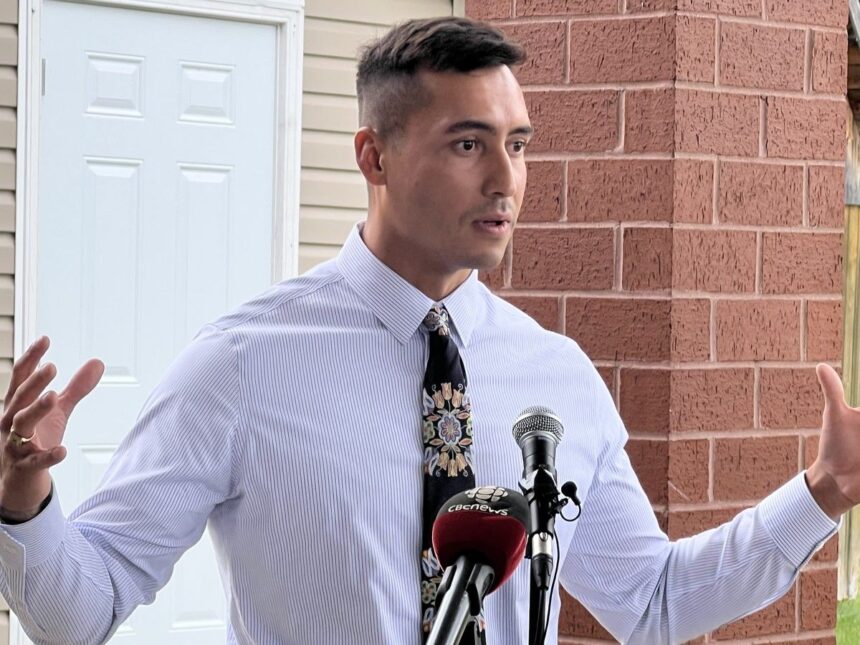
An announcement near Fredericton features two leaders who had their own road to recoveryAuthor of the article: John Chilibeck • Local Journalism Initiative reporterPublished Sep 10, 2026 • Last updated Sep 10, 2026 • 4 minute readJustice Gruben, the chief of Bilijk or Kingsclear First Nation, says addictions have gripped in his community because of historical wrongs. Photo by John Chilibeck/ Brunswick NewsTwo leaders who themselves battled addiction have announced $1.3 million in funding to build a new treatment in Bilijk (Kingsclear First Nation), a small community west of Fredericton battling a drug and alcohol crisis.THIS CONTENT IS RESERVED FOR SUBSCRIBERSSubscribe now to read the latest news in your city and across Canada.Unlimited online access to articles from across Canada with one account.Get exclusive access to the e-Edition, an electronic replica of the print edition that you can share, download and comment on.Enjoy insights and behind-the-scenes analysis from our award-winning journalists.Support local journalism and the next generation of journalists.SUBSCRIBE TO UNLOCK MORE ARTICLESSubscribe now to read the latest news in your city and across Canada.Unlimited online access to articles from across Canada with one account.Get exclusive access to the e-Edition, an electronic replica of the print edition that you can share, download and comment on.Enjoy insights and behind-the-scenes analysis from our award-winning journalists.Support local journalism and the next generation of journalists.REGISTER / SIGN IN TO UNLOCK MORE ARTICLESCreate an account or sign in to keep reading.Access articles from across Canada with one account.Enjoy additional articles per month.Get email updates from your favourite journalists.THIS ARTICLE IS FREE TO READ REGISTER TO UNLOCK.Create an account or sign in to continue with your reading experience.Access articles from across Canada with one accountShare your thoughts and join the conversation in the commentsEnjoy additional articles per monthGet email updates from your favourite authorsArticle contentOn Wednesday, Justice Gruben, the 28-year-old who was recently elected chief, and Rob McKee, the justice minister who is also responsible for addictions and mental health services, took part in the announcement.The money from the provincial and federal governments will go toward an outpatient treatment centre in the heart of the community expected to open next spring. The Bilijk Health Centre is already helping 75 out of the registered population of about 700, but it does not have enough space to provide treatment.Terry Young, who serves on Bilijk council, introduced the crowd of 100 people or so to native elder Nelson Solomon, who decades ago helped set up addiction services for Indigenous people throughout Atlantic Canada. He then pivoted to Gruben, who he’s known since he was a child.“I’m really grateful for this young man who stands here because he fought addiction, and he won,” Young said, before pointing out to a woman in the front row. “Because that woman, his mother, fought it and won. Now we’re gonna pass that on, and we’re gonna help others and our families to fight it and win.”By signing up you consent to receive the above newsletter from Postmedia Network Inc.Article contentArticle content Terry Young, a Kingsclear First Nation councillor, introduces elder Nelson Solomon, a pioneer in addiction services for Indigenous people in the region. Photo by John Chilibeck/ Brunswick NewsSpeaking to reporters afterward, Gruben apologized by saying he’d prefer not to talk about his own plight.However, the chief blamed historical wrongs for damaging his community. Centuries ago, his Wolastoqey people ranged over a large territory – the western half of New Brunswick – before Ottawa penned them into smaller reservations.Losing their land, traditions and language created a cycle of poverty and abuse, repeated through generations, that culminated in alcohol and drug problems, he said.“It’s kind of like a slogan of mine that I like to say: The reservation is the institution of social control and isolation,” said Gruben, who has a master’s degree in social work from the University of Toronto. “It’s designed to keep us disempowered and oppressed. And so, I believe that an avenue to liberating ourselves and freeing ourselves from those kind of vices is to provide structural solutions.”The day after he was elected, Gruben took longstanding plans that others in the community had proposed to improve addiction services and began calling provincial cabinet ministers.Article contentOne of them he knew well: Cindy Miles, the minister of social development, whose son he grew up with. She told Gilles LePage to expect the chief’s call. He’s the minister responsible for the Regional Development Corporation, the provincial agency that would eventually hand over $499,000 for the project (another $800,000 came from Health Canada).The call came that same day in February.“If the reservation is the institution of social, political violence, how do you emancipate yourself from that?” Gruben told reporters. “And I believe you change the structure within it, and you grow and you provide structural solutions in that space. And so, the addictions outreach centre, that’s a structural solution to addictions.”Gruben said booze, fentanyl and other hard drugs were plaguing his First Nation. Although some places in the region are suffering a shortage of health-care professionals, he said that wouldn’t be an issue at the new centre. The First Nation, he said, recently posted jobs for a registered nurse and several licensed practical nurses and received 10 applications in no time.Article contentDuring the announcement, McKee said he was pleased to see so many members of the First Nation come to the outdoor event that included four provincial cabinet ministers.The project, the justice minister said, came together in record time.“We see across the province, addictions and mental health is a growing crisis, whether it’s in big cities or rural communities or First Nation communities, the need is growing. But it’s especially more so on First Nations, because of the intergenerational traumas that you have faced, systemic racism, colonialism, that the crisis of addiction and overdose is greater. So that’s why we’re here working with you to get this done.”The minister said when it comes to mental health and addictions, everyone deserves timely care, appropriate treatment, and hope for recovery.“Recovery lays the foundation for so many good things to follow in an individual’s life.” Justice Minister Rob McKee tells a crowd at Kingsclear First Nation that he was treated for addiction when he was 20 years old. Photo by John Chilibeck/ Brunswick NewsMcKee, a 40-year-old bilingual lawyer who represents Moncton Centre, told the crowd he wanted to share his own story of recovery.“I entered treatment 20 years ago this past August, and that’s when my recovery journey started, and now in this role as minister, I take it upon myself to give those same opportunities to people that might be less privileged than I was in that moment, when I needed help, I was able to get it that very next day.“Not everyone has those same opportunities, and so that’s why my mission is to give those opportunities to less privileged Brunswickers, because everybody deserves the same opportunities.”Article content
‘He fought addiction, and he won’; FN chief announces treatment centre