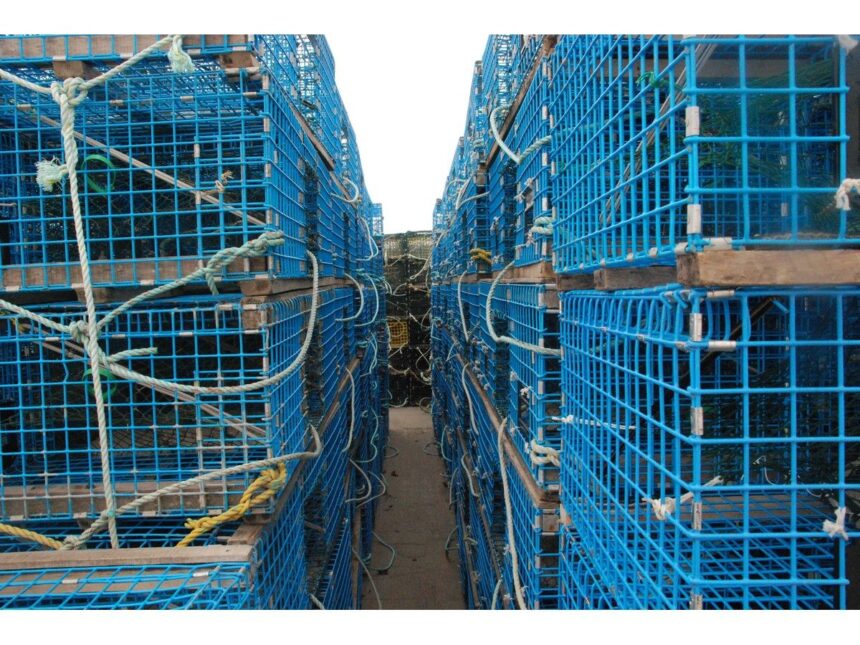
Indigenous rights activists celebrate judge’s ruling, while a legal scholar questions whether it will do more harm than goodAuthor of the article: John Chilibeck • Local Journalism Initiative reporterPublished Sep 30, 2026 • Last updated 2 days ago • 7 minute readLobster traps at the New Mills wharf in northern New Brunswick are in the spot where a big bust happened in 2024. BRUNSWICK NEWS ARCHIVESMany legal experts and Indigenous activists are anxiously waiting for a decision in a Campbellton courtroom on Oct. 30.THIS CONTENT IS RESERVED FOR SUBSCRIBERSSubscribe now to read the latest news in your city and across Canada.Unlimited online access to articles from across Canada with one account.Get exclusive access to the e-Edition, an electronic replica of the print edition that you can share, download and comment on.Enjoy insights and behind-the-scenes analysis from our award-winning journalists.Support local journalism and the next generation of journalists.SUBSCRIBE TO UNLOCK MORE ARTICLESSubscribe now to read the latest news in your city and across Canada.Unlimited online access to articles from across Canada with one account.Get exclusive access to the e-Edition, an electronic replica of the print edition that you can share, download and comment on.Enjoy insights and behind-the-scenes analysis from our award-winning journalists.Support local journalism and the next generation of journalists.REGISTER / SIGN IN TO UNLOCK MORE ARTICLESCreate an account or sign in to keep reading.Access articles from across Canada with one account.Enjoy additional articles per month.Get email updates from your favourite journalists.THIS ARTICLE IS FREE TO READ REGISTER TO UNLOCK.Create an account or sign in to continue with your reading experience.Access articles from across Canada with one accountShare your thoughts and join the conversation in the commentsEnjoy additional articles per monthGet email updates from your favourite authorsArticle contentThat’s the date Provincial Court Judge Martin Goguen delivers a verdict for three Mi’kmaq fishermen accused of trying to poach lobsters at the New Mills wharf in northern New Brunswick.The case has caused a stir, one that a former national First Nation chief says is the latest in a series of raids by “Carney’s I.C.E. agents,” comparing the actions of Prime Minister Mark Carney and federal enforcement officials with the controversial tactics of President Donald Trump and U.S. Immigration and Customs Enforcement.The boat captain, Chris Labillois of Eel River Bar, is charged with fishing lobster using traps without valid tags and fishing lobster without authorization.His deck hands, Nathan Metallic and James Gideon of Listuguj, Que., are charged with fishing lobster without authorization and without being a designate for community members who are allowed to fish for food, social and ceremonial purposes. The view at the end of the breakwater at the New Mills wharf on Chaleur Bay is normally idyllic. But two years ago it was the scene of a confrontation between fisheries officers and Mi’kmaq fishermen. Brunswick News ArchiveFederal fisheries officers in large numbers swooped in on the men when they were preparing to launch their boat at the wharf in October 2024, confiscating their traps.Article contentCanadian lobster exports are worth $3 billion annually and the creatures consistently rank as the nation’s top seafood export by a wide margin.As such, the rules around the lucrative fishery are designed to ensure the lobsters aren’t wiped out. Indigenous fishermen have a different set of rules to follow than non-Indigenous fishermen do, but both seasons are supposed to be strictly enforced.The charges in this particular case are not out of the ordinary, but their legal defence is.The accused trio, with the help of former national First Nation chief Delbert Riley and academic Tom Keefer, convinced the judge that they could use an elder or delegate representative, rather than a defence lawyer, according to Indigenous legal tradition and custom.On Sept. 1, Judge Goguen wrote a 14-page decision that’s already been described as precedent-setting. Indigenous rights activists celebrated the move, while a prominent law professor warned it risked undermining their defence and sending them to jail, an outcome that could befall other Indigenous people who might try the same legal maneuver when they are accused of a crime.By signing up you consent to receive the above newsletter from Postmedia Network Inc.Article contentArticle contentThe judge, appointed to the bench only last year, ruled in favour of an earlier application by Riley, the former chief of the National Indian Brotherhood, and Keefer, an academic from southern Ontario who has spent many years fighting for Indigenous rights.Goguen agreed with the two activists that Mi’kmaq communities historically used elders or delegates to help settle disputes, including when they negotiated treaties with the British Crown more than 250 years ago.“I am satisfied that the practice of agent representation by an elder or delegate to resolve disputes in the indigenous community of Ugpi’ganjig has continued over the last 3 centuries,” the judge wrote, referring to the Indigenous name for Eel River Bar, the First Nation just east of Campbellton. “The use of elder or delegates has been eroded over the years but is now on a comeback.”Riley and Keefer had challenged a section of the Criminal Code – 802.1 – that was enacted by Parliament in 2002 to protect accused persons and the integrity of court proceedings by restricting who may act as a legal agent in serious summary conviction offences, punishable by six months in jail or more.Article contentUp until Goguen’s ruling, only lawyers could defend accused Indigenous persons, or they could represent themselves in court.The trial of the fishermen went ahead on Sept. 9 and 10, with Riley and Keefer defending the accused every step of the way.The judge will deliver his verdict on the afternoon of Oct. 30. Fisheries Officer Jordan Hazenberg inspects lobster traps and materials on a lobster boat near Deer Island. Photo by Brice McVicar/Brunswick NewsThe elderly chief told Brunswick News in an interview this week that he’s been acting on behalf of several Indigenous people who are accused in fisheries and cannabis offences across the three Maritime provinces.Riley said he had persuaded many in the Mi’kmaq community he could help because they often can’t convince lawyers to take on their cases if they argue they’re exercising their Aboriginal rights, especially when it comes to fishing, hunting or selling cannabis.“The big problem is the Mi’kmaq can’t get a proper defence for their constitutionally protected rights, and their treaty rights,” said Riley, 82, who goes by the shorthand of his first name, Del.Article content Former national First Nation chief Del Riley speaks to reporters in Moncton in April during a pot protest. Photo by John Chilibeck/ Brunswick NewsHe is from the Chippewas of the Thames First Nations community near London, Ont., but has spent many months visiting the Maritimes in recent years. Only last April, he was in Moncton defending the Indigenous owners of the L’Nuk Lounge, which Public Safety and RCMP officers have repeatedly raided for selling pot.“The other problem is that the officers in charge, namely, fisheries and RCMP, have been ignoring the Constitution of Canada and enforcing areas of law that are superseded by the Constitution, the highest law of the land. The legal profession has very brilliant people, but it’s just an area that they’ve ignored, to the detriment of the Mi’kmaq people.”In some of the other cases in New Brunswick, Nova Scotia and Prince Edward Island, Riley says prosecutors have dropped or lessened the charges once he and Keefer show up presenting their arguments for elder or delegate representation. The Campbellton case was the first one in which a judge accepted their arguments.Article contentThe elderly chief said the part that disturbs him is that whenever fisheries officers or RCMP make arrests, they also confiscate property, such as lobster traps or cannabis, and don’t return the goods, even if charges are eventually dropped or the accused are found not guilty.“They’ve been essentially acting like Trump’s I.C.E. agents,” he said, alluding to the violent tactics law enforcement has used in the United States to round up illegal immigrants. “They come in and destroy Mi’kmaq property. That’s theft. They steal their products and never return them. So, they are thieves. They behave like I.C.E. agents, but in our case, they would be Carney’s I.C.E. agents.” Del Riley, 82, shows the text of the 1752 peace and friendship treaty signed in Halifax between the Mi’kmaq and the British Crown on the sleeve of his sweatshirt. Photo by John Chilibeck/ Brunswick NewsBut a legal scholar questioned whether Riley and Keefer were the right people to represent Indigenous people accused of serious offences.For starters, says Nicole O’Byrne, a law professor at the University of New Brunswick, there are no clear standards defining who may claim to be an elder or a delegate for a member of an Indigenous community.Article content“It remains unclear what an elder from a First Nation in Ontario would contribute in terms of expertise on the scope of Aboriginal rights in a case involving a Mi’kmaq member of the Ugpi’Ganjig,” she told Brunswick News in an email.“This may undermine the objective and consistent application of procedural safeguards in criminal proceedings and potentially infringe the accused’s right to competent legal representation in a summary matter where liberty is at stake.”O’Byrne said although the judge in this case ruled in favour of representation by an elder or delegate, it remained a complex legal issue that would require stronger proof and clearer boundaries.“In my view, the judge’s broad reading-in of an exception to criminal procedure law, without a clear legislative direction, constitutes judicial overreach and should be revisited.”The law professor said if the decision isn’t challenged, she could see a whole host of thorny practical and constitutional problems arising.Article content Cailin O’Neil shows off her meal at the Shediac Lobster Festival in New Brunswick in this file photo. Lobster exports from Canada are worth $3 billion annually. Brunswick News Archive“Elder representation at the sentencing stage may be helpful to explain the circumstances of the accused including the impact of systemic racism, the legacy of residential schools, or the meaning of treaty relationships. However, the trial process itself involves skills such as cross-examination, the introduction of evidence, and legal argumentation. These are the skills of trained lawyers licensed to practise in the province.”If the decision stands, it’s likely that more Indigenous people will be represented by elders who lack the training and background to navigate the finer aspects legal issues and evidence presented at trial, O’Byrne said.That could lead to more accused Indigenous people being convicted and going to jail.“As a practical matter, ensuring that elders have the requisite legal training and skills to be helpful during the trial process will take resources and time. The recognition of these limitations with respect to criminal matters was the impetus behind Parliament’s decision to pass that section of the Criminal Code in the first place.”Article contentStill, the judge’s actions were celebrated by Nicholas Prisk of Oinpegitjoig, or Pabineau First Nation, who considers himself the hereditary chief of the Mi’kmaq of the region. Pabineau is about a one hour’s drive south of Eel River Bar, the boat captain’s home community.The judge said the unelected chief’s testimony and comments about Mi’kmaq history and traditions during the application helped persuade him that there was sufficient proof that Indigenous people had well-established ways of settling serious issues with the help of elders as representatives.“I was surprised that the section of the Criminal Code was made by Parliament without input from Native people,” Prisk, 75, told Brunswick News in a recent interview. “The judge’s ruling was very important because a lot of lawyers don’t want to touch Native cases. It’s important for them to have representation in court.”Article content
Case of Mi’kmaq fishermen accused of trying to steal lobster causes stir