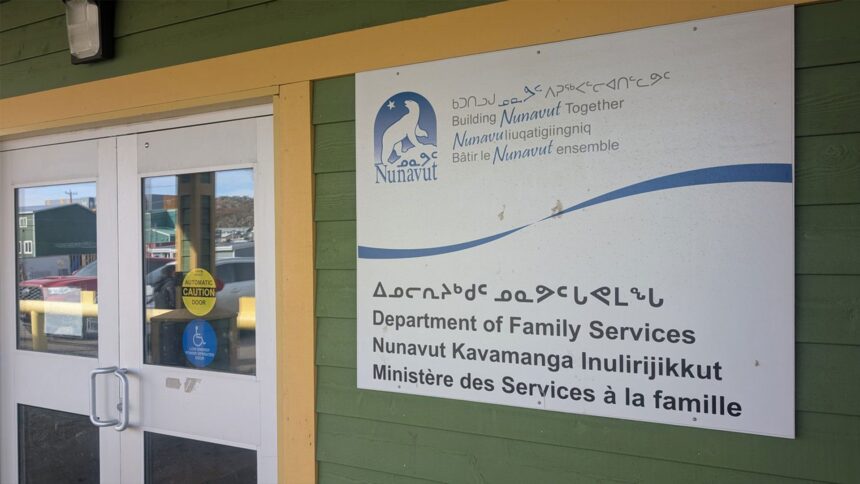
The Auditor General of Canada tabled a distressing report Tuesday in the Legislative Assembly of Nunavut on foster care in the territory, finding the system has failed to meet its own standards in providing safe and healthy homes for children in care. “When children are removed from their homes and placed in foster care for their protection, the department takes on responsibility for their safety and well-being,” the auditor general’s team writes in the introduction to the report. “Yet, the department [of Family Services] still could not consistently demonstrate that the basic safeguards intended to protect those children were being followed.” In 2023, the auditor general described Nunavut’s child-and-family-services system as being “in crisis,” and though a follow-up report in 2025 found the Department of Family Services (DFS) had begun to take action, the current report notes in 2025 that “substantial work remained before those efforts would translate into better services and outcomes for children.” This year’s audit is focused on foster care and finds there have been little to no changes to serious flaws in the system that the auditor general previously identified and marked for attention. Among the most damning statistics in the report is the figure that 90 per cent of children or their caregivers did not receive monthly contacts the DFS was required to provide, while five cases showed no evidence DFS contacted children or caregivers for over a year, and one case saw no contact from DFS over 17 months. The report notes that 100 per cent of files on foster children in the Kitikmeot region, 92 per cent of files in the Kivalliq and South Qikiqtaaluk regions, and 80 per cent of files in the North Qikiqtaaluk region were not compliant with the required regular contact between the department and children in care. In three regions – Kivalliq and both North and South Qikiqtaaluk — 100 per cent of files (along with 75 per cent of files in Kitikmeot region) showed inadequate contact between the DFS and foster caregivers. Safe home data missing Another significant failure was in the screening and monitoring of foster homes. Prior to DFS approving foster homes as safe for children to be placed in, homes are supposed to be subject to a “home study” to assess both the foster caregiver and the safety of the home environment, a clear foster-home agreement laying out roles and responsibilities, a “vulnerable-sector check” to make certain a caregiver does not have any history of crimes against children, and an annual home review to make sure the home remains a safe place for kids. Unfortunately, for five of 21 homes recently opened, the auditor general found home studies were missing or incomplete, while in another five cases, home studies occurred only after the child or children were already placed in the foster home. In 53 per cent of foster homes, the report found vulnerable-sector checks were missing or late for some or all adults in the home. Annual home reviews occurred in only 24 per cent of cases, while 76 per cent of files had either incomplete or inadequate home reviews. Finally, 78 per cent of foster home files were missing a signed and up-to-date foster home agreement. The report notes home studies are important for providing safe environments for children, while “Failure to complete vulnerable sector checks for all adults living in foster homes puts children at risk of being exposed to individuals who may cause them harm.” Lack of annual home reviews, the report notes, “leaves the department without up to date information on the safety and needs of children in care.” And a lack of signed and up-to-date foster home agreements “increases the risk that foster caregivers do not understand their entitlements or their obligations to help keep children safe.” Meanwhile, the report finds DFS failed to maintain “complete, accurate, and up to date information on all children placed in foster homes,” in part due to the haphazard rollout of a new information management system called Matrix, which began in the end of 2023. “We found that the department continued to rely on a manually compiled list of children in care as the most accurate source of reporting information,” the report reads, “instead of its new case management software, Matrix, because employees had not yet fully adopted Matrix or achieved proficiency in using the system.” Rather than technical concerns, however, the report found errors in the Matrix system were caused by delayed filing by social services workers or confusion about how to input information. “The root cause of these realities continued to be a lack of staff capacity and chronic turnover challenges faced by the department,” the report notes. An unknown number of children in care Consequently, “the department did not have a single, reliable source of information on how many children were in care or where they were placed, affecting both child safety and service planning.” Over 22 interviews with foster caregivers, the report notes, the auditor general’s office found 15 said poor communications from DFS negatively affected their ability to provide safe environments for children. “They received little or no family, medical, or trauma history about the children placed in their care,” the report notes. “This left the caregivers ill equipped to provide needed medical support or to manage unexpected behaviours from the children placed in their care.” Furthermore, DFS did not communicate with foster caregivers about the length of children’s stays or plans to return children to their biological families, and did not warn foster families ahead of time of visits with biological families. “We also found that in 32 of the 44 children’s files we reviewed, the child and youth placement information form was not completed for each child in care,” the report states. “This form is supposed to provide important information to foster caregivers about the child’s health, previous placements, and required cultural supports.” The report’s conclusion is a single sentence: “We concluded that the Department of Family Services did not provide timely and effective foster care services within the territory to protect and support the safety and well being of children in accordance with relevant legislation, policies, standards, and procedures.” Recommendations piling up The report includes several recommendations for improvements to the Department of Family Services, and responses from the Department of Family Services, which agrees with the recommendations. However, as the report itself notes, the auditor general’s 2023 audit “found significant deficiencies in all areas of responsibility for the Department of Family Services, including monitoring of children in foster care and oversight and screening of foster homes. The audit also highlighted several root causes that contributed to this persistent and chronic crisis such as staffing issues, insufficient staff training, lack of housing and office space, and poor information management.” As a consequence, the 2023 audit made no recommendations, “because the recommendations made in previous audit reports [in 2011 and 2014] remained unaddressed and continued to provide a basis for improvement.” “The department has known about these issues for the better part of 15 years, since our first audit in 2011,” deputy auditor general Andrew Hayes told media during a press conference. “We raised problems again in 2023. And at this point in time now, we’re talking about foster care and children that deserve services. All across the territory, we’re seeing the same problem.” Read More: Nunavut minister encouraged at progress on child welfare, but territory behind in fixing system Asked to explain why the DFS had failed on such a grand scale, Hayes cited the difficulty of community social services work, the challenges in staffing, recruitment and retention, as well as workload and burnout. “That’s one of the reasons why we’ve been calling on the department to increase the support for them, whether it be through training, whether it be through resourcing,” Hayes said. “But ultimately, when it comes down to enforcing the requirements under the Act, making sure that the services that have been promised to these families are delivered, the department has to address all of these issues, taking a big picture approach. “It’s going to take a whole of government effort here. There are other departments that need to contribute. What we are asking the government to do in our recommendations is really deliver on what it’s promised to the people in the territory.” Jesse StaniforthOnline Journalist | MontrealJesse joined APTN as a producer after 16 years as a print and web journalist. During seven of those years, he covered the Cree Nation of Eeyou Istchee for community newsmagazine The Nation. Jesse’s writing on Indigenous issues has also appeared in Canadian Geographic, the Toronto Star, the Rover, The Eastern Door, Metro, and the Huffington Post. Continue Reading
Auditor General finds Nunavut foster care continues to fail vulnerable children



Leave a Comment